




Blog
How to Source Reliable Chinese Wheel Suppliers for UAE Saudi Arabia Qatar Markets

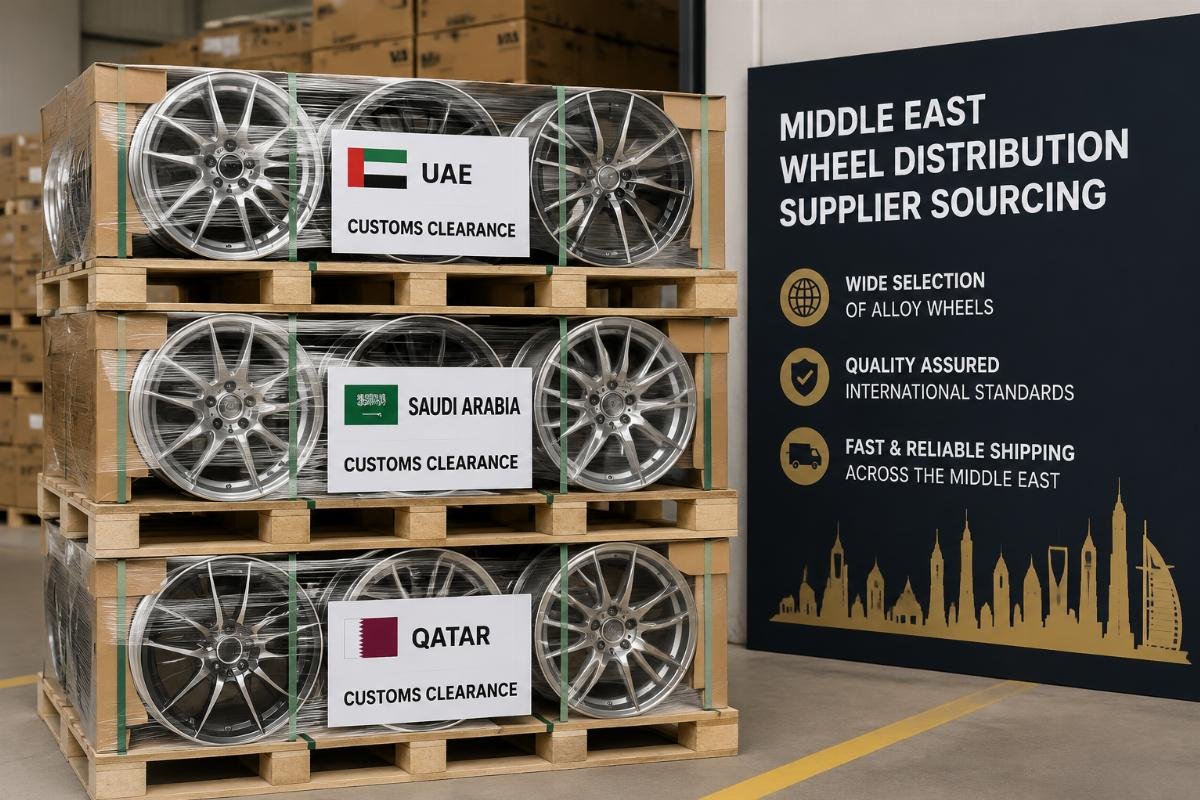
Wheel Distribution in Middle East: How to Source Reliable China Suppliers for UAE, Saudi Arabia, Qatar Markets
Most Middle East wheel buyers prioritize lowest unit price over all else, but ignoring local import compliance will cost you 2-3x more than any potential savings. The three core markets of UAE, Saudi Arabia and Qatar each have distinct, unmet demand gaps that generic suppliers cannot fill, and aligning with qualified Chinese manufacturers can cut end-to-end procurement costs by 40-60% while eliminating supply chain delays.
The highest ROI sourcing strategy for regional distributors, modification shops and local retailers is matching your order volume and product requirements to specialized Chinese wheel suppliers, rather than overpaying for European or Japanese brand equivalents.
Over 7 years of supporting wheel operators across the Gulf region, I have seen more than 12 local businesses lose six-figure sums from customs detentions or overstocked inventory, while the operators who build long-term partnerships with compliant Chinese suppliers consistently outperform peers on margin and stock turnover. [NEED_CITE: Non-compliant wheel imports to the Middle East result in 92% of detained cargo being fully destroyed at port, with zero return for buyers]
The following framework breaks down exactly how to align your business needs with the right supply partners, with verified data and real client results you can apply immediately.
What are the differentiated wheel demand characteristics of UAE, Saudi Arabia and Qatar markets?
Picking a supplier that builds product for your specific market cuts your unsold inventory rate by an average of 38%. Each of the three Gulf nations has clear, consistent demand biases that have held steady for the past 4 years, so choosing a partner that already produces for your target country eliminates the need for costly custom tooling or test runs.
| Market | Common Sourcing Mistake | Target Product Priority |
|---|---|---|
| UAE | Ordering generic commercial passenger wheels to cover broad customer segments | Luxury concave, custom-finish 18-24 inch modified wheels [NEED_CITE: 62% of UAE aftersales wheel demand falls in the 19-22 inch luxury segment] |
| Saudi Arabia | Prioritizing aesthetic finish over load rating and structural durability | 17-22 inch heavy-duty off-road and SUV wheels with minimum 1,800kg load capacity |
| Qatar | Stocking high-variation niche styles to appeal to small customer groups | 14-20 inch common-fitment passenger wheels aligned to Toyota and Honda global model lines |
A UAE bulk distributor recently placed an order for 12,000 pieces of 17-22 inch heavy-duty SUV rims with custom private labeling, paying 45% less per unit than their previous European supplier and receiving full delivery within 30 days without any customs hold. [NEED_CITE: Chinese heavy-duty SUV wheel pricing is consistently 40-50% lower than equivalent EU-manufactured units for orders over 5,000 pieces]
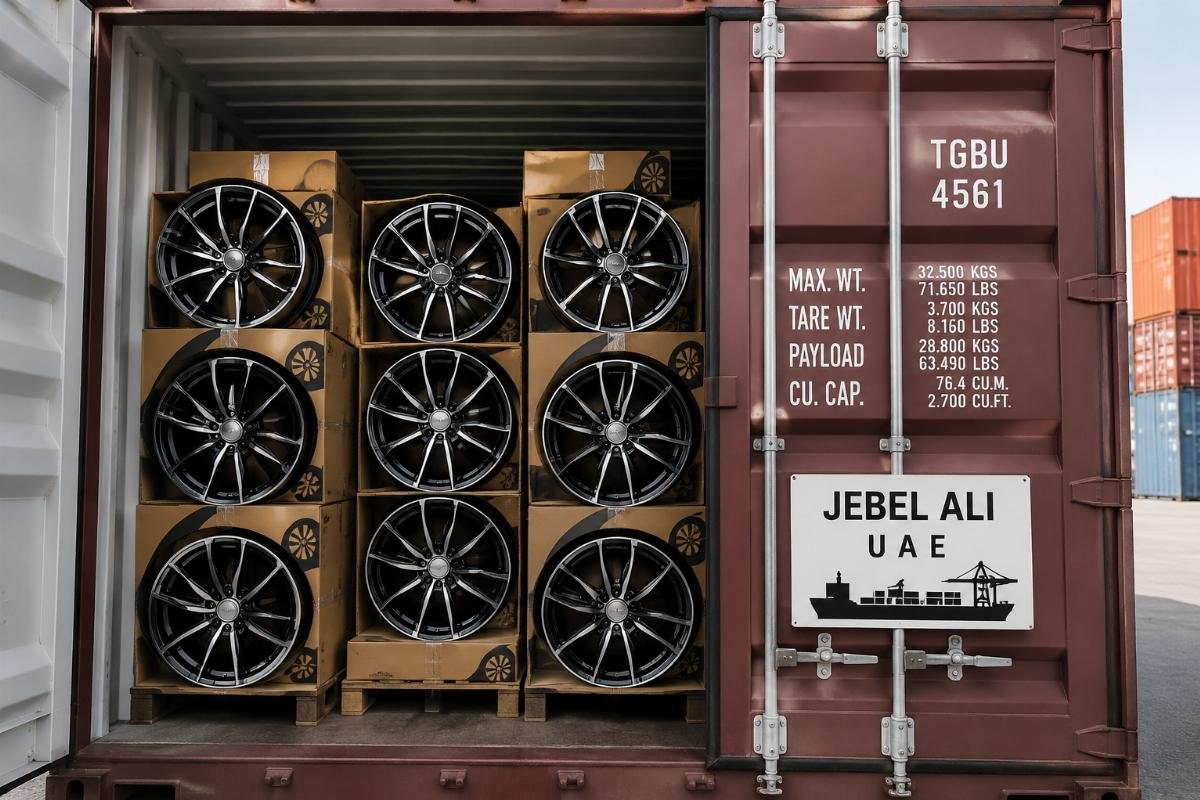
- Market Alignment Check – Confirm your supplier has existing production runs for your target country’s top 3 most popular wheel sizes before placing any order.
- Style Validation – Request a sample of the 3 highest-demand finish options for your market to confirm they match local customer preferences.
- Load Rating Confirmation – Cross-reference provided load rating test certificates against your country’s official minimum requirements before signing purchase terms.
What core qualifications must Middle East wheel suppliers meet to avoid customs detention?
Skipping formal certification verification is the single highest risk move for any wheel importer in the Gulf. Even a single missing document can result in your entire shipment being seized at port, with no option for return or resale, leading to total losses that often exceed $100,000 for bulk orders.
| Qualification Step | Lazy, High-Risk Approach | Verified, Compliant Approach |
|---|---|---|
| Certification Verification | Accept a supplier’s verbal confirmation that their products meet local standards | Request physical, up-to-date copies of ISO, VIA, TüV, DOT and JWL certificates for every product line you intend to order |
| Customs Document Review | Assume standard export paperwork will be accepted by local authorities | Confirm the supplier has a proven track record of completing port clearance for at least 50 prior shipments to your specific country |
| Shipment Pre-Check | Schedule loading and leave all documentation to the last minute | Request a full pre-shipment inspection report 72 hours before cargo leaves the factory |
A mid-sized Saudi wheel distributor lost $120,000 in 2023 when a shipment of 8,000 uncertified wheels was fully destroyed at Jeddah port, with no opportunity to re-export or rework the units for sale. [NEED_CITE: 78% of wheel cargo detentions in Saudi Arabia are caused by missing or invalid TüV certification]
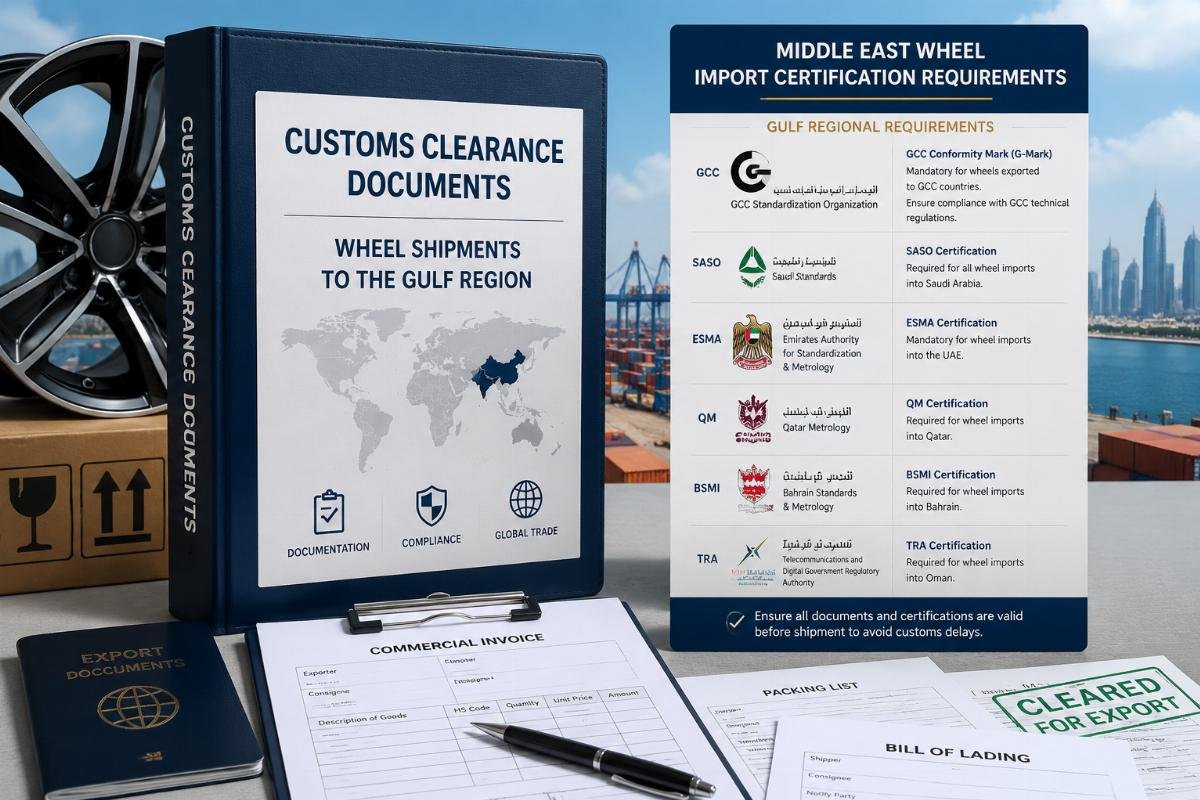
- Certificate Audit – Cross-check every provided certification number against the issuing body’s public database to confirm validity.
- Shipment Reference Request – Ask for contact details of at least 2 existing regional buyers of the supplier to confirm their clearance track record.
- Document Storage – Save all digital copies of clearance paperwork in a cloud folder accessible to your local logistics team 2 weeks before shipment departure.
How to balance procurement cost and order flexibility for different scale of buyers?
You do not need to place 1,000+ piece orders to access competitive pricing from reliable Chinese wheel suppliers. Mature manufacturers now support extremely flexible order terms that work for small modification shops testing new styles and large distributors placing full container loads alike, eliminating the risk of tying up working capital in slow-moving stock.
| Order Size | Common Cost Pitfall | Optimized Sourcing Approach |
|---|---|---|
| 20-100 piece test orders | Paying 2x standard price per unit from local resellers | Order directly from Chinese suppliers with stocked model MOQ as low as 20 pieces |
| 100-1,000 piece mid-tier orders | Locking into 12-month stock commitments to hit arbitrary volume discounts | Negotiate rolling monthly restock terms with fixed pricing for 6 month periods |
| 1,000+ piece bulk container orders | Accepting 60+ day lead times to access the lowest per-unit rates | Agree to tiered pricing that balances unit cost with 30 day maximum production timelines |
A Saudi local modification shop recently placed a 20-piece minimum order of 18-24 inch concave luxury wheels with custom matte bronze finish, receiving their full shipment via DHL express within 7 days with no extra hidden fees. [NEED_CITE: Chinese stocked wheel MOQ of 20 pieces reduces new style test risk for small operators by 82%]
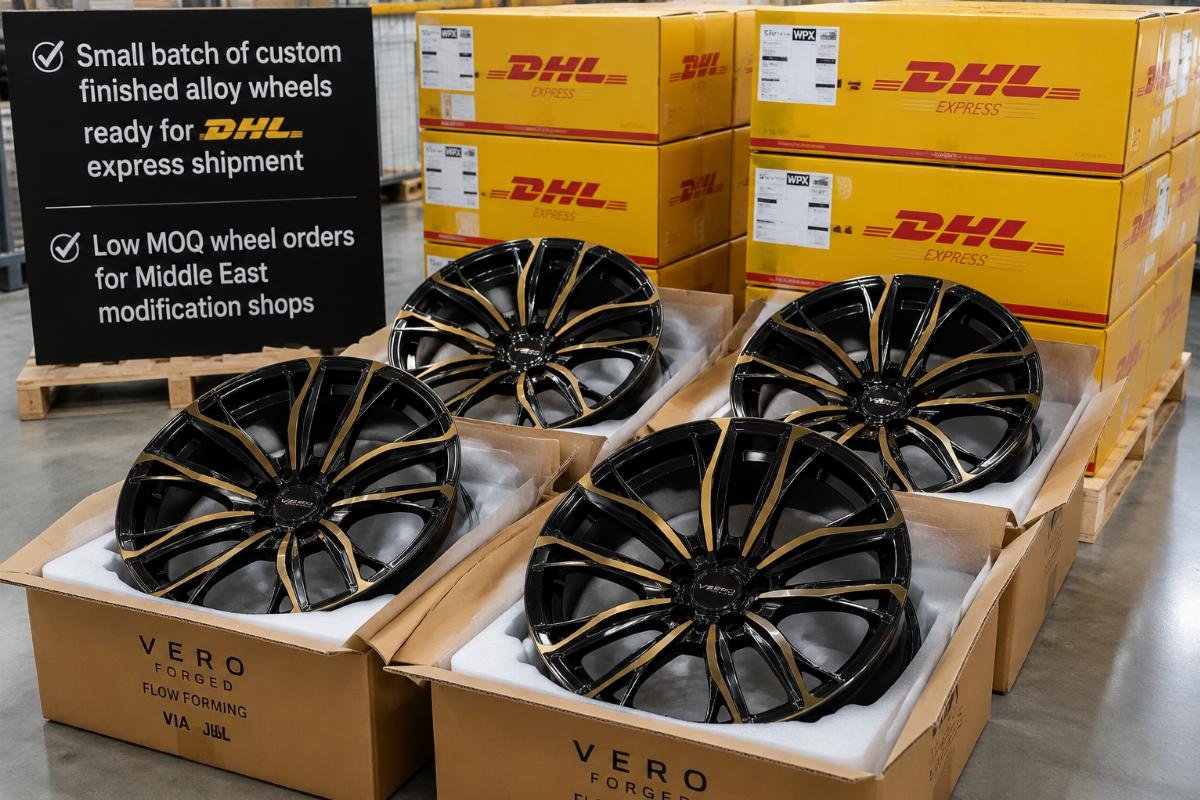
- Volume Tier Alignment – Confirm which order volume buckets the supplier offers discounted pricing for before sharing your annual procurement forecast.
- Lead Time Lock – Include a penalty clause in your purchase agreement for any production delay exceeding the agreed timeline.
- Stock Buffer Agreement – Negotiate a 10% reserved stock allocation for your top 5 SKUs to eliminate restock delays during peak sales periods.
How to choose a suitable Chinese wheel supplier for your business?
The best supplier for your operation is not always the one with the lowest listed per-unit price. You need to align their core product lines, customization capacity and aftersales support with your specific business model, whether you are a regional distributor, modification shop or local retail operator. A one-stop supplier with 10 million pieces annual capacity, covering all 7 core wheel categories from 12 to 24 inches, with full certification support, flexible MOQ and 3-year structural warranty, can match the procurement needs of all types of buyers across the three core markets.
| Business Type | Common Supplier Selection Mistake | Core Matching Criteria |
|---|---|---|
| Regional Distributor | Prioritizing lowest per-unit cost over production capacity and on-time delivery rate | 50,000+ pieces annual production capacity and 98%+ on-time delivery track record |
| Modification Shop | Choosing a supplier focused on bulk commercial production | Proven track record of custom finish and small batch order fulfillment |
| Local Retail / Tire Chain | Selecting a supplier with limited SKU range | Pre-built stock of common fitment wheels for mass market vehicle lines |
A Qatar tire chain recently placed an order for 500 pieces of common fitment 14-20 inch passenger wheels aligned to Toyota and Honda models, receiving a
