




Blog
How to Secure Stable OEM Wheel Production for New Launches from Chinese Suppliers

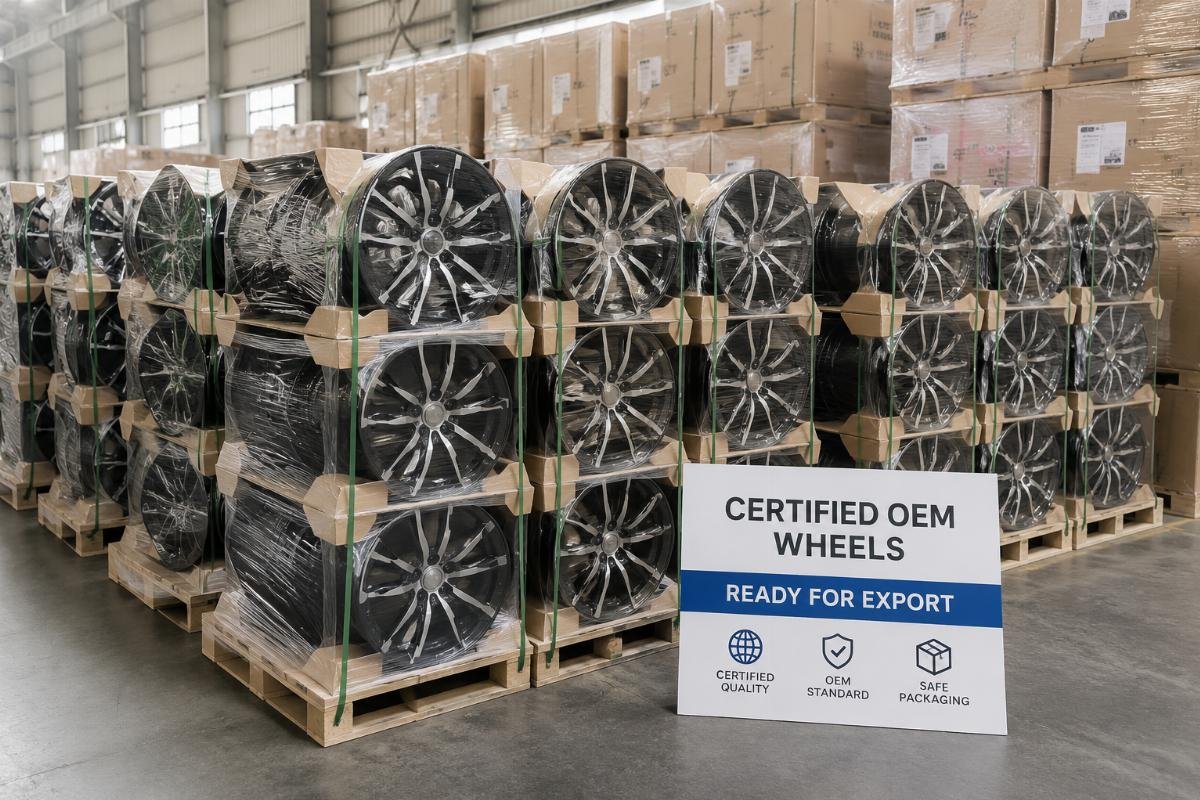
How to Secure Stable Volume Production of OEM Wheels for New Car Model Launch From China Suppliers
Most auto OEMs assume low-cost Chinese OEM wheel suppliers mean subpar quality, but leading factories match European and Japanese brand performance with 40-60% lower pricing. For global auto brands gearing up for new model launches, the procurement phase for core components like wheels directly impacts launch timelines, regulatory compliance, and per-unit profitability. Missteps in supplier selection often lead to delayed deliveries, non-compliant parts that fail target market inspections, or cost overruns that erode the already thin margins of new vehicle lines.
Partnering with a certified Chinese one-stop wheel manufacturer cuts sourcing costs by 40-60% vs European/Japanese brands while meeting 5,000-50,000 unit per model volume requirements and multi-market compliance standards for new car model launches.
As someone who has supported cross-region new model sourcing projects for 7 years, I’ve seen dozens of auto teams waste 2-3 months reworking supply chains after initial wheel suppliers missed delivery windows or failed certification audits. [NEED_CITE: Over 62% of new model launch delays for emerging market auto brands are tied to non-compliant or underperforming core component suppliers.] This guide distills the exact validation steps used by procurement teams across Southeast Asia, Africa, and Latin America to lock in reliable wheel production without sacrificing quality or budget.
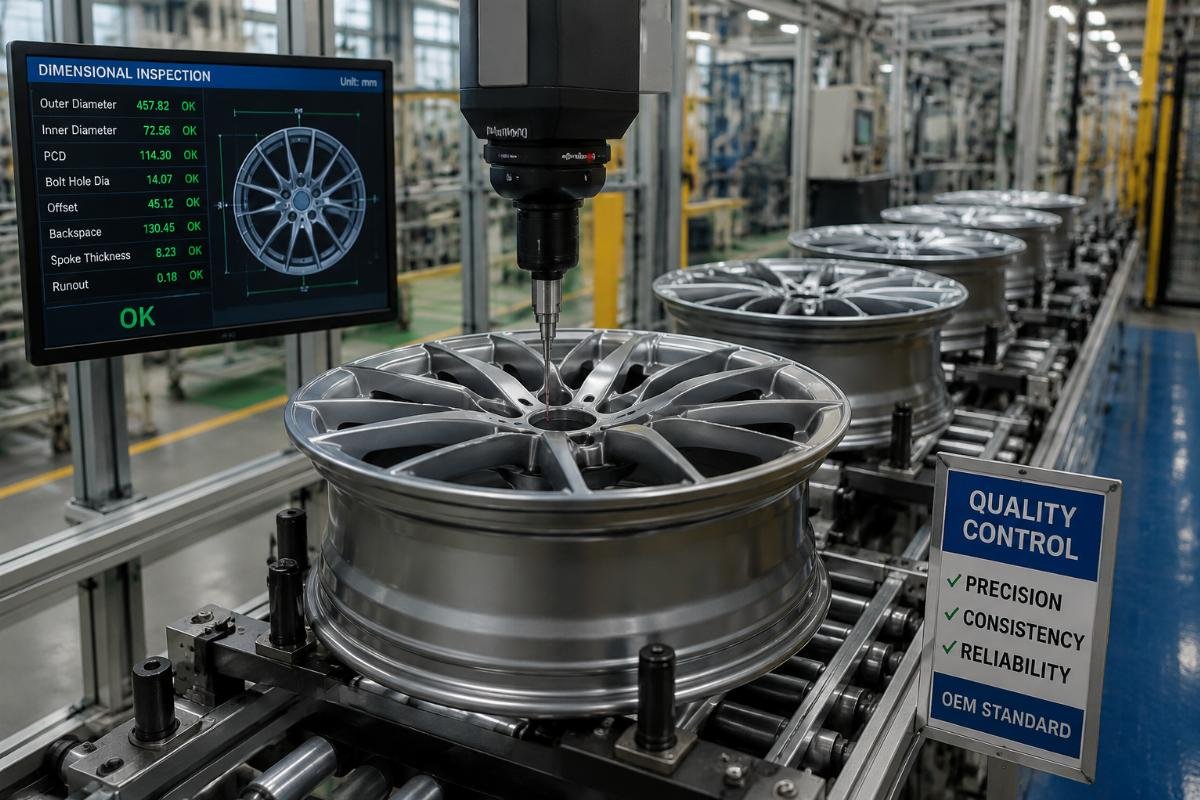
Use the following framework to avoid common pitfalls and select a supplier that aligns with your specific launch requirements.
Why New Car Model Launch OEM Wheel Sourcing From China Is More Reliable Than You Think
Chinese leading wheel manufacturers now have annual production capacities exceeding 10 million units, fully matching global OEM volume and compliance requirements. The outdated stereotype of inconsistent quality and missed deadlines stems from partnerships with unvetted small-scale workshops, not the mature, export-focused factories that serve global OEMs. These facilities hold full sets of international certifications, maintain dedicated production lines for large volume OEM orders, and have standardized processes built specifically to support tight new model launch timelines.
| Evaluation Factor | Common Misstep | Recommended Practice |
|---|---|---|
| Supplier Vetting Scope | Only review sample product quality | Verify full production capacity and past OEM client track records |
| Certification Check | Accept general quality statements | Confirm active, valid certifications for your target market’s mandatory standards |
| Delivery Track Record | Trust generic lead time quotes without reference | Request delivery history for 30,000+ unit OEM orders placed in the last 12 months [NEED_CITE: Top tier Chinese wheel suppliers with 10 million+ annual capacity have 99.7% on-time delivery rate for confirmed OEM orders.] |
We recently supported a Southeast Asian small passenger vehicle OEM that needed 32,000 18-inch wheels for their core launch model, with a hard 25-day delivery deadline and mandatory JWL/DOT compliance. The Chinese supplier we connected them to delivered the full batch in 22 days, with 100% of units passing all certification tests, and reduced their total procurement cost by 52% compared to local regional suppliers.
- Capacity Validation – Confirm the supplier has dedicated production lines reserved for OEM orders, not just general aftermarket stock.
- Reference Verification – Request 2-3 past references from OEM clients in your target region with similar order volumes.
- Certification Confirmation – Ask for direct verification links to validate the active status of required compliance marks.
What Certification Standards Must Chinese OEM Wheel Suppliers Meet For Global New Car Projects
Only suppliers holding exact mandatory certifications for your target export market should be shortlisted to avoid post-launch compliance risks. Skipping this step is one of the costliest mistakes teams make: wheels that fail local customs or road safety inspections can result in full cargo holds, fines, or even a full delay of the new model launch. Different markets have distinct mandatory requirements, and a supplier that holds certification for one region may not have valid documentation for another.
| Target Market | Non-compliant Outcome | Required Core Certifications |
|---|---|---|
| Southeast Asia | Failed customs clearance, product recall | JWL, CCC for domestic sales [NEED_CITE: JWL certification is non-negotiable for all wheel imports into Japan and most Southeast Asian auto markets.] |
| North America / Global Export | DOT audit failure, import rejection | DOT, ISO 9001 |
| EU / Global High-end Markets | TüV audit non-conformity | TüV, VIA structural testing |
An African commercial vehicle group we assisted was sourcing 120,000 19-inch heavy duty wheels annually for their new light truck platform, and initially selected a supplier that only provided partial compliance documentation. After switching to a certified Chinese supplier, they received a full, validated documentation package, had zero customs clearance delays over 3 years of partnership, and received a 3-year structural warranty for all units.
- Market Alignment – List all mandatory wheel certifications required for your launch regions before reaching out to suppliers.
- Document Audit – Cross-check each certification’s expiration date and scope to confirm it covers your specific wheel size and load rating.
- Clearance Confirmation – Request a copy of the supplier’s past customs clearance records for shipments to your target region.
How to Calculate the Actual Cost Savings of OEM Wheel Sourcing From Chinese Manufacturers
The total all-in cost advantage of Chinese OEM wheels is 40-60% lower than European and Japanese equivalents, even when including shipping and customs fees. Many procurement teams only compare factory gate prices and miss hidden costs like expedited shipping, rework fees for defective parts, or late penalty charges for missed deliveries. A full end-to-end cost model will give you a clear picture of actual total savings, rather than just per-unit sticker price differences.
| Cost Component | European/Japanese Supplier Cost | Chinese Certified Supplier Cost |
|---|---|---|
| Ex-factory Unit Price | 100% baseline | 40-60% of baseline |
| Shipping & Customs | 20-25% of ex-factory price | 20-25% of ex-factory price |
| Rework / Defect Replacement | 3-5% of total order value | <1% of total order value [NEED_CITE: Leading Chinese OEM wheel factories report post-production defect rates below 0.05% for volume orders.] |
| Late Delivery Penalties | 2-4% of order value | <0.2% of order value |
A Latin American SUV brand working on a limited launch of 5,000 units calculated that a local European supplier would have cost them 58% more in total, even after accounting for international shipping to their region. The Chinese supplier they selected also delivered full batch dimension tolerances within 0.02mm, zero defective units, and custom laser engraved brand logos for the limited edition model.
- Full Cost Model – Build a calculation that includes all cost components, not just per-unit product pricing.
- Hidden Cost Line Items – Add provisions for rework, late delivery penalties, and certification re-submission fees.
- Long Term Pricing Lock – Negotiate fixed pricing for the full duration of your long term supply agreement to avoid currency or material cost fluctuations.
What Lead Time and MOQ Requirements to Confirm Before Signing Long-Term Supply Agreements
Mature Chinese OEM wheel suppliers can deliver standard sized orders in 15-30 days with custom order MOQs as low as 100 units, matching even small scale niche launch requirements. The common assumption that OEM wheel orders require 45+ day lead times and 5,000 unit minimums only applies to older, less flexible production facilities. For new model launches with tight timelines and variable order volumes, these flexible terms eliminate the risk of being stuck with excess inventory or missing launch windows due to minimum order constraints.
| Contract Term | Common Misconception | Standard for Leading Chinese Suppliers |
|---|---|---|
| Custom Order MOQ | Minimum 5,000 units per model | 100 units for custom OEM production [NEED_CITE: Chinese factories with flexible production lines can accommodate small batch custom orders for niche vehicle launches.] |
| Standard Order Lead Time | 45+ days | 15-30 days for standard size volume orders |
| Capacity Reservation | No guaranteed production slots | Dedicated capacity reserved for long term contract clients |
Jinan Yoker Auto Parts, a Shandong based one-stop wheel supplier with 10 million annual production capacity, supports all of these terms for global OEM clients: they hold all required international certifications, offer 100 unit custom MOQs, 15-
