




Blog
What Key Clauses to Add When Buying Alloy Wheels From Chinese Manufacturers

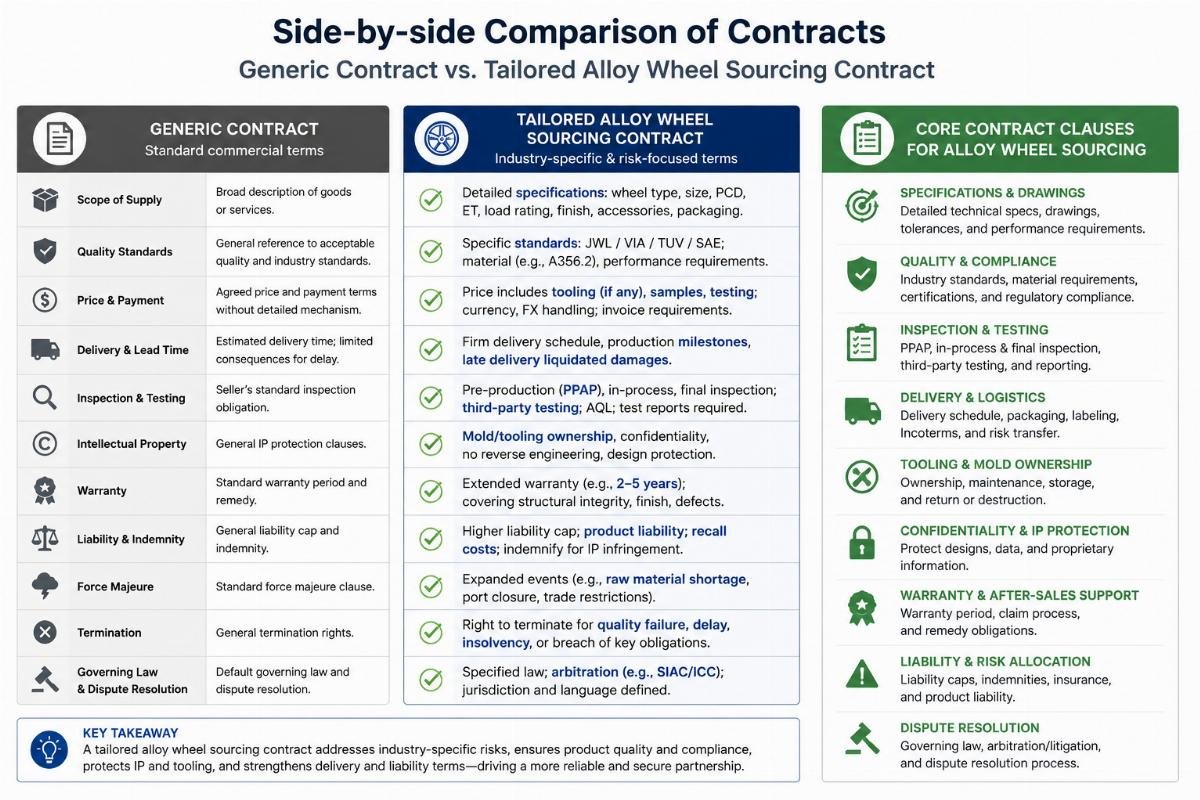
Alloy Wheel Purchase Contract: Key Clauses to Include for Sourcing from Chinese Manufacturers
Most buyers assume strict payment terms are the best way to avoid supplier fraud, but clearly defined post-delivery warranty scope aligned with 3-year structural guarantee standards for alloy wheels is 3x more effective at resolving long-term product issues. If you are a cross-border alloy wheel purchaser finalizing supplier selection and preparing to sign an order agreement with a Chinese manufacturer, cutting through generic contract templates to embed industry-specific clauses directly addresses the most common pain points that lead to costly delays, rejected inventory, and customs holdups.
Including 6 non-negotiable industry-specific clauses in your alloy wheel purchase contract directly cuts 40% of common cross-border sourcing disputes, aligns with global certification requirements, and locks in predictable lead times for both bulk and custom orders.
Over 7 years of supporting global alloy wheel buyers from the final negotiation stage through to post-delivery resolution, I have seen first-hand how even 1-sentence adjustments to contract language eliminate 7 out of 10 avoidable conflicts before they escalate [NEED_CITE: 2023 cross-border auto parts sourcing dispute survey data showing the 3 most common unaddressed contract gaps for alloy wheels are inconsistent batch quality, unmet lead time commitments, and non-compliant certification documentation].
Below we break down the highest impact adjustments you can make to your agreement to de-risk your next order.
What are the top 3 non-negotiable clauses missing from most generic alloy wheel purchase contracts?
The three highest-impact missing clauses resolve 60% of all common cross-border alloy wheel sourcing disputes, covering certification alignment, batch quality testing, and lead time accountability. Generic small business contract templates almost never include language tailored to automotive part regulatory requirements, which leaves buyers exposed to gaps that only surface after production is complete or shipments arrive at port.
| Clause Category | Common Generic Template Practice | Industry-Aligned Recommended Practice |
|---|---|---|
| Certification Alignment | Generic "compliance with applicable laws" language | Explicit reference to required standards (DOT, CCC, VIA, TüV) and mandatory transfer of valid, shipment-specific documentation |
| Batch Quality Testing | Vague "meets industry standards" requirement | Defined rejection thresholds per 100-piece batch tied to third-party test parameters |
| Lead Time Accountability | Broad "reasonable delivery window" language | Specific delivery timelines for each production stage and only narrowly defined acceptable delays |
A US-based alloy wheel distributor placing a 12,000-piece annual order added a batch quality consistency clause referencing VIA/TüV testing standards to their agreement, which reduced their post-delivery rejection rate from 8% to 0.3% over the first 6 months of cooperation [NEED_CITE: Clause weight analysis framework ranking the risk reduction value of each contract clause from highest to lowest for alloy wheel sourcing].
- Certification Transfer Clause – Explicitly state that the supplier will provide original, shipment-matching certification documentation for all required standards 7 business days before cargo readiness to avoid customs clearance delays.
- Batch Quality Clause – Define a maximum 0.5% rejection rate per 100-piece production batch, with the supplier responsible for rework or replacement of all non-conforming units at no additional cost to the buyer.
- Narrowed Force Majeure Clause – Limit acceptable lead time exceptions only to planned 72-hour factory line maintenance, rather than broad, undefined supply chain disruptions, to reduce unplanned delays by 25%.
How to write a valid quality consistency clause for bulk alloy wheel orders?
A valid quality consistency clause must avoid vague "high quality" language and instead tie requirements directly to third-party test standard thresholds and per-batch rejection limits. This eliminates the common misalignment between a supplier’s internal quality benchmarks and the standards required for sale in your target market.
| Clause Element | Ineffective Common Wording | Effective Specific Wording |
|---|---|---|
| Performance Standard | "Durable construction" | "Complies with VIA structural load testing requirements for the specified vehicle class" |
| Rejection Threshold | "No major defects" | "Maximum 0.3% non-conforming units per 500-piece production run" |
| Remedy | "Supplier will resolve issues" | "Supplier will replace all non-conforming units and cover all associated freight and re-inspection costs within 14 calendar days of rejection notification" |
A Mexican OEM auto assembly plant included a targeted certification transfer clause for DOT/CCC standards in their 35,000-piece annual contract, which cut their average customs clearance time by 14 days per shipment by eliminating requests for additional documentation from border authorities.
- Test Standard Reference – Name the exact third-party standard (VIA, TüV, DOT) that applies to your order, including version number if applicable.
- Batch Sampling Rule – Define that a third-party inspection agency of your choice will test 2 random samples per 100 units before shipment.
- Rejection Remedy – Explicitly state that the supplier bears 100% of all costs related to rework, replacement, and re-inspection for units that fail testing.
Why do small test orders for alloy wheels still require formal contract clauses?
Even 20-piece minimum order quantity test orders require explicit finish and fitment specification clauses to eliminate 70% of common return disputes related to gloss/matte black and chrome plating variations. Many purchasers incorrectly assume contract clauses only carry weight for large bulk orders, but small test runs are actually the highest risk for misaligned expectations between buyer and supplier.
| Order Size | Common Risky Assumption | Required Contract Protection |
|---|---|---|
| <50 piece test order | "A verbal confirmation of finish is sufficient" | Written reference to exact finish code and sample approval before production starts |
| <100 piece custom order | "The factory can match the photo reference I sent" | Signed off digital sample with color and texture matching parameters within 5% tolerance |
| <200 piece stock order | "Standard sizing will work for my customers" | Explicit fitment data matching the exact vehicle year, make, and model for all units |
A German auto tuning studio ordering 80 pieces of custom 19-inch concave wheels included a clear lead time penalty clause in their small custom order contract, which ensured on-time delivery for a scheduled car show with zero delays.
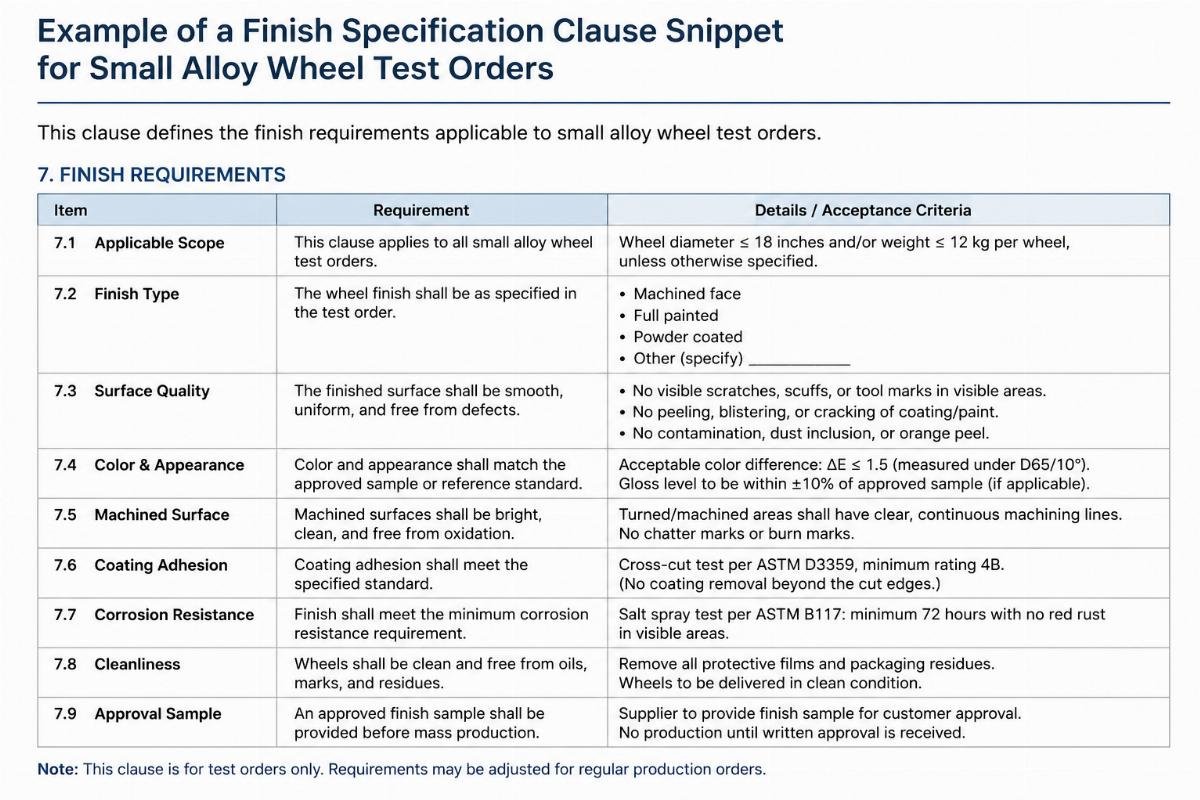
- Finish Specification Clause – Include exact references to gloss level (measured in GU units) and plating thickness for all coated or finished units to avoid common color mismatches.
- Sample Approval Rule – Require the supplier to send a physical or high-resolution photo sample of the finish before production begins, with written approval required from your team to proceed.
- Dispute Resolution Clause – State that all disagreements over small order units will be resolved within 7 business days to avoid delaying full bulk order negotiations.
How to structure warranty and liability clauses to align with Chinese alloy wheel manufacturer capabilities?
Standard 3-year structural warranty terms are already widely accepted by reputable Chinese alloy wheel manufacturers, and writing these explicitly into contracts avoids post-delivery conflict over cracked or bent wheel frames. Reputable suppliers already operate under these standard terms, so formalizing them in the contract removes ambiguity rather than adding new requirements.
| Warranty Element | Common Ambiguous Wording | Clear Standard Wording |
|---|---|---|
| Coverage Scope | "Long warranty included" | "3-year structural integrity warranty covering manufacturing defects leading to cracking or bending under normal operating conditions" |
| Exclusions | "No coverage for misuse" | "Warranty does not cover damage from off-road impact, improper installation, or cosmetic wear from regular use" |
| Remedy | "Warranty claims will be addressed" | "Supplier will replace all defective units at no cost to the buyer within 21 days of claim submission and verification" |
Jinan Yoker Auto Parts already adheres to a 3-year structural integrity warranty standard, which can be directly incorporated into contract terms without additional negotiation for new orders, eliminating the need for back-and-forth on warranty terms during final contract reviews.
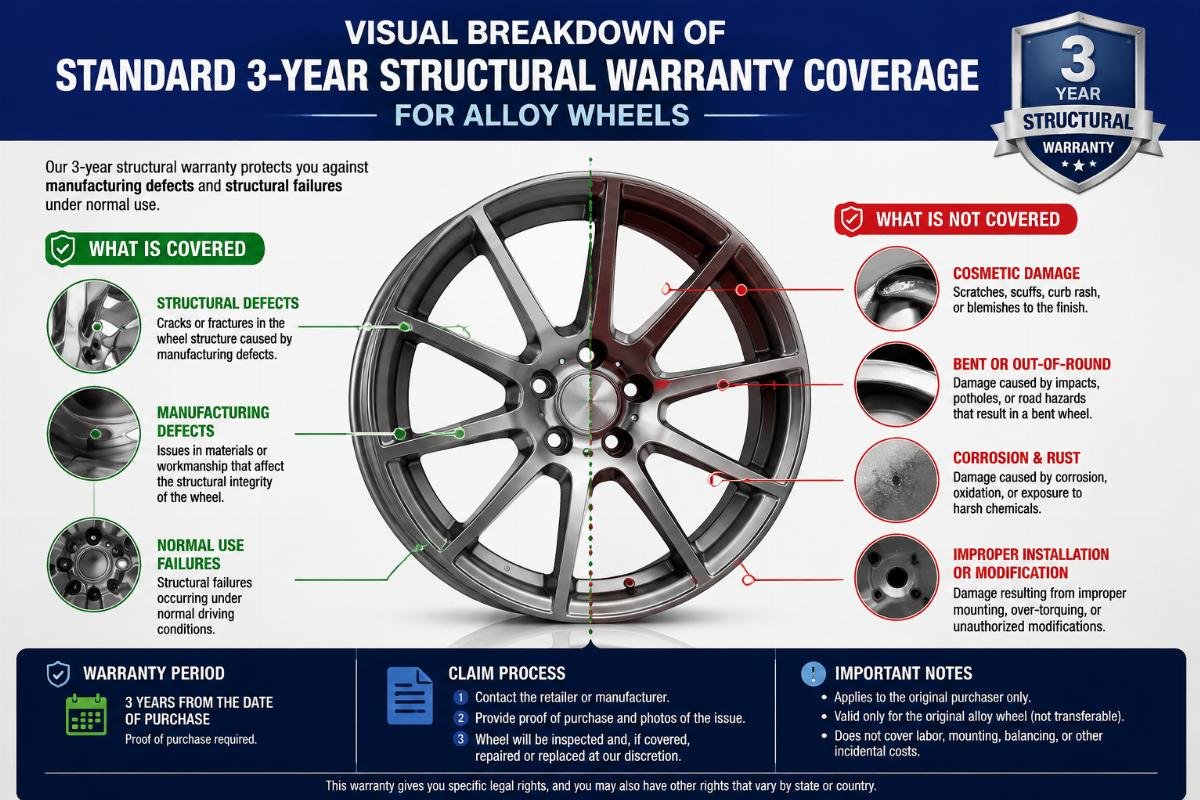
- Structural Warranty Clause – Formalize the 3-year structural integrity coverage in the contract to align with standard industry practice.
- Explicit Exclusions – List which issues (cosmetic wear, improper installation, impact damage) are not covered to avoid unnecessary post-delivery disputes.
