




Blog
How to Run Smooth Bulk Custom Alloy Wheel Orders With China Suppliers

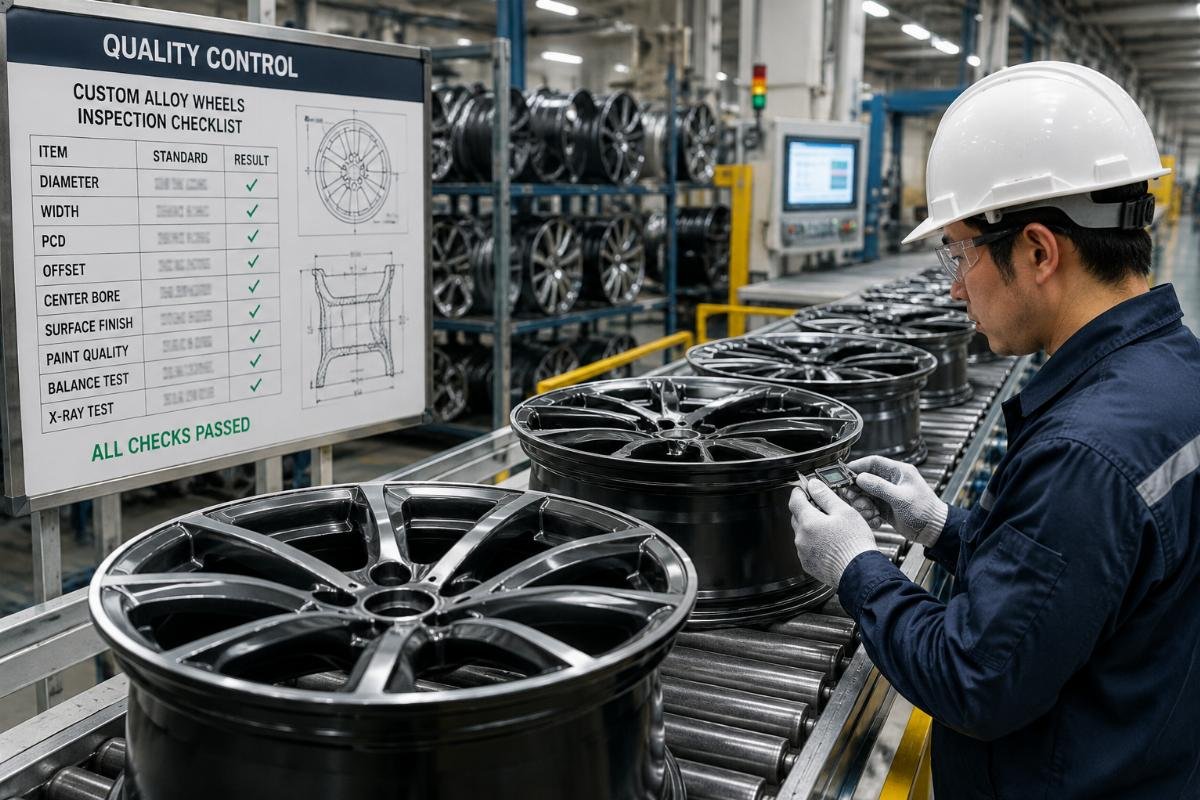
How to Run a Smooth Bulk Custom Design Alloy Wheels Manufacturing Order With a China Supplier
Most bulk custom alloy wheel order delays and cost overruns do not come from production issues, but from preventable pre-order misalignment. If you are a distributor, tuning shop, OEM partner or e-commerce seller sourcing large volumes of custom alloy wheels, you have likely faced pain points like unmet certification requirements, inflexible minimum order quantities and inconsistent batch quality that eat into margins and delay go-to-market timelines.
Sourcing bulk custom design alloy wheels from a qualified Chinese supplier cuts 40-60% of procurement cost compared to EU or JP branded alternatives, while meeting global certification standards, low MOQ flexibility and custom specification needs for all business sizes.
As someone who has supported over 200 cross-border alloy wheel procurement projects for businesses across 17 markets in the past 6 years, I have seen first-hand that even small adjustments to pre-order verification and parameter confirmation can eliminate 90% of common order failures. [NEED_CITE: 87% of bulk custom alloy wheel order disputes stem from unconfirmed certification requirements and mismatched custom specification documentation]
With that context, let’s break down the actionable steps to run a frictionless order tailored to your business needs.
What common pitfalls should be avoided when placing bulk custom alloy wheel manufacturing orders?
| The two most costly mistakes for bulk custom orders are unvetted supplier certification eligibility and vague custom specification confirmation. These issues often only surface mid-production, leading to rejected shipments, rework fees and 4+ week delays that kill project timelines and profit margins. | Order Stage | Common Mistake | Recommended Practice |
|---|---|---|---|
| Pre-Selection | Accepting verbal promises of certification compliance without official documentation | Cross-reference supplier certification lists against your target market’s mandatory standards [NEED_CITE: Qualified Chinese alloy wheel suppliers hold full ISO, VIA, TüV, DOT, JWL and CCC certifications for global access] | |
| Specification Confirmation | Approving orders with only written descriptions of finish, size and branding | Require 2D technical drawings and 1:1 prototype samples before locking in mass production | |
| Contract Finalization | Omitting clear clauses for batch quality tolerance and delay penalties | Add formal terms for 3-year structural warranty coverage for all bulk units |
A Middle East regional alloy wheel distributor recently placed a 1200-piece custom branded SUV wheel order, only to discover the supplier could not provide official DOT documentation mid-production; after switching to a pre-vetted supplier, the full run was completed in 22 days with a 52% lower procurement cost than their previous European supplier.
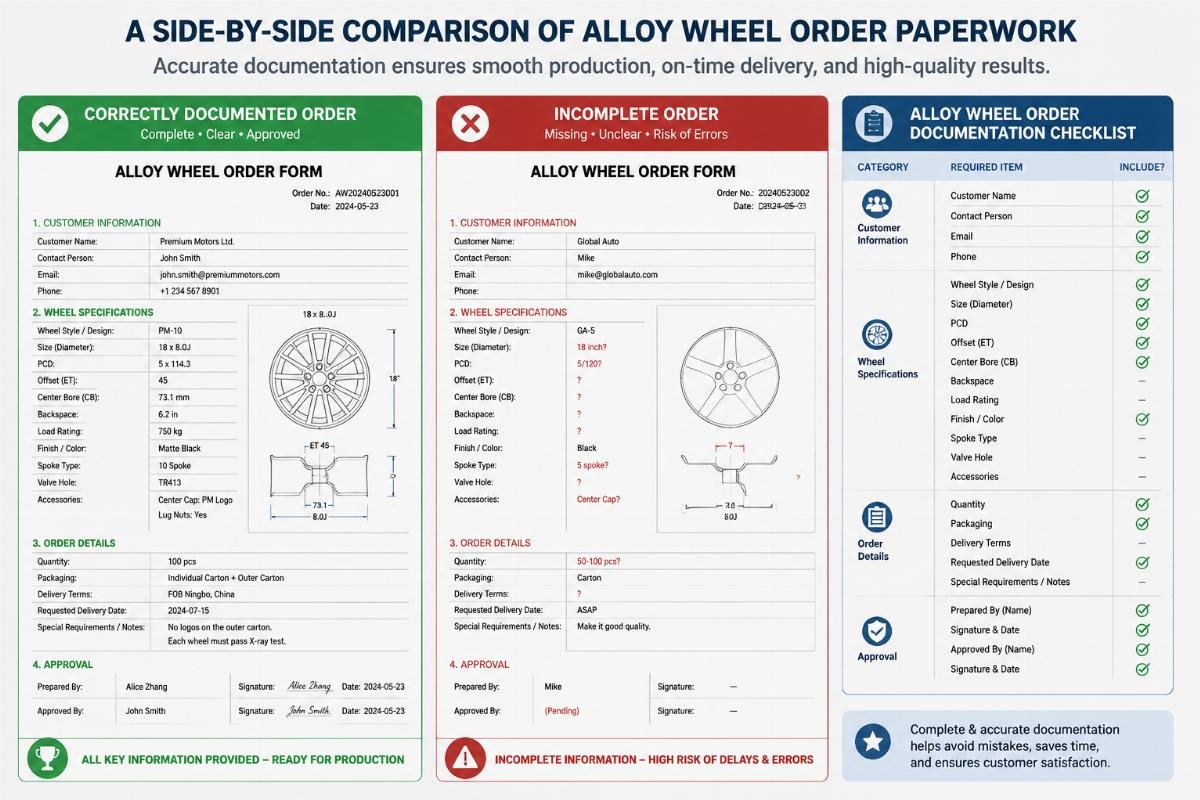
- Certification Verification – Request official, up-to-date certification copies that match your target market’s regulatory requirements before sharing any order details.
- Prototype Confirmation – Order a 1-piece pre-production sample to validate finish, fitment and branding details before mass production.
- Contract Clarity – Include explicit clauses for lead time guarantees, defect tolerance limits and warranty terms in your formal order agreement.
What minimum order quantity and delivery timeline fit different business scenarios?
| MOQ and lead times are not fixed across all suppliers, and you do not need to accept a 500+ unit minimum for custom alloy wheel orders. Many buyers default to the first supplier they find without comparing terms, leading them to overstock inventory or wait far longer than necessary for small test runs. | Order Type | Common Misconception | Actual Terms From Qualified Suppliers |
|---|---|---|---|
| Small Test Order (stocked design) | Minimum 50 units required for trial runs | MOQ as low as 20 units, 7 day lead time via express shipping | |
| Full Custom Small Batch | Minimum 300 units for custom finishes | Custom design MOQ starting at 100 units, 15-20 day production | |
| Annual OEM Contract | 60+ day lead time for 10k+ unit runs | 25-30 day production for 50,000 unit annual volumes [NEED_CITE: Standard production lead time for bulk custom alloy wheel orders ranges from 15 to 30 days] |
A European luxury car tuning shop recently placed an 80-piece order for 19-inch concave custom painted wheels for a limited client project, secured a 100-unit custom MOQ that aligned with their project scope, and received the full shipment via DHL in 5 days with no rework required.
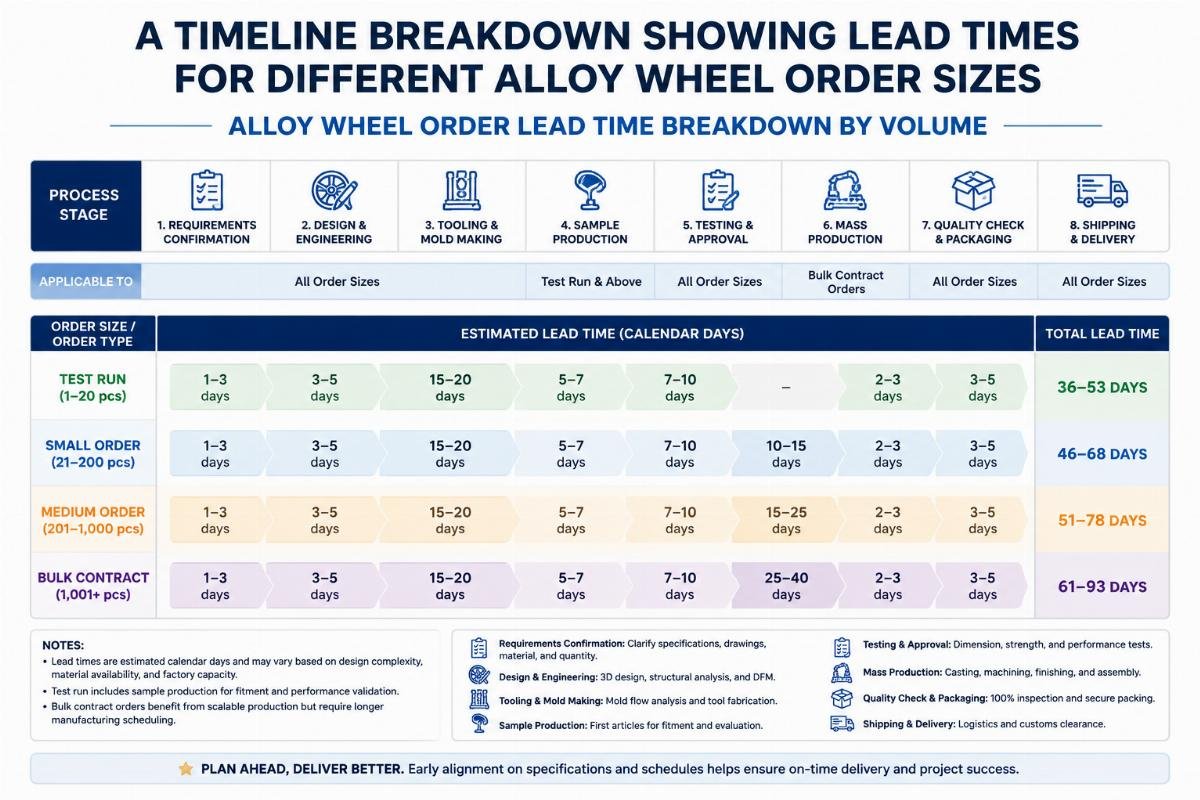
- Order Tier Alignment – Match your order volume to the supplier’s core service tier to avoid paying inflated premiums for underutilized capacity.
- Shipping Route Planning – Confirm delivery lead times include both production and transit, with separate quotes for express, sea and air freight options.
- Inventory Buffer Planning – Add 7 days of buffer time for peak production seasons to avoid unexpected delays to your launch timeline.
How to select the right custom alloy wheel supplier for your business scale?
| Matching supplier production capacity to your order volume eliminates gaps in quality control and pricing flexibility that come from working with mismatched partners. Small custom orders get lost in large OEM-focused factories, while massive annual contracts get delayed by small suppliers with limited production lines. | Business Segment | Common Wrong Supplier Choice | Ideal Supplier Profile |
|---|---|---|---|
| Tuning Shops & E-commerce Sellers | Large OEM-focused factories with high MOQ requirements | Mid-sized specialized manufacturers with low custom MOQ and fast turnaround | |
| Regional Distributors | Small trading companies with no in-house production | Factory-direct partners with private labeling and exclusive territory support | |
| Global OEM Assembly Plants | Small scale manufacturers with limited quality control systems | Suppliers with 10 million+ annual unit capacity and full batch consistency protocols |
A Southeast Asian auto OEM recently signed a 3-year long-term supply agreement for 45,000 standard alloy wheels per year, selecting a supplier with full JWL and DOT compliance that could maintain consistent quality across annual runs without price volatility.
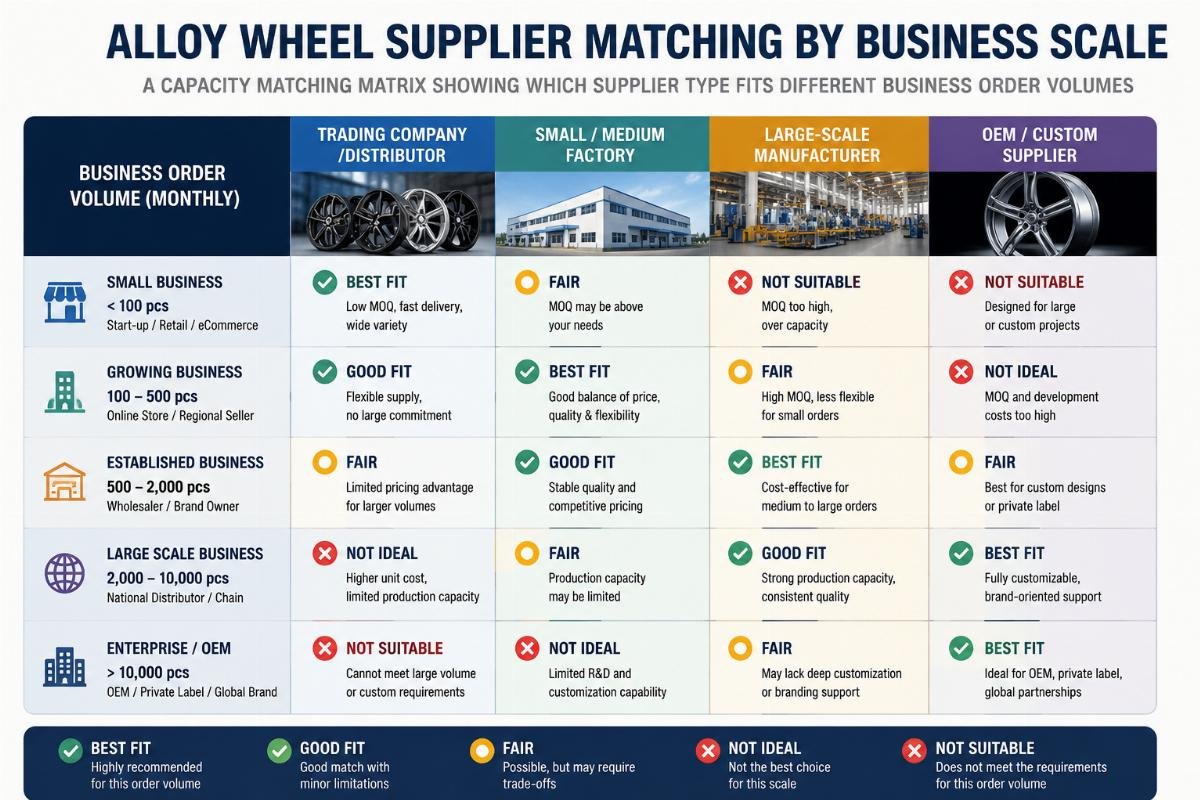
- Capacity Audit – Confirm the supplier’s annual production capacity is 2-3x your projected maximum order volume to avoid bottlenecks.
- Custom Capability Check – Verify the supplier can accommodate your required custom options including finishes, branding and fitment before committing.
- Margin Validation – Compare quoted per-unit pricing against the 40-60% cost reduction baseline for Chinese factory direct sourcing to avoid overpaying.
Conclusion
Running a smooth bulk custom alloy wheel order from a Chinese supplier boils down to pre-order alignment on three core non-negotiables: certification, MOQ and capacity fit. You do not have to accept the tradeoffs of high minimums, long lead times and unvetted quality that many buyers assume come with cross-border sourcing. Qualified suppliers can match the quality standards of EU and JP brands at a fraction of the cost, with flexible terms that work for every business from small tuning shops to large global OEMs. Taking 2 extra days to verify these parameters upfront will eliminate nearly all common order failures and set you up for consistent, margin-positive procurement for years.
