
Buy SUV Alloy Wheels: China Factory Direct Wholesale Supplier
Most buyers think quoting a vehicle model is enough to place an order — until the container arrives at the port and nothing fits.
Buying SUV alloy wheels directly from a China factory can cut sourcing costs significantly compared to trading companies, but only if you verify fitment data from the original wheel nameplate, confirm market-specific certifications before production, and structure trial orders to validate quality before scaling. Skipping any of these steps routinely leads to customs holds, warehouse demurrage, and emergency air freight that wipes out the savings you were chasing.
I still remember a shipment bound for Jeddah — a full container of 20-inch forged SUV wheels. The buyer had measured the PCD themselves, got it slightly wrong, and by the time the wheels reached the warehouse, not a single one mounted properly. That entire container sat in bonded storage for months while we scrambled to produce adapter rings and air-freight them out. The freight bill alone nearly consumed whatever margin the order had generated. After that, I made it a non-negotiable rule: before any quote goes out, the buyer sends photos of the original wheel’s back stamp — vehicle model alone is never enough. [NEED_CITE: common fitment specification errors in aftermarket wheel procurement]
Getting the technical details right is only half the equation — the rest depends on choosing the right sourcing channel and understanding certification requirements for your destination market.
How to Verify SUV Wheel Fitment Before Ordering from China?
The single most reliable method is photographing the original wheel’s back stamp and measuring three critical dimensions: PCD, center bore, and ET offset — never rely solely on a vehicle year-make-model description.
The problem with "I drive a 2022 Toyota Land Cruiser, so I need the matching wheel" is that the same model across different model years, trim levels, or regional specifications can carry entirely different bolt patterns, offsets, and hub diameters. A buyer in the Middle East ordering for a Gulf-spec SUV may receive wheels that physically cannot clear the brake calipers of an African-market variant of the same vehicle. [NEED_CITE: vehicle fitment variation across regional specifications for same model name]
Here is what needs to happen before any production begins:
- Photograph the original wheel’s back stamp. This includes the manufacturer code, size designation (e.g., 18x8J), PCD, ET offset, and center bore diameter. A clear phone photo is sufficient.
- Measure PCD with a caliper or PCD gauge. For 5-lug patterns, measure from the back of one hole to the center of the opposite hole and apply the standard calculation. For 6-lug patterns, measure directly across opposing holes.
- Confirm center bore diameter. If the new wheel’s center bore is larger than the vehicle’s hub, a hub-centric ring solves the issue. If it is smaller, the wheel simply will not mount — no workaround exists.
- Verify ET offset against suspension and caliper clearance. Moving the offset too far outward risks fender rub; too far inward risks caliper contact, especially on larger SUV brake setups.
| Fitment Parameter | What Happens When Ignored | Verification Method |
|---|---|---|
| PCD | Wheel will not mount on hub | Caliper measurement + back stamp photo |
| Center Bore | Vibration if too large, no mount if too small | Direct measurement against hub spec |
| ET Offset | Caliper rub or fender contact | Clearance check with original wheel comparison |
| Wheel Width | Tire stretch or inner liner contact | Compare with OEM width tolerance range |
A modification shop in Dubai once ordered a set of deep-concave SUV wheels based purely on a brochure image and a vehicle model name. When the wheels arrived, the concave profile pushed the mounting surface so far inward that the wheels contacted the brake calipers on the front axle. The entire batch had to be reworked with custom spacers — an expense that could have been avoided with a simple clearance measurement before ordering. [NEED_CITE: brake caliper clearance interference with aggressive offset wheels on SUVs]
The takeaway is straightforward: treat the original wheel’s physical data as the only acceptable source of truth. Brochures, online fitment guides, and even some dealer databases contain errors that compound across regions and model years.
What Certifications Do You Need for SUV Alloy Wheels in Different Markets?
Certification is not optional — it determines whether your shipment clears customs or sits in a bonded warehouse accumulating daily storage fees.
Different markets enforce different wheel certification standards, and the consequences of shipping without the correct paperwork range from delayed clearance to outright seizure. Many buyers discover this only after the vessel has departed, at which point adding the missing certificate means waiting for the next production cycle or paying for costly document amendments. [NEED_CITE: wheel certification requirements by import market region]
Here is how the major certification frameworks map to destination markets:
| Certification | Primary Market | What It Covers | Consequence of Missing |
|---|---|---|---|
| JWL / VIA | Japan, Middle East, SE Asia | Structural integrity, dynamic fatigue, impact resistance | Customs hold, buyer rejection |
| DOT | United States, Latin America | Compliance with FMVSS standards for wheel strength | Import denial at port of entry |
| TÜV | Germany, broader EU | Full vehicle-wheel system compatibility testing | Registration refusal, liability exposure |
| ISO 9001 | Global (factory-level) | Quality management system audit | Limits buyer confidence, not a product cert |
| CCC | China domestic market | Mandatory for wheels sold within China | Not relevant for export, but signals factory capability |
A wholesale distributor in Doha was preparing a large OEM-branded order for regional distribution. The factory had ISO certification and could produce the wheels to spec, but the buyer’s customs broker flagged that the destination country required VIA-marked wheels for aftermarket imports. The production timeline extended by several weeks while the factory arranged third-party testing and certification stamping. The delay was manageable because it was caught before production — but had the wheels shipped without the mark, the entire container would have been held at port. [NEED_CITE: VIA certification process timeline for aftermarket alloy wheel exports]
The practical lesson: confirm certification requirements with your local customs broker before placing any order, not after. Factories that hold multiple certifications — including JWL, VIA, TÜV, and DOT — can serve diverse markets from a single production base, but you must specify which marks are needed at the quotation stage. Adding certification after production begins is always more expensive and slower than building it into the original order.
China Factory Direct vs Trading Company: Price and MOQ Comparison
Sourcing directly from a China factory typically delivers substantially lower per-piece pricing and more flexible minimum order quantities — provided you can verify the factory’s certifications and production capabilities independently.
Trading companies add a margin layer that compounds across the supply chain. For buyers ordering container-load quantities, this margin translates into a meaningful cost difference per wheel. However, the lower price from a factory only matters if the factory can actually produce to the required certification standards and maintain batch consistency. A cheap wheel that fails customs inspection costs far more than a slightly pricier wheel that clears without issue. [NEED_CITE: cost structure comparison factory direct vs trading company alloy wheel export]
Here is how the two channels typically compare across key procurement dimensions:
| Procurement Factor | Direct Factory | Trading Company |
|---|---|---|
| Per-Piece Pricing | Noticeably lower — no intermediary margin | Higher — includes trading margin |
| MOQ Flexibility | Often accepts small-batch custom orders | Usually requires larger standard orders |
| Certification Authenticity | Verifiable directly with issuing body | Must be trusted at face value |
| Custom OEM/ODM Capability | Full control over tooling and finish | Limited to existing factory catalog |
| Lead Time for Custom Orders | Controlled by factory production schedule | Dependent on factory’s priority allocation |
| Communication Complexity | Direct technical dialogue possible | Information passes through intermediary |
A wholesale buyer in Latin America was comparing quotes for an OEM-branded SUV wheel order. The trading company’s quote was noticeably higher per piece, but the trading company promised faster delivery because they "already had relationships with multiple factories." When the buyer requested proof of TÜV certification for the specific wheel design, the trading company could not provide it — the factory they planned to use had not undergone TÜV testing for that particular model. The direct factory, by contrast, provided the TÜV test report within days because their production line was already certified for that design family. The buyer went with the direct factory and avoided a certification gap that would have caused problems at the destination port. [NEED_CITE: certification documentation availability direct factory vs trading company]
The critical point: price advantage only becomes real savings when the factory’s certifications are genuine and verifiable. Request test reports, not just certificates — test reports show the actual data from the testing laboratory, while certificates can sometimes be presented without full supporting documentation.
Common Fitment Mistakes When Buying SUV Wheels from China
PCD mismatch, incorrect ET offset, and center bore incompatibility account for the overwhelming majority of fitment failures — and all three are preventable with pre-order verification.
These mistakes are not rare edge cases. They recur across markets and buyer types because the information-gathering step is often treated as optional rather than foundational. Understanding where things go wrong helps build a procurement process that catches problems before production starts.
PCD errors are the most common. Buyers often assume that because two vehicles share the same number of lug nuts, they share the same bolt circle. This is false. A 5-lug pattern can be arranged on multiple different circle diameters, and even a small deviation means the wheel will not seat against the hub. The fix is simple — measure and confirm — but it is routinely skipped.
ET offset errors are the second most common, particularly with larger-diameter SUV wheels. Buyers upgrading from 18-inch to 20-inch or 22-inch wheels often do not account for how the offset interacts with the wider wheel width. The result is a wheel that either rubs against the inner suspension components or protrudes beyond the fender line. On SUVs with large brake calipers — common in luxury and performance-oriented models — an incorrect offset can cause the wheel spoke to contact the caliper directly. [NEED_CITE: SUV wheel offset and brake caliper clearance interference patterns]
Center bore mismatches are the third common failure. If the wheel’s center bore is smaller than the vehicle hub, the wheel physically cannot mount. If it is larger, the wheel will mount but will not be hub-centric, leading to vibration at speed. Hub-centric rings can resolve a larger center bore, but they add cost and a potential failure point if not sized precisely.
| Mistake Type | Root Cause | Prevention |
|---|---|---|
| PCD mismatch | Assumption based on lug count alone | Physical measurement + back stamp photo |
| ET offset error | Upgrade in diameter without offset recalculation | Clearance comparison with OEM wheel |
| Center bore mismatch | No measurement against vehicle hub spec | Direct hub diameter measurement |
A tire shop chain in Southeast Asia ordered a batch of popular-fitment SUV wheels for their retail locations. They specified the vehicle models correctly but did not verify the center bore. When the wheels arrived, a significant portion had a center bore that was slightly too small for the hubs of the local-market SUVs they served. The wheels could not be returned easily, and the shop had to machine the center bores locally — a process that voided any structural warranty and introduced quality inconsistency across their inventory. [NEED_CITE: center bore machining impact on wheel structural integrity and warranty]
How to Structure Your First Order with a Chinese Wheel Factory
Start with a small trial order to validate product quality, packaging integrity, and documentation accuracy — then scale only after the trial shipment clears customs and passes end-user inspection without issues.
Jumping straight into a full container order with a new factory is a risk that experienced buyers avoid. The trial order serves multiple purposes: it tests the factory’s production consistency, reveals whether the packaging can withstand ocean freight, and confirms that all customs documentation — commercial invoice, packing list, certificate of origin, and certification copies — is accurate and complete. [NEED_CITE: trial order best practices for alloy wheel import procurement]
The recommended structure for a first order follows a clear sequence:
- Request samples or a small-batch production run. Most factories producing SUV alloy wheels can accommodate small quantities for custom designs and offer stock models with even lower thresholds. Use this batch to verify finish quality, weight consistency, and dimensional accuracy against your specifications.
- Validate all certification documents before bulk production. Confirm that the test reports match the specific wheel design you are ordering — not a similar design from the factory’s catalog. Mismatched certification documentation is a frequent cause of customs delays.
- Confirm packaging specifications. Ocean freight for wheels demands robust packaging — typically individual cardboard dividers plus palletized stacking with edge protection. Request photos of the packing method before the full order ships.
- Place the bulk order only after trial shipment clearance. Once the trial batch has cleared your destination country’s customs without holds or additional inspection requirements, you have confirmation that the documentation and product compliance are in order.
A modification shop in the Gulf region wanted to offer a custom deep-concave SUV wheel design under their own brand. They started with a small trial batch — just a few dozen pieces across multiple fitments — to test market response and validate the factory’s ability to deliver consistent finish quality and accurate fitment data. The trial batch arrived with all documentation correct, the finish matched the approved sample, and the fitment data was precise across every size. Satisfied with the results, they scaled to regular orders and eventually moved to full container-load quantities with OEM branding. [NEED_CITE: small-batch trial order validation for custom alloy wheel branding]
The principle is simple: de-risk the relationship before committing significant capital. Factories that are confident in their product quality and documentation will welcome a trial order — it demonstrates a serious buyer who plans to scale, not a one-time purchaser looking for the cheapest possible price.
Conclusion
Successful SUV wheel procurement from China depends on three non-negotiable foundations: verified fitment data from original wheel stamps, confirmed market-specific certifications before production, and a structured trial order before volume commitment.
Buyers who treat these steps as optional routinely pay for the lesson through customs holds, fitment failures, and emergency logistics costs. Those who build them into their standard procurement process consistently secure factory-direct pricing with reliable quality and smooth clearance — turning what could be a risky transaction into a repeatable, profitable sourcing channel.
Related Applications
Parts in This Article
Products mentioned above
 01
WHEEL RIM/HUB
Llantas de aleación para SUV: Eficientes en combustible, Duraderas, Cómodas
View Specifications 02
WHEEL RIM/HUB
Ruedas de aleación forjadas personalizadas de SUV todoterreno en verde esmerilado
View Specifications 03
WHEEL RIM/HUB
Ruedas de aleación de SUV Off Road negras 17X9 6X139.7 llantas de aluminio
View Specifications 04
WHEEL RIM/HUB
Rin de aleación de aluminio A356.2 para SUV de 15 pulgadas plateado personalizado
View Specifications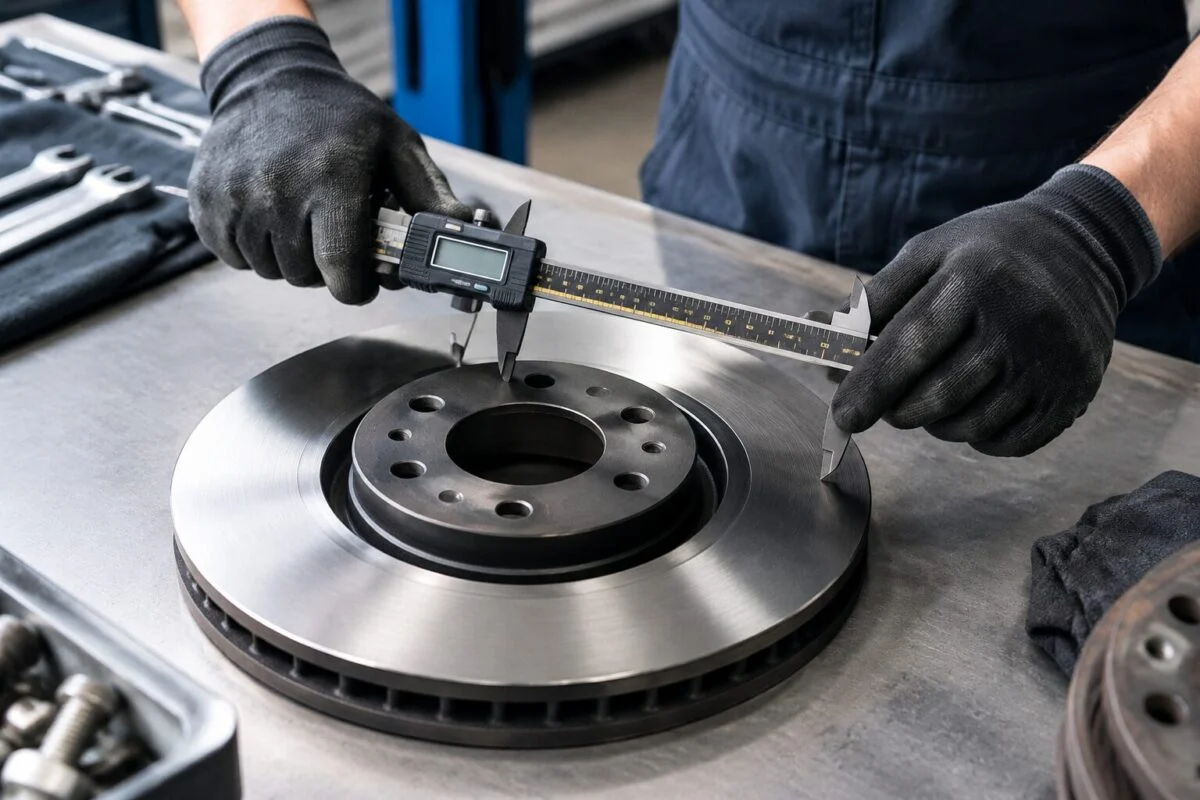
OE Fitment Check
Not sure it fits? Send us the OE number and we'll check it.
Jinan Yoker Auto Parts matches brake discs, drums, radiators, A/C condensers and wheel rims by OE number, vehicle model and year, PCD, ET and CB, so the parts fit before they ship.
- Factory-direct quote within 24 hours
- Free samples before bulk orders
- 10% off first order for new buyers (terms apply)
- Condenser MOQ from 10 PCS
Keep Reading
Related guides on auto parts sourcing

Buying Guide · · 9 min read
Alloy Wheels Price in USA: 2026 Wholesale Supplier Guide
Navigate US alloy wheel wholesale prices by mastering cost drivers beyond rim size. Discover how manufacturing process, DOT certification, and hidden fees like tooling…
Read the Guide
Buying Guide · · 10 min read
Alloy Wheels Price in UK: 2026 Wholesale Supplier Guide
Navigate the 2026 alloy wheels price UK market by understanding how surface finish and certification drive costs more than diameter. Discover why factory-direct sourcing…
Read the Guide
Buying Guide · · 13 min read
Alloy Wheels Price in Canada: 2026 Wholesale Supplier Guide
Stop relying on low FOB quotes that hide hidden costs. This 2026 guide breaks down the real alloy wheels price Canada buyers pay, covering…
Read the Guide