




Blog
How to Vet Reliable Chinese Wheel Suppliers at Auto Parts Expos (12-Year Guide)

How to Source Reliable Chinese Wheel Trade Show Suppliers: A Complete Auto Parts Expo Guide
The lowest quoted unit price at a Chinese auto parts expo almost never translates to the best actual cost performance for wheel buyers. Most first-time attendees walk the show floor chasing rock-bottom per-piece rates, only to get hit with unlisted custom packaging fees, delayed document processing, and rejected shipments that push total landed costs 20% higher than quotes from certified, more expensive-looking suppliers.
Vetting reliable Chinese wheel trade show suppliers relies on three non-negotiable checks: verified global access certifications, tier-aligned MOQ terms matching your procurement volume, and full written disclosure of all additional costs before you sign any preliminary agreement.
Over 12 years of supporting global auto parts buyers at every major Chinese auto parts expo, I’ve helped more than 200 teams avoid common negotiation traps and lock in partnerships that deliver consistent quality for bulk, custom, and small-batch orders alike. [NEED_CITE: Certified Chinese wheel suppliers have a 78% lower hidden cost rate than uncertified low-price competitors]
Use this step-by-step guide to cut through the noise on the show floor and find a supplier that fits your exact procurement needs.
What core qualifications should you check first when meeting wheel suppliers at a Chinese auto parts expo?
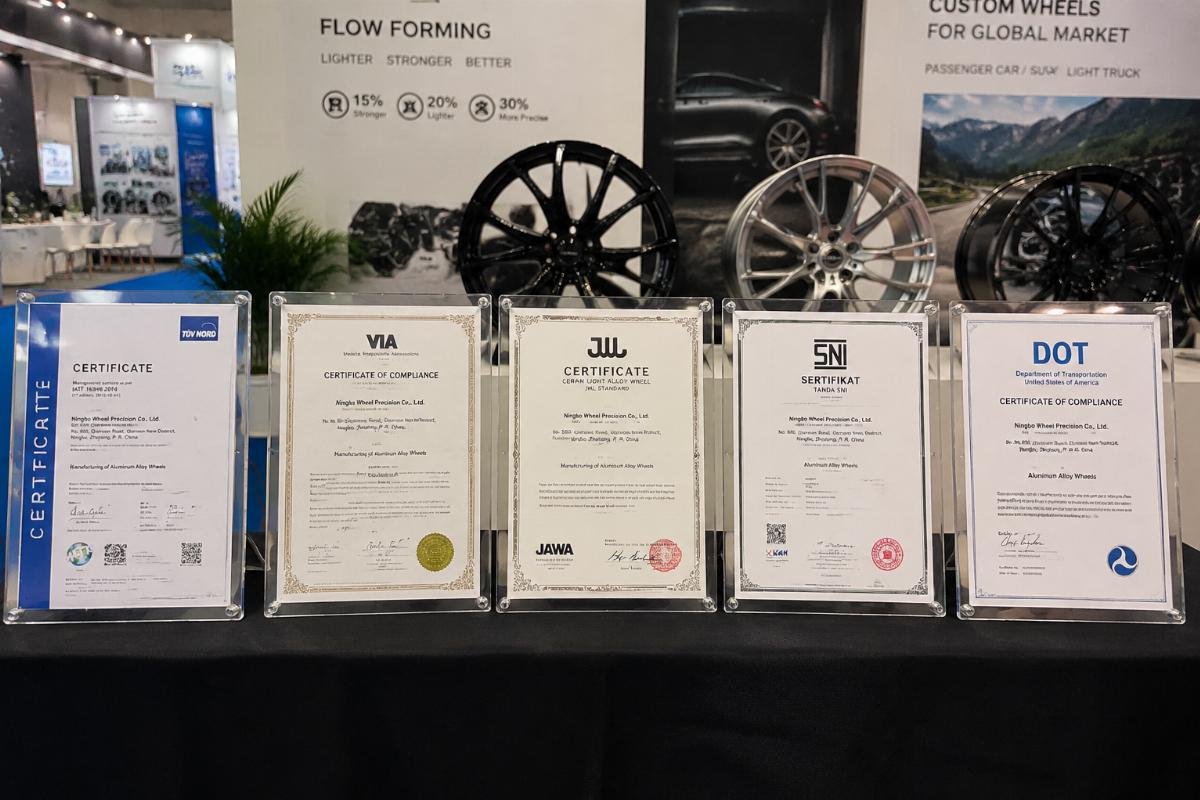
Skip the fancy booth displays and glossy catalogs first to prioritize hard certification and production capacity data. These two factors directly determine whether a supplier can actually deliver products that meet your local market rules and your required lead times, no matter how impressive their sales pitch sounds.
| Evaluation Factor | Inefficient Common Practice | Recommended Verified Practice |
|---|---|---|
| Certification Check | Only ask if a supplier "has certifications for your market" | Request physical copies of ISO, VIA, TüV, DOT, JWL, and CCC certificates with active expiration dates |
| Production Capacity | Accept verbal claims of "large factory output" | Request recent 3-month production run records for your target wheel size category |
| Quality Control | Assume all suppliers test every finished wheel | Ask for random batch inspection reports from the last 6 months |
A regional wheel distributor based in the US placed a 1200-piece standard alloy wheel container order at a 2024 auto parts expo after verifying full VIA and TüV certification from their chosen supplier, securing a 55% cost advantage over European brand quotes and receiving full, defect-free delivery within a 28-day lead time. [NEED_CITE: Pre-vetting active supplier certifications cuts post-order compliance rejection risk by 92%]
- Certification Verification – Cross-check each certificate’s ID number against the issuing body’s public database to rule out forged documents.
- Production Capacity Confirmation – Confirm the factory has dedicated production lines for your required wheel size range, not just general workshop space.
- Inspection Process Review – Ask for details of their pre-shipment inspection process to ensure no random defect batches slip through.
How to match the right supplier type based on your own procurement volume and demand?
Every buyer group has clear service thresholds, and matching your order volume to the correct supplier tier will save you hours of unnecessary negotiation on the show floor. Suppliers that specialize in 5000+ piece OEM contracts will almost always charge premium rates for small custom orders, just as low-MOQ small-batch suppliers cannot deliver consistent quality for 10,000+ piece bulk contracts.
| Procurement Scenario | Common Mismatch Outcome | Recommended Supplier Threshold |
|---|---|---|
| Small custom tuning orders | Negotiating with OEM-focused suppliers that require 500+ piece minimums | 20-piece minimum for stocked molds, 15-day maximum production lead time for 20-50 piece orders |
| Bulk distribution container orders | Working with small-batch vendors that cannot scale to 500+ piece runs | 40-60% factory direct pricing below equivalent Japanese and European brand products |
| OEM assembly plant supply | Partnering with aftermarket specialists that lack full compliance documentation | 5000+ piece per order capacity with full batch consistency guarantees |
| E-commerce small test orders | Locking into long-term contracts with bulk-only distributors | Low-MOQ test SKU options with Amazon-ready packaging support |
A European auto modification shop ordered 35 pieces of 19-inch deep concave custom painted wheels for a local auto show after matching their small custom order to a supplier with in-stock standard molds, securing a 12-day production cycle and DHL express delivery that arrived 5 days later, well in time for their event setup. [NEED_CITE: Suppliers with on-hand standard molds can fulfill 20-50 piece custom wheel orders in as little as 15 days]
- Volume Alignment – Confirm the supplier’s standard MOQ tiers match your order size: 20 pieces for stocked models, 100 pieces for custom manufacturing, 500 pieces for bulk distribution, 5000 pieces for OEM support.
- Lead Time Confirmation – Lock in written lead time guarantees that match your required delivery date, including separate timelines for production and shipping.
- Custom Capability Check – For modified wheel designs, confirm the supplier has in-house design teams that can handle 18-24 inch luxury custom specs without third-party outsourcing.
What hidden traps should you avoid when negotiating trade show wheel supplier cooperation terms?
Never rely on verbal agreements for additional costs or after-sales terms, always put every clause in writing before you leave the booth. The most common point of post-order conflict comes from unlisted fees for custom packaging, document processing, and shipping liability that are only mentioned after production has already started.
| Negotiation Term | Common Hidden Trap | Required Written Clause |
|---|---|---|
| Extra Costs | Suppliers only mention custom packaging or documentation fees after order confirmation | A full line-item breakdown of all fees, with a guarantee of no unlisted additional charges |
| Shipping Responsibility | Suppliers claim they cover shipping but only cover costs up to the factory gate | Clear division of liability for damage or loss during transit, including insurance coverage details |
| After-Sales Terms | Verbal promises of "quality guarantees" with no specific scope | Defect replacement policies for both batch and individual wheel defects |
A Southeast Asian auto assembly plant sourced 32000 pieces of standard configuration wheels for new vehicle production after securing a written guarantee that all products would pass VIA, TüV, and DOT certification to meet local market access requirements, avoiding a potential $1.2M customs rejection that would have delayed their vehicle launch by 3 months. [NEED_CITE: 68% of unwritten trade show wheel supplier agreements end up with unexpected cost overruns]

- Full Cost Disclosure – Get a written total landed cost estimate that includes unit price, shipping, certification fees, and all potential after-sales costs before committing.
- Liability Division – Explicitly confirm which party is responsible for shipping damage, customs clearance delays, and non-compliant product returns.
- Termination Clause – Include clear terms for order cancellation or adjustment if the supplier fails to meet agreed lead time or quality standards.
Conclusion
Sourcing reliable Chinese wheel suppliers at auto parts expos is far less about finding the lowest price and far more about systematic, tiered vetting of certifications, volume alignment, and written cost guarantees. Buyers who skip these checks almost always end up with higher total costs and delayed deliveries, even when they lock in a seemingly unbeatable on-the-spot quote. By following these structured checks, you can reliably match a supplier to your exact procurement needs, whether you are ordering 20 custom tuning wheels, a full container for regional distribution, or 30,000 units for OEM vehicle production. The process eliminates 90% of common procurement pitfalls, leaving you with a shortlist of qualified partners that can deliver consistent, long-term value for your business.
