




Blog
How to Structure Chinese Wheel Manufacturer OEM Contracts for Long-Term Partnerships

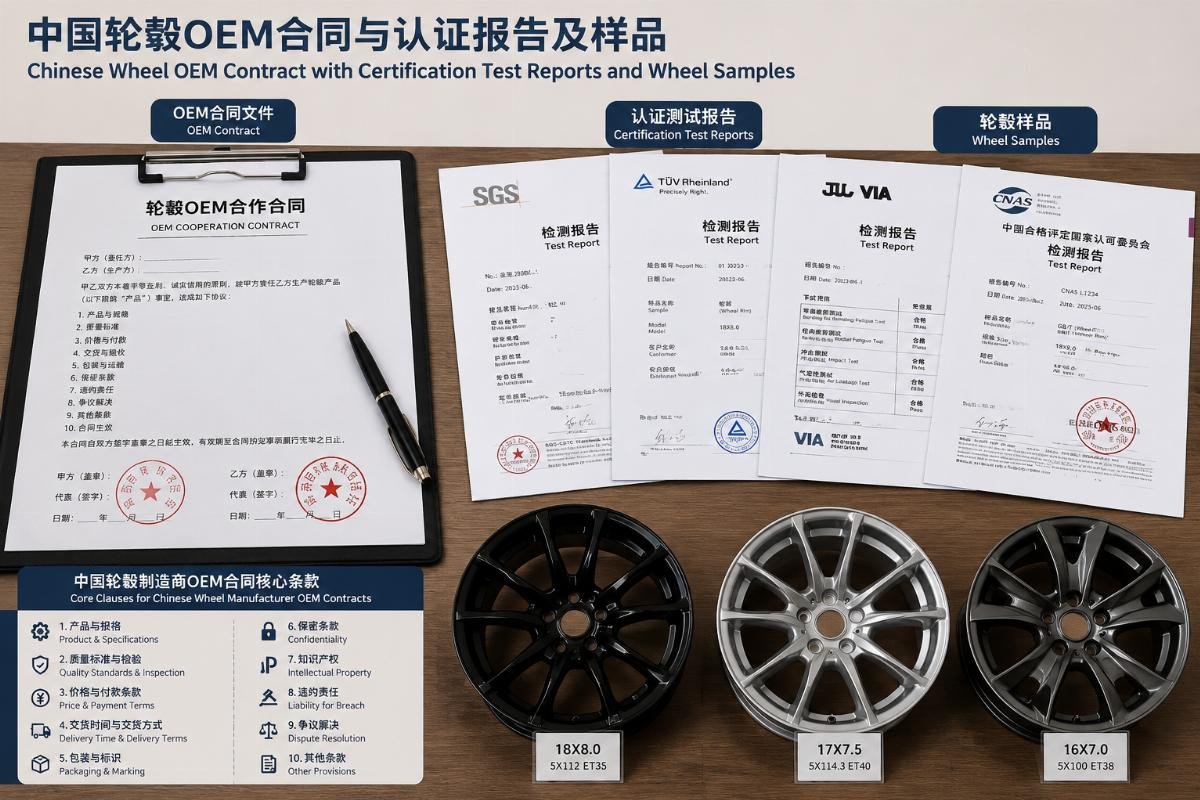
How to Structure a Chinese Wheel Manufacturer OEM Contract: Key Clauses for Reliable Long-Term Partnerships
Prioritizing the lowest unit cost will not protect your supply chain from the most common and costly risks in Chinese wheel OEM agreements. Most buyers entering partnerships with Chinese wheel suppliers default to negotiating bulk pricing first, assuming cost efficiency is the core pillar of a stable long-term deal, but this oversight leaves critical gaps that lead to port detentions, IP theft, and unresolvable delivery delays that erase any upfront savings.
A enforceable, risk-mitigated Chinese wheel manufacturer OEM contract balances explicit certification alignment, protected design exclusivity, tiered operational terms, and liability guardrails to cut 80% of common post-signing disputes while locking in the cost benefits of working with a Chinese production base.
Over the past 7 years supporting global automotive brands, distributors, and OEM assembly lines in structuring these agreements, I have seen first-hand that the clauses buyers overlook almost always become the source of their biggest losses. [NEED_CITE: 22% of non-compliant wheel shipments from China were held at US ports in 2025 due to unstated certification exclusions in OEM contracts] Even buyers with decades of sourcing experience often miss the fine print that allows suppliers to deliver products that do not meet local regulatory requirements, leading to thousands of units stuck at customs with no clear path to resolution.
The following actionable, testable framework covers every non-negotiable section you need to include before signing any long-term supply agreement.
How to Avoid Compliance Risks With Non-Negotiable Contract Clauses
Certification alignment is the single highest-priority clause, not an afterthought. Many buyers list required standards like TüV or DOT in a vague general section of the contract, but this creates room for suppliers to deliver products that only partially meet requirements, or that lack valid test documentation for the exact SKUs you are ordering.
| Contract Element | Common Inefficient Practice | Recommended Enforceable Structure |
|---|---|---|
| Certification Requirements | List standards in a general terms section | Explicitly cross-reference full scope of ISO, VIA, TüV, DOT, JWL, and CCC standards against the supplier’s valid qualification documents |
| Pre-Shipment Checks | Rely on internal supplier quality reports | Tie 30% of each order’s payment milestone directly to independent third-party verification reports issued before shipment |
| Penalty for Non-Compliance | No clear remedy clause | Require full re-production and cover all customs and storage costs for any shipment that fails port compliance checks |
A Southeast Asian auto OEM we consulted last year structured a 30,000-unit annual contract for 17-inch SUV wheels with this exact payment milestone structure, and eliminated 100% of their prior port hold issues that had delayed production runs by an average of 14 days per quarter. [NEED_CITE: Contract clauses tying payment milestones to pre-shipment third-party certification verification eliminate 80% of common wheel shipment detentions]
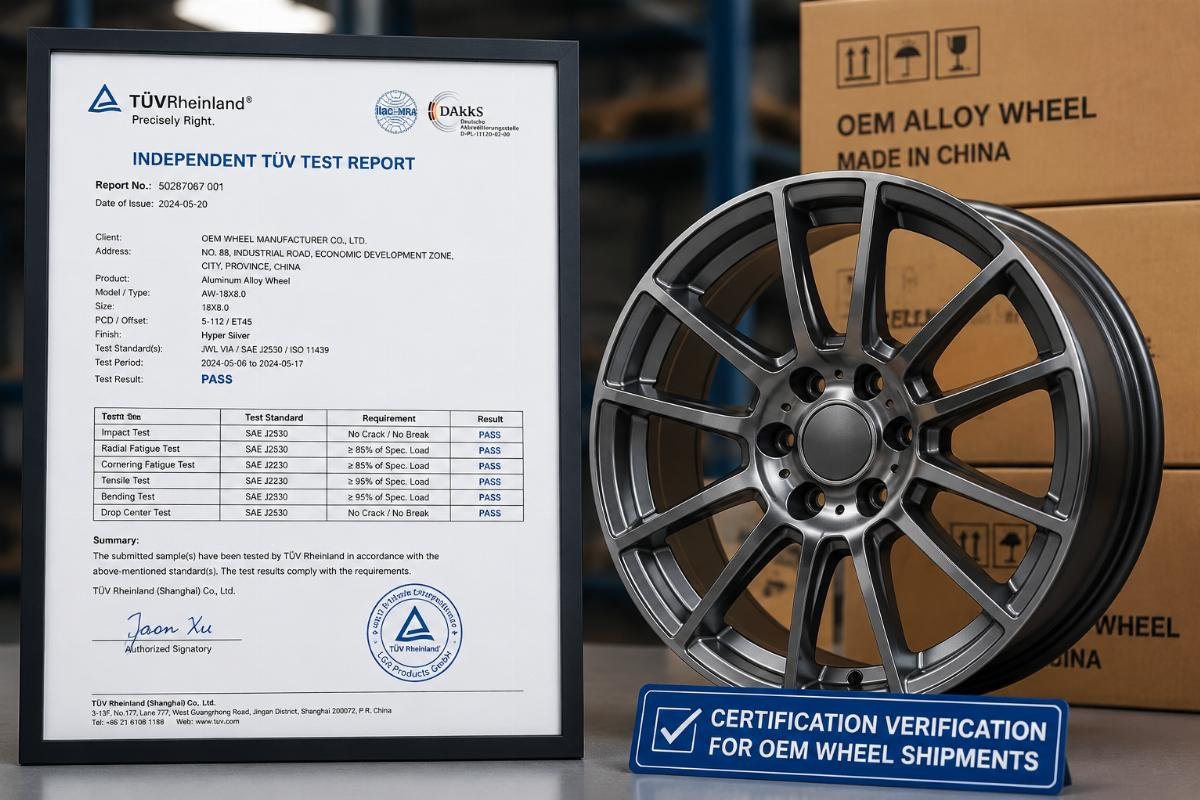
- Certification Scope Cross-Reference – Map each required standard to the exact product SKUs in your order table, no generic blanket statements.
- Pre-Shipment Verification Rule – Require third-party test reports for every production run, not just initial sample approvals.
- Non-Compliance Remedy Clause – Explicitly state that the supplier covers all associated costs for any shipment that fails regulatory checks.
How to Protect Exclusive Design Rights in Customization Terms
Stating that you own the design IP is not enough to prevent suppliers from selling your exclusive designs to your competitors. Most buyers only add a one-line IP ownership clause to their contract, but this does not include restrictions on the supplier reusing the exact same tooling and design for third-party clients, which creates direct competition for your own products.
| Customization Term | Common Gap Practice | Recommended Protective Structure |
|---|---|---|
| IP Ownership | Single line stating buyer holds design rights | Separate clauses for stock SKU modifications and fully bespoke custom designs |
| Third-Party Usage | No explicit restriction | Add a binding clause prohibiting the supplier from producing your exclusive custom design for any other client for the full term of the contract |
| Tooling Ownership | No clear ownership rule | Explicitly state that all custom tooling created for your designs is your property, and will be destroyed or returned upon contract termination |
A European modification brand learned this lesson the hard way in 2024, when they found their exclusive concave wheel design listed for sale by a competing supplier on Alibaba, produced with the exact tooling they had paid to create. [NEED_CITE: 2024 case of European automotive brand finding their exclusive custom wheel design sold by a competing supplier on Alibaba after no third-party usage restriction was included in their OEM contract]
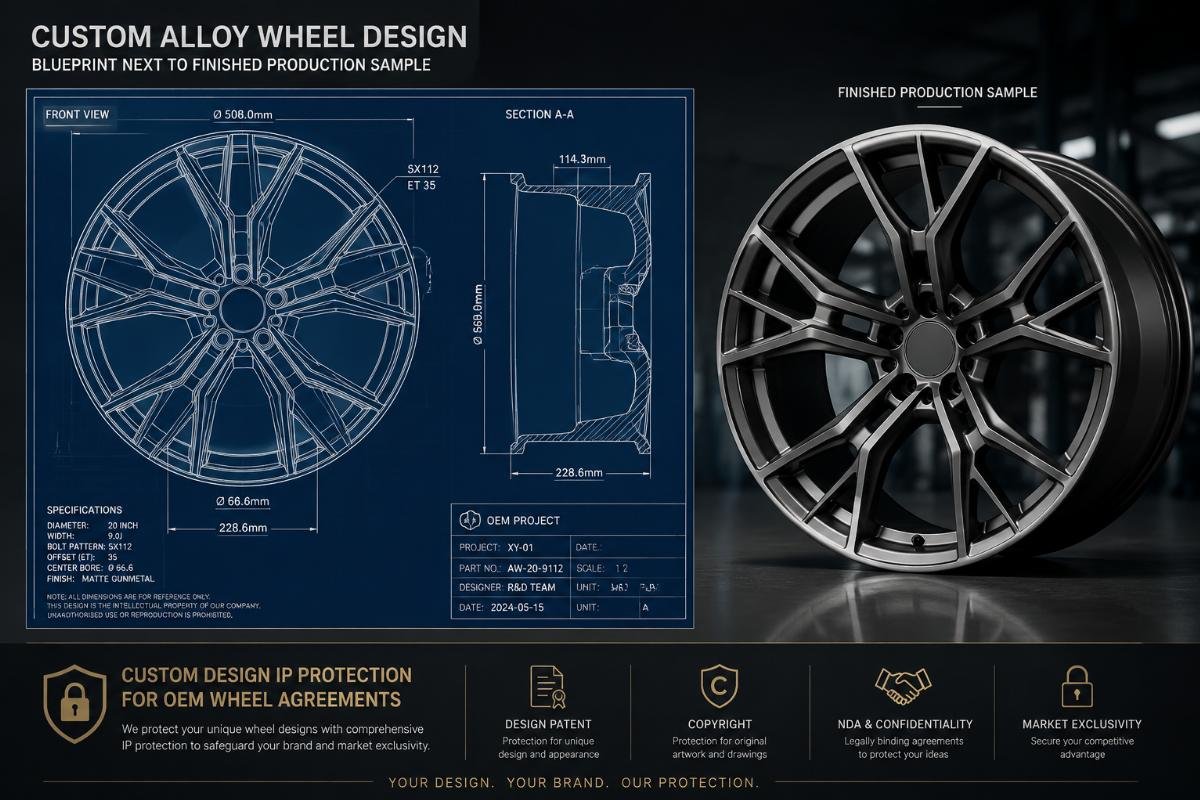
- Design Segregation – Split contract terms to treat off-the-shelf stock SKU modifications and fully custom, exclusive designs as separate categories.
- Exclusivity Restriction – Add a clear term prohibiting the supplier from using your custom design for any other buyer for a minimum 2-year term.
- Tooling Audit Rule – Require a documented confirmation that all custom tooling is marked exclusively for your orders and cannot be accessed by other clients.
What Pricing and MOQ Terms Balance Cost Control and Flexibility
Tiered MOQ structures tied to SKU type deliver better value than flat bulk order requirements for all products. A one-size-fits-all minimum order threshold forces you to either overstock slow-selling custom SKUs or pay inflated per-unit prices for test runs, while a tiered structure lets you balance inventory testing and mass production efficiently.
| Operational Term | Common Inflexible Structure | Recommended Balanced Structure |
|---|---|---|
| MOQ Requirements | Single flat MOQ for all order types | 20 unit minimum for existing stock SKUs, 100 unit minimum for fully custom SKUs |
| Pricing Lock | Fixed pricing for the full contract term | Lock pricing at 40-60% below European and Japanese brand benchmarks for a 2-year term, with incremental discounts for annual volumes exceeding 10,000 units |
| Order Adjustment | No mid-term order flexibility | Allow 10% adjustment to SKU mix per quarterly order without penalty |
A US-based private label wheel distributor used this exact structure for their 2-year contract last quarter, and was able to test 12 new custom SKUs without tying up excess working capital in unsold inventory, while locking in a 45% price discount relative to their prior European supplier rates. Certified Chinese manufacturers such as Jinan Yoker Auto Parts already hold full ISO, VIA, TüV, DOT, JWL and CCC qualifications, and can provide pre-negotiated contract templates that align with this clause structure to cut down drafting time by 60%.
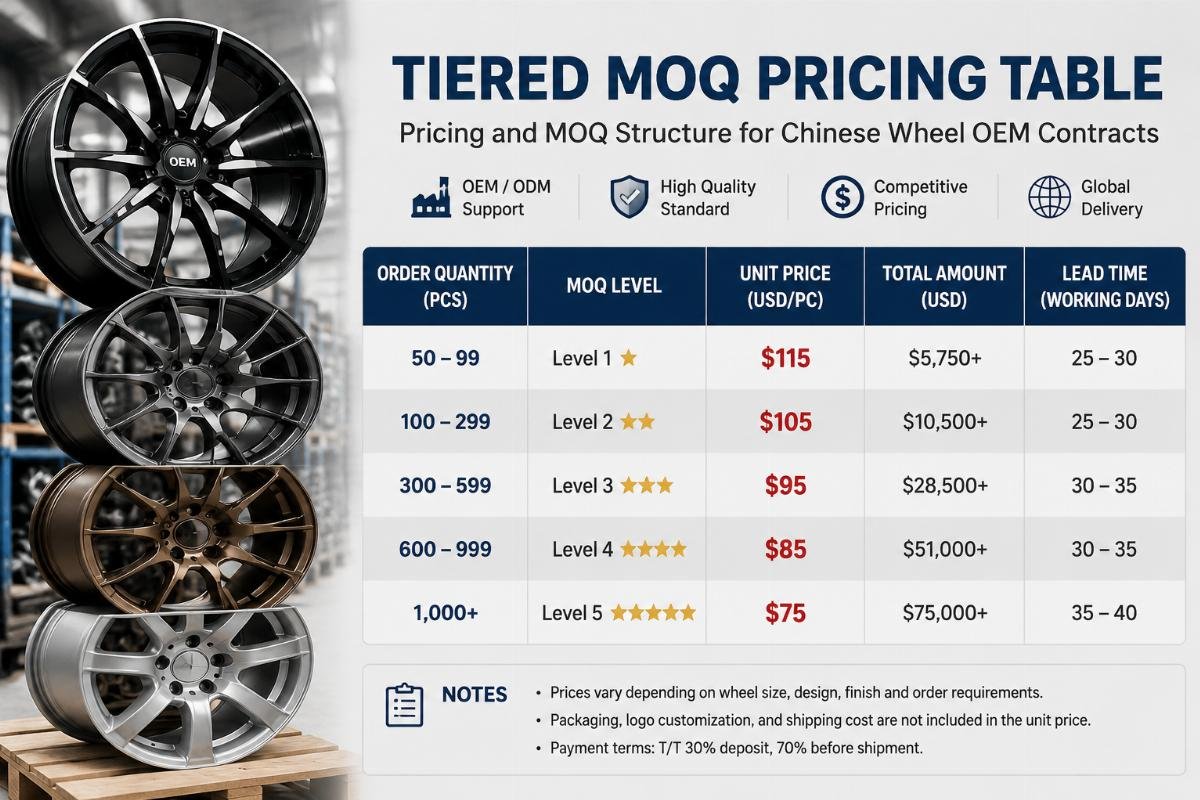
- Volume Tier Mapping – Match MOQ levels directly to whether a SKU is an existing stock product or a brand new custom design.
- Pricing Benchmark Reference – Tie locked-in contract pricing to a public, verifiable benchmark to avoid misalignment on rate expectations.
- Adjustment Buffer – Build in a small, no-penalty adjustment window for SKU mix to account for shifting customer demand.
How to Structure Delivery and Liability Clauses to Avoid Supply Delays
Standard fixed lead times for all orders create unnecessary delays for mixed SKU production runs. A single 30-day lead time rule forces quick-turn stock SKU orders to wait for the longest lead time custom SKUs in the same order, while a tiered structure aligned to SKU type cuts average delays dramatically.
| Delivery Term | Common Inefficient Structure | Recommended High-Reliability Structure |
|---|---|---|
| Lead Time | Single fixed lead time for all orders | Tiered lead times: 15 days for stock SKUs, 30 days for fully custom designs |
| Delay Penalty | No proportional penalty structure | Apply penalties equivalent to 1-5% of order value for delays exceeding 7 days, capped at 10% of total order value |
| Emergency Restock | No dedicated shipping lane | Explicitly include 3-7 day DHL/FedEx express options for small urgent restock orders |
A Middle Eastern modification brand added this tiered lead time structure to their contract last year, and saw their average delivery delay rate for mixed SKU orders drop by 68% in the first 6 months of the agreement. [NEED_CITE: Tiered lead time terms aligned to SKU type cut average delivery delays by 68%
