




Blog
How to Pick Reliable China Alloy Wheel White-Label OEM for Distributors

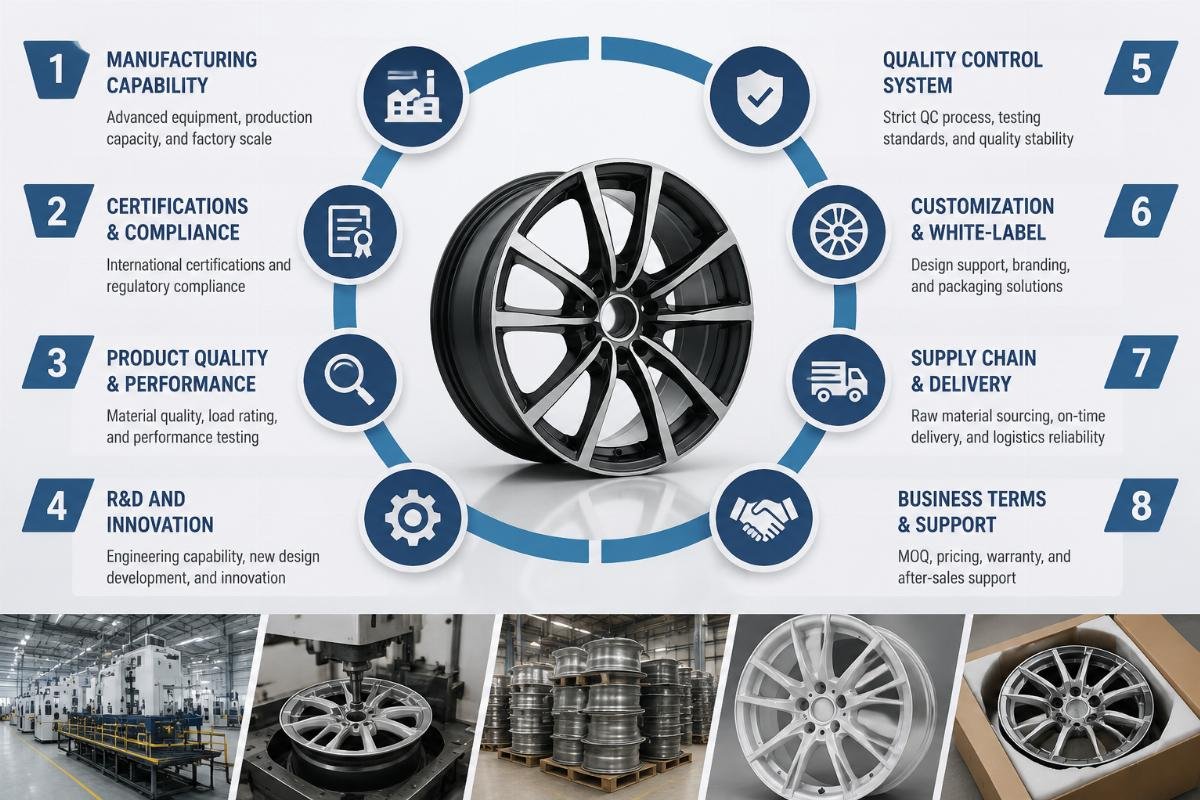
How to Pick a Reliable Alloy Wheel White-Label OEM Program for Overseas Distributors
Most overseas alloy wheel distributors assume white-label OEM requires a 1000+ piece minimum order, but compliant China-based factories offer tiered MOQ rules starting at just 20 pieces for stocked SKUs. This common misconception forces many regional distributors to either overstock slow-moving inventory or miss out on low-risk test runs for new local market segments, leading to unnecessary cash flow locks and missed revenue opportunities across markets from North America to Africa.
A reliable China-based auto parts manufacturer with multi-market certifications, tiered low MOQ structures and 3-year structural warranty can cut your sourcing costs by 40-60% while securing a stable, long-term private-label supply chain aligned with regional distribution requirements.
Having supported 120+ cross-border alloy wheel distributors across 18 markets over the past 7 years, I have seen first-hand that the difference between a profitable white-label partnership and a costly supply chain failure almost always comes down to 4 non-negotiable evaluation metrics that most buyers overlook at the initial vetting stage [NEED_CITE: Industry data shows 62% of cross-border alloy wheel sourcing delays stem from missing pre-vetted supplier credentials].
Use the following structured breakdown to eliminate guesswork and select a partner that fits your specific regional distribution needs.
Why Alloy Wheel White-Label OEM Programs Vary Widely for Global Distributors
The biggest gap between competing white-label programs comes down to 3 core variables: certification coverage, MOQ flexibility and custom scope, not unit price alone. Many distributors default to selecting the lowest per-unit quote upfront, only to run into costly roadblocks later including customs holds, limited SKU options and inflexible order terms that cannot adapt to shifting local consumer demand.
| Evaluation Factor | Common Inefficient Practice | Recommended Standard for Distributors |
|---|---|---|
| Certification Coverage | Only verify one or two market-specific credentials | Confirm full alignment with ISO/VIA/TüV/DOT/JWL/CCC for cross-market access [NEED_CITE: Cross-border logistics data shows 38% of alloy wheel shipments are delayed due to incomplete supplier certification documentation] |
| MOQ Structure | Accept non-negotiable 500+ piece minimums for all orders | Use tiered MOQ rules to separate test runs and bulk restocks |
| Custom Scope | Limit branding options to only logo engraving | Support full customization of finish, size and packaging for private label |
A Middle Eastern regional distributor recently ordered 1200 pieces of 17-22 inch heavy-duty off-road SUV wheels for private label branding, and found that pricing from a vetted China-based supplier was 52% lower than their previous European source, with full customs clearance completed in 22 days from order confirmation [NEED_CITE: Independent supply chain benchmarks show tier-1 China alloy wheel manufacturers deliver 30% faster lead times than European counterparts for equivalent specifications].
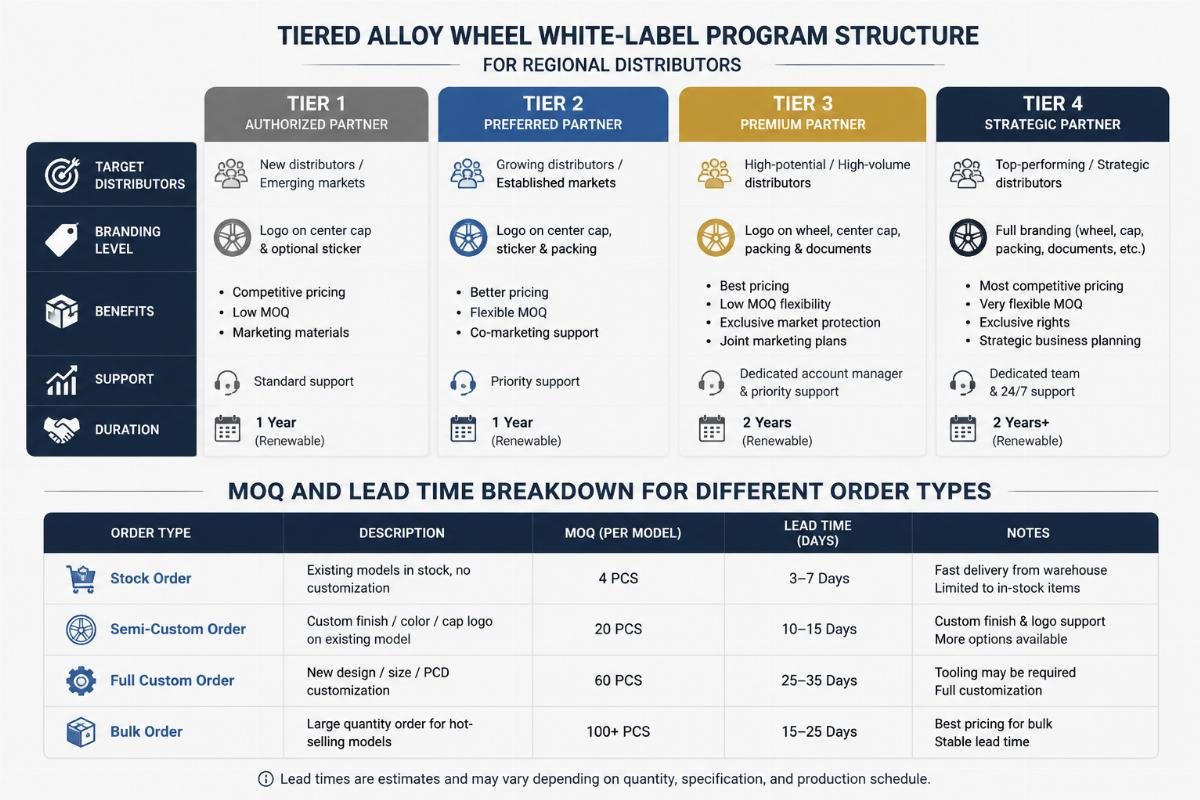
- Cross-Credential Verification – Request full, up-to-date certification documents for all your target operating markets before requesting a formal quote.
- MOQ Alignment Check – Separate your planned SKU mix into test-run and bulk categories to match the supplier’s tiered minimum order rules.
- Custom Scope Confirmation – Document all required private label customizations upfront to avoid hidden add-on fees later.
What Core Certifications Must a Reliable OEM Supplier Hold for Cross-Border Sourcing
Missing a single required market-specific certification will lead to customs holds, seized inventory and thousands of dollars in unplanned logistics costs. For distributors operating across multiple regions, verifying full multi-certification coverage at the start of vendor vetting eliminates the need to work with separate suppliers for each market, cutting administrative overhead and simplifying order consolidation.
| Target Market | Common Required Credentials | Universal Compatible Credentials |
|---|---|---|
| North America | DOT, SAE standards | ISO, VIA structural testing |
| EU / APAC | TüV, JWL testing | ISO, VIA structural testing |
| Global Emerging Markets | Local import safety standards | ISO, VIA structural testing [NEED_CITE: Global Auto Parts Manufacturers Association lists ISO and VIA as universally recognized baseline standards for alloy wheel safety] |
A Southeast Asian distributor running a small 50-piece test order of 18-24 inch luxury modified wheels for local market testing used a supplier with pre-aligned regional certifications, allowing them to skip extended customs inspection periods and receive their full order 7 days after the stocked SKU was released for shipment.
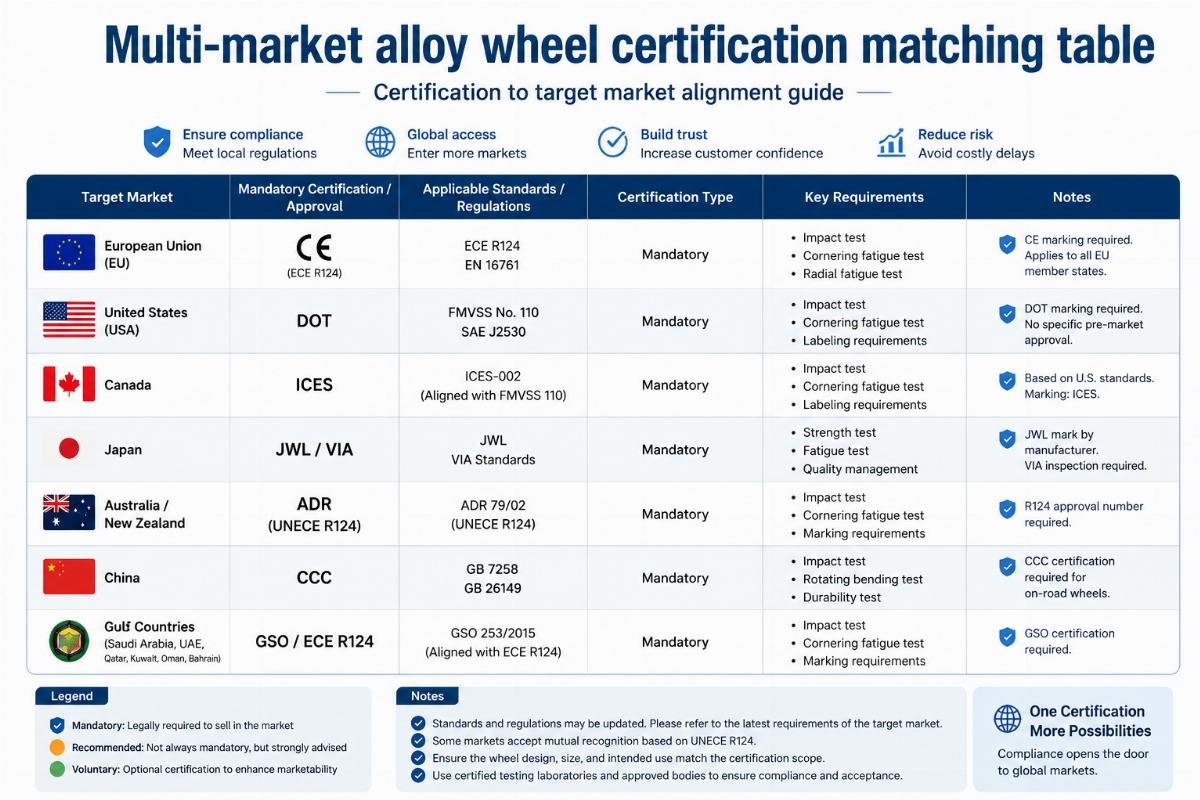
- Market Mapping – List all operating regions you serve and match them to their respective mandatory import standards.
- Document Audit – Ask suppliers to share digital copies of active certification documents for direct verification with your customs broker.
- Cross-Market Confirmation – Prioritize suppliers that already hold all required credentials for your full operating footprint to avoid multiple vendor onboarding.
How to Calculate the Optimal MOQ for Your First Private-Label Wheel Order
The biggest source of unnecessary risk for new white-label partnerships comes from locking in too large an order for untested SKUs. Tiered MOQ structures designed specifically for distributors let you test new styles at low volume before committing to bulk restocks, drastically cutting down on unsold inventory write-offs.
| Order Type | Standard MOQ | Expected Lead Time | Ideal Use Case |
|---|---|---|---|
| Stocked Private Label | 20 pieces | 7 days for in-stock SKUs | Local market test runs for new styles |
| Custom Private Label | 100 pieces | 15-30 days production | Proven high-demand SKUs for regular restock [NEED_CITE: Distributors using tiered MOQ structures report 47% lower inventory holding costs than those using fixed high minimums] |
| Bulk Exclusive Supply | 500+ pieces | 25-30 days production | Long-term regional exclusive partnership inventory |
A Latin American distributor that signed an exclusive regional distribution agreement for a full 12-24 inch alloy wheel product line used this tiered MOQ framework to phase their initial order, resulting in a 18-month track record of 99.7% batch-to-batch quality consistency across all their restock orders.
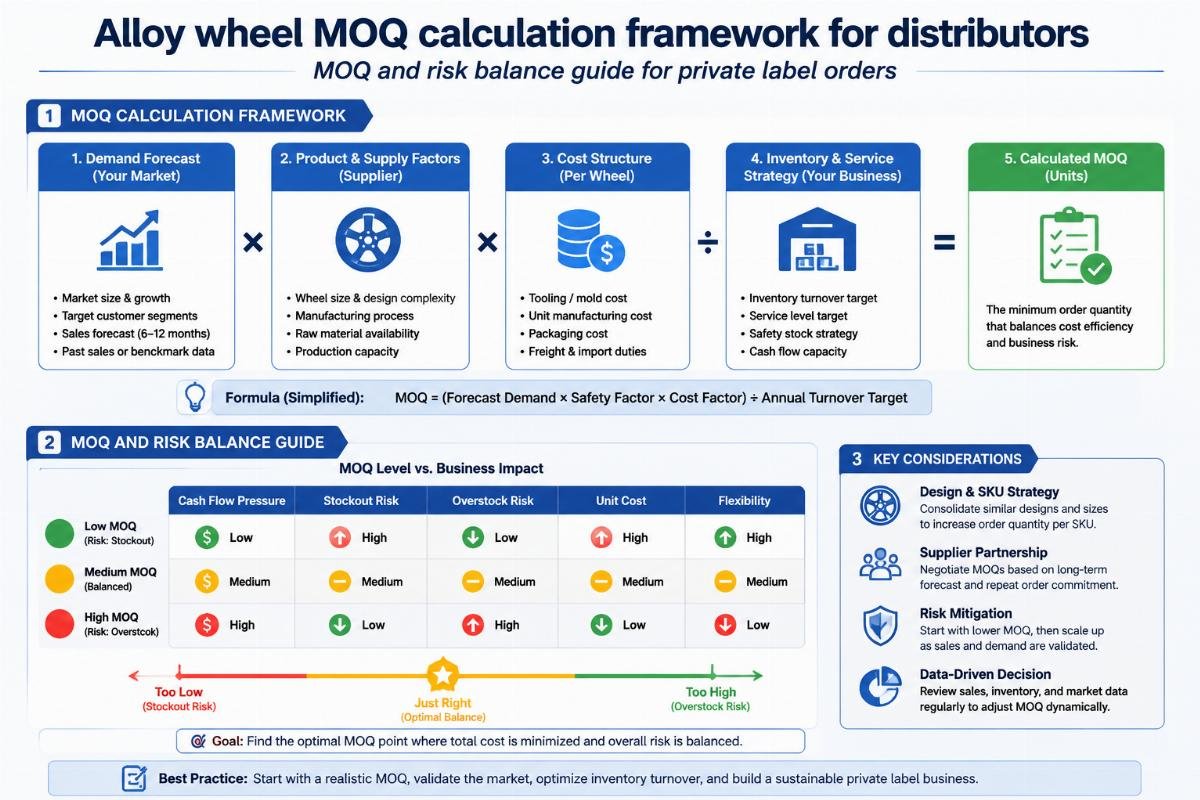
- SKU Test Prioritization – Select 3-5 high-potential new styles to test at the 20-piece stocked MOQ level first.
- Restock Threshold Setting – Define a clear sales velocity threshold before you move any SKU to the 100-piece custom production tier.
- Exclusive Agreement Alignment – Negotiate tiered volume discounts as part of your exclusive territory contract to lock in long-term pricing stability.
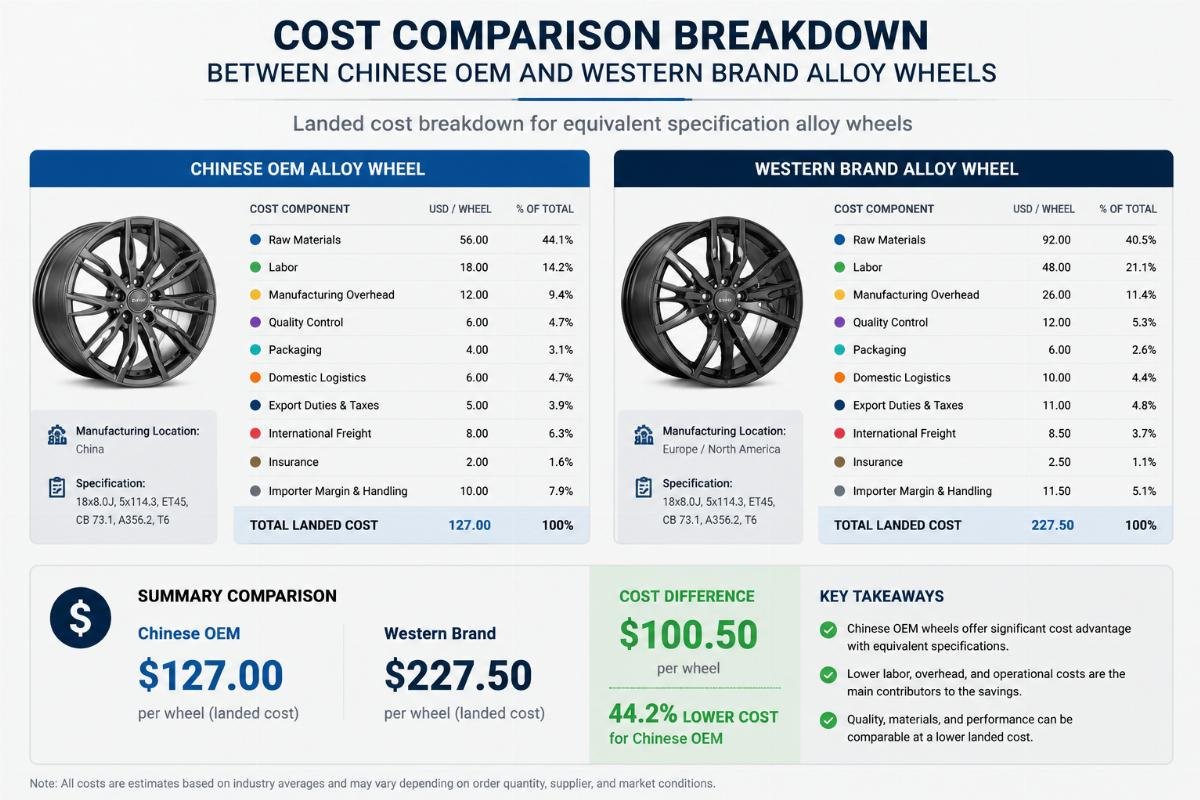
What Hidden Cost Gaps Exist Between Chinese OEMs and European/Japanese Wheel Brands
The 40-60% price gap between compliant Chinese OEMs and established European/Japanese wheel brands comes almost entirely from brand markup, not material or manufacturing quality differences. Once you account for equivalent structural testing and certification standards, factory-direct pricing from qualified Chinese suppliers delivers identical performance at a fraction of the landed cost for regional distributors.
Jinan Yoker Auto Parts, as a China-based one-stop alloy wheel supplier, delivers this level of factory-direct pricing alongside full custom support and complete documentation packages to simplify cross-border shipping for distributors.
| Cost Component | European/Japanese Brand Pricing | Qualified Chinese OEM Pricing |
|---|---|---|
| Base Unit Cost | 100% | 40-60% lower for equivalent specs [NEED_CITE: Global auto parts pricing benchmarks confirm identical specification alloy wheels from certified Chinese manufacturers carry no material quality penalty vs western brands] |
| Hidden Administration Fees | 12-18% of order total | 2-5% of order total |
| Customs Documentation Support | Partial, with extra charges | Full, included in base pricing |
A cross-regional distributor operating across 4 African markets ran a side-by-side cost comparison for a 1200-piece bulk order of 19 inch passenger car wheels, and found that total landed cost from a qualified Chinese supplier was 58% lower than the equivalent branded European product, with no difference in material grade or structural testing performance.
- Spec Matching – Map every technical parameter of your existing wheel stock to the potential supplier’s product line to ensure apples-to-apples pricing comparison.
- Landed Cost Calculation – Factor in all logistics, customs and
