
Buy Wheel Studs Wholesale: China Factory Direct Bulk Supplier
The cheapest wheel stud in the catalog is often the most expensive one on the road.
When sourcing wholesale wheel studs, the real battleground is not unit price—it is the alignment of material grade, heat-treatment protocol, and traceable certification with your end-use scenario. A mismatch here does not just shorten bolt life; it triggers field failures, warranty claims, and even full-vehicle recalls that dwarf the original purchase savings.
I still remember a shipment we inspected years ago at the Jinan plant—boxes of M12×1.5 studs, mirror-polished, packed neatly, looking identical to the premium batch next to them. The only difference was the steel grade stamped on the mill certificate. Six months later, a distributor in the Gulf region faced a fleet-wide recall after studs stretched under desert heat and heavy load. The recall cost ran into multiple times what they "saved" by switching to a non-certified source. That kind of lesson sticks. [NEED_CITE: root cause analysis of wheel stud failures under thermal and mechanical overload per SAE J1292]
Let me walk you through what actually matters when you evaluate a wholesale wheel studs supplier, straight from the factory floor to the shipping container.
40Cr vs SCM435: Which Material Grade Matches Your Operating Conditions?
Material selection is the single most consequential decision in bulk wheel studs procurement, and the wrong choice can shift tensile strength by a wide margin without any visible difference to the naked eye.
Most buyers assume that if two studs look the same and fit the same hub, they are interchangeable. In reality, the chemical composition and resulting mechanical properties define how the fastener behaves under cyclic loading, temperature swings, and corrosion exposure. [NEED_CITE: chemical composition and mechanical property comparison between 40Cr and SCM435 per GB/T 3077 and JIS G4053]
Here is how the two mainstream grades stack up across the parameters that matter in the field:
| Parameter | 40Cr (GB/T 3077) | SCM435 (JIS G4053) |
|---|---|---|
| Carbon range | Medium carbon | Medium-low carbon with chromium-molybdenum |
| Hardenability | Moderate | Noticeably higher due to Mo addition |
| Quenched & tempered hardness | Standard HRC range for passenger use | Extended HRC range suitable for heavy-duty |
| Tensile strength class | Property class 8.8 typical | Property class 10.9 achievable |
| High-temperature stability | Adequate for temperate climates | Superior resistance to thermal softening |
| Corrosion resistance after plating | Acceptable with standard zinc | More robust substrate for zinc-flake coatings |
| Best-fit application | Light-duty passenger vehicles, urban use | SUVs, trucks, off-road, high-temperature regions |
A modification shop in the American Southwest once switched from mixed-source studs to a unified SCM435 specification with controlled quench-and-temper treatment. Their warranty claim rate dropped noticeably within a single season, even though the per-piece cost rose slightly. [NEED_CITE: field performance correlation between alloy steel grade and fastener fatigue life per ISO 898-1]
The takeaway is straightforward: if your end market includes heavy loads, high ambient temperatures, or aggressive driving conditions, specifying SCM435 or an equivalent Cr-Mo grade is not optional—it is insurance. For standard passenger-car replacement in moderate climates, 40Cr remains a cost-effective and technically sound choice. A reliable wholesale wheel studs supplier will help you match grade to scenario rather than pushing the most expensive option by default.
How Do You Verify Heat Treatment? What Documentation Is Non-Negotiable?
A material certificate alone tells you what went into the furnace; it does not tell you what came out. Heat-treatment verification requires a three-piece document set: mill test report, heat-treatment time-temperature curve, and batch hardness test results.
Many buyers collect certificates and file them away without realizing that a cert without a corresponding batch number is essentially decorative. The real question is traceability—can you link the hardness reading on page three to the exact furnace run that processed the studs in your container? [NEED_CITE: fastener heat treatment verification requirements per ISO 16047 and DIN 267]
Here is what a complete documentation package should include:
- Mill Test Report (MTR): Specifies the heat number, chemical composition, and mechanical properties of the raw steel billet. This is your starting point for material identity.
- Heat-Treatment Curve: Records the quenching temperature, holding time, cooling rate, and tempering parameters for each batch. Without this, you cannot confirm whether the studs actually reached the required metallographic structure.
- Hardness Test Report: Shows the HRC readings across a statistical sample from the batch. The acceptable range for property class 10.9 fasteners typically falls within a defined HRC band—anything outside signals under-tempering or over-tempering. [NEED_CITE: hardness range specifications for property class 10.9 fasteners per ISO 898-1]
An OEM procurement team in Southeast Asia once rejected an entire batch of studs because the supplier could only provide a generic material certificate with no furnace-specific curve. The supplier claimed the heat treatment was "standard procedure." The buyer insisted on batch-level traceability. The dispute was resolved only when a second source produced the full three-piece package for the same specification. [NEED_CITE: importance of batch traceability in automotive fastener quality management per IATF 16949]
When you are vetting a wholesale wheel studs supplier, ask for these three documents before placing a trial order—not after. If the supplier hesitates or offers only a summary certificate, treat that as a red flag. Proper heat treatment is not a secret process; it is a controlled one, and controlled processes produce paperwork.
What Are the Real MOQ, Lead Time, and Cost Structures in Factory-Direct Sourcing?
Factory-direct procurement of wholesale wheel studs can deliver substantial cost advantages over trading-company sourcing, but the actual savings depend on order structure, customization depth, and logistics planning rather than a simple price-per-piece comparison.
The economics of direct sourcing break down into three layers:
Base pricing advantage. A manufacturer with integrated forging, machining, heat treatment, and plating lines eliminates multiple margin layers. For buyers ordering in container-load quantities, the per-piece cost difference versus sourcing through intermediaries becomes significant—often enough to fund private-label packaging or additional quality inspections. [NEED_CITE: cost structure comparison between factory-direct and trading-company fastener sourcing]
MOQ flexibility. Not every buyer needs fifty thousand pieces per SKU. A modification shop testing a new wheel pattern may need a few hundred studs; a regional distributor restocking fast-moving sizes may need several thousand. The right wholesale wheel studs supplier structures MOQs to accommodate both scenarios—low minimums for stock items and reasonable thresholds for custom specifications.
Lead time predictability. Standard sizes in common grades (M12×1.25, M12×1.5, M14×1.5 in 40Cr or SCM435) can typically ship within a few weeks from a well-managed Jinan-based facility with raw material buffers. Custom lengths, special knurl patterns, or non-standard plating add processing steps and extend the timeline accordingly. Planning your order cycle around these realities prevents emergency air-freight costs that erase any factory-direct savings.
A distributor in Latin America restructured their procurement from quarterly large-batch orders to monthly rolling forecasts aligned with the manufacturer’s production schedule. The result was smoother inventory turnover, reduced warehouse holding costs, and no stockouts during peak season—without paying a premium for the flexibility.
The cost structure also includes hidden elements: customs documentation completeness, coating consistency across batches, and packaging durability for ocean transit. A factory that handles all of these in-house removes coordination friction and reduces the risk of delays or damage claims.
How Do You Separate a Reliable China Wheel Stud Factory from the Rest?
Certification logos on a website prove nothing; what matters is whether the factory can demonstrate batch-level traceability, accommodate audit requests, and maintain consistent quality across production runs.
The gap between a genuine manufacturing partner and a catalog reseller becomes visible in three areas:
Certification depth. ISO 9001 is a baseline, not a differentiator. For automotive fasteners, look for IATF 16949 alignment, VIA certification for the Japanese aftermarket, TÜV product marks for European compliance, and DOT/JWL where applicable. A serious wholesale wheel studs supplier maintains these certifications as living systems with annual surveillance audits, not as framed certificates from a decade ago. [NEED_CITE: certification requirements for automotive fastener manufacturers in global markets]
Traceability infrastructure. Can the factory pull up the full documentation chain for a specific batch shipped eighteen months ago? If their answer involves "we will check with our quality department and get back to you," their traceability system is likely manual and fragile. Modern fastener plants link each heat number to furnace logs, hardness data, plating thickness readings, and shipping records in a digital system. This is not a luxury—it is the foundation of recall defense.
Audit and sample cooperation. A confident factory welcomes buyer audits, third-party inspections, and pre-shipment sampling without resistance. They understand that transparency builds long-term relationships. If a supplier deflects audit requests or limits sample access to "standard items only," their production consistency may not withstand scrutiny.
An European aftermarket brand conducted an on-site audit at a Jinan fastener facility before committing to a multi-year supply agreement. The audit covered incoming material inspection, in-process hardness checks, plating line controls, and finished-goods packaging. The factory passed with minor observations, and the partnership has since run smoothly across multiple container shipments. The key was that the factory treated the audit as routine, not as an intrusion.
Conclusion
Wholesale wheel studs procurement is a technical exercise disguised as a pricing exercise. Material grade must match operating conditions, heat-treatment documentation must be batch-traceable, cost advantages must be evaluated against total logistics and quality infrastructure, and supplier selection must rest on verifiable certification depth rather than marketing claims. Get these four elements right, and the unit price becomes a secondary conversation.
Related Applications
Parts in This Article
Products mentioned above
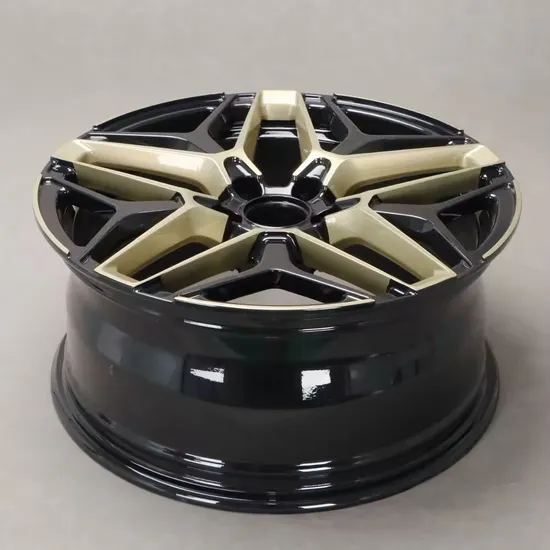 01
WHEEL RIM/HUB
China Factory 17-21inch Alloy Car Wheel Hub Replacement Rim
View Specifications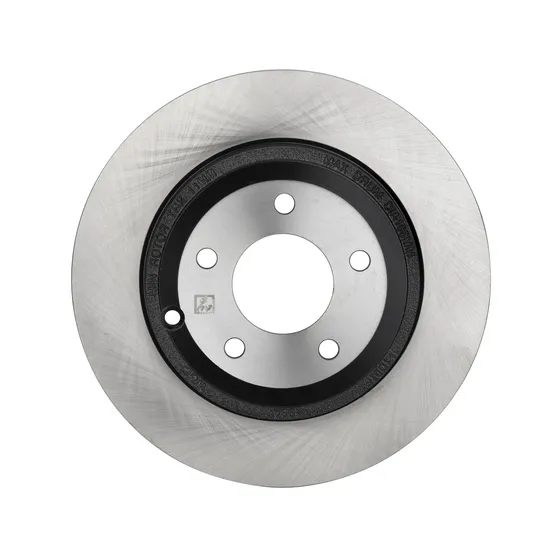 02
BRAKE DISC/DRUM
China Factory Front Rear Brake Rotor Disc Pad for Series Cars
View Specifications 03
BRAKE DISC/DRUM
China Factory Brake Rotor Disc Pad for Series Cars Wholesale Price
View Specifications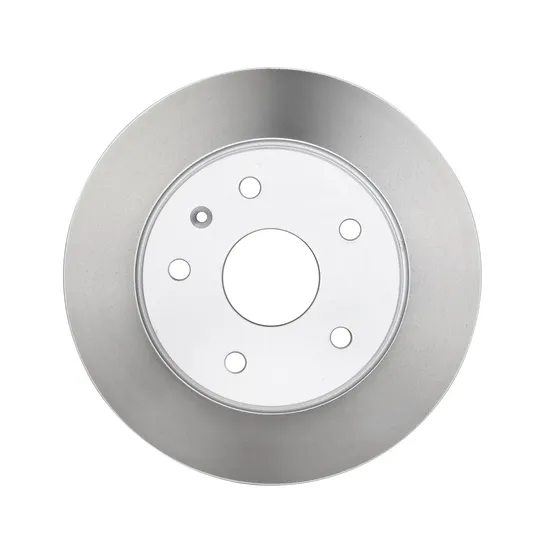 04
BRAKE DISC/DRUM
China Factory Brake Rotor Disc Pad for Series Cars Front Rear
View Specifications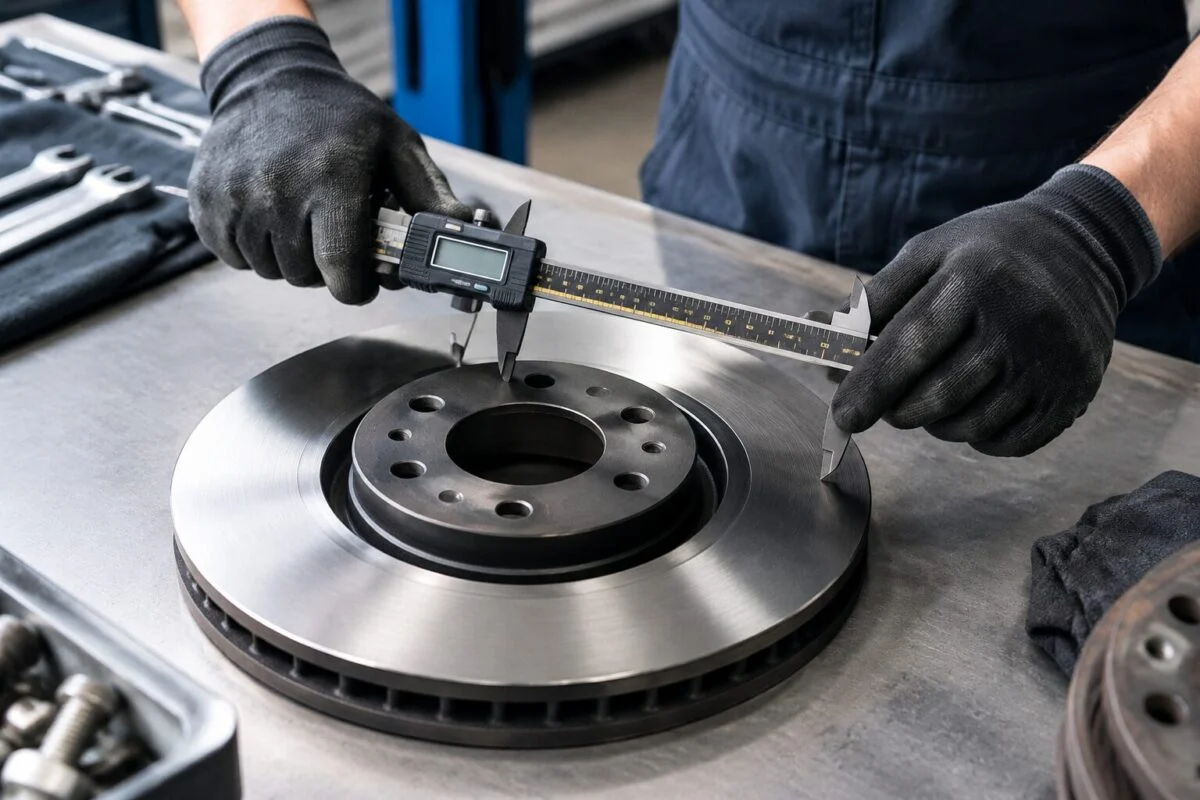
OE Fitment Check
Not sure it fits? Send us the OE number and we'll check it.
Jinan Yoker Auto Parts matches brake discs, drums, radiators, A/C condensers and wheel rims by OE number, vehicle model and year, PCD, ET and CB, so the parts fit before they ship.
- Factory-direct quote within 24 hours
- Free samples before bulk orders
- 10% off first order for new buyers (terms apply)
- Condenser MOQ from 10 PCS
Keep Reading
Related guides on auto parts sourcing
Buying Guide · · 9 min read
Alloy Wheels Price in USA: 2026 Wholesale Supplier Guide
Navigate US alloy wheel wholesale prices by mastering cost drivers beyond rim size. Discover how manufacturing process, DOT certification, and hidden fees like tooling…
Read the Guide
Buying Guide · · 10 min read
Alloy Wheels Price in UK: 2026 Wholesale Supplier Guide
Navigate the 2026 alloy wheels price UK market by understanding how surface finish and certification drive costs more than diameter. Discover why factory-direct sourcing…
Read the Guide
Buying Guide · · 13 min read
Alloy Wheels Price in Canada: 2026 Wholesale Supplier Guide
Stop relying on low FOB quotes that hide hidden costs. This 2026 guide breaks down the real alloy wheels price Canada buyers pay, covering…
Read the Guide