
Car Rims Supplier for Indonesia: China Factory Direct Wholesale
The cheapest rim quote you receive today could cost you triple in demurrage fees tomorrow if the certification paperwork does not clear Indonesian customs.
When sourcing a car rims supplier for Indonesia, certification compliance (JWL/VIA/CCC) and complete customs documentation matter far more than unit price. A China factory-direct supplier who understands Tanjung Priok clearance requirements can deliver pricing noticeably below Japanese brands while keeping your containers moving through the port within days—not weeks.
I once helped a modification shop in Jakarta source a batch of 18-inch flow-formed wheels. The per-piece quote came in noticeably below market rate, and the buyer was ready to place a full container. The shipment arrived at Tanjung Priok, and customs officers ran the VIA certification number through the issuing authority’s database. The number returned no match. The entire container sat in the port for weeks, and the accumulated demurrage charges ended up dwarfing whatever savings the buyer thought they had secured on the rim price itself. [NEED_CITE: Indonesian customs verification protocol for imported alloy wheel certifications] That single invalid certificate number erased every dollar of negotiated discount. Since then, I have made it a point to verify every JWL and VIA certificate number against the issuing body’s official registry before a single piece leaves the factory floor. Price means nothing if the cargo never reaches the warehouse.
Getting the price right is only half the equation. The other half is making sure the paperwork travels with the goods and holds up under inspection. Let me walk you through how to evaluate a car rims supplier for Indonesia the right way—starting with the certifications that actually gate your shipment at the port.
Why Does Certification Compliance Outweigh Unit Price for Indonesia Rim Imports?
JWL and VIA certifications are non-negotiable entry requirements for alloy wheels entering Indonesia, and a certificate that cannot be verified online is functionally the same as having no certificate at all.
Indonesian customs at Tanjung Priok and other major ports routinely cross-check certification numbers against the databases maintained by the Japan Light Alloy Wheel Institute (JWL) and the Vehicle Inspection and Registration System (VIA). [NEED_CITE: JWL and VIA certification verification requirements for Indonesian alloy wheel imports] If the number does not resolve, the shipment is held. There is no appeal shortcut, no "we will send the real certificate later" workaround. The container stays put, and the clock on port storage fees starts ticking from day one.
Here is what most buyers get wrong: they assume that receiving a scanned PDF of a JWL or VIA certificate from their supplier is sufficient proof. It is not. The document itself can look authentic—proper letterhead, official stamps, signature blocks—yet the number printed on it may have been fabricated, may belong to a different product, or may have expired. The only reliable verification step is to take that number and look it up on the issuing authority’s public registry. [NEED_CITE: VIA certification online verification database for alloy wheels]
Consider the cost structure of a stalled shipment. Port demurrage in Jakarta is calculated per container per day. For a standard 20-foot container loaded with alloy wheels, even a moderate delay can generate storage and handling charges that rival or exceed the total purchase value of the rims inside. Add in the administrative cost of re-submitting documents, potential re-inspection fees, and the downstream revenue loss from not having product available for your customers, and the "savings" from choosing a cheaper but uncertified car rims supplier for Indonesia evaporate entirely.
By contrast, a supplier who maintains verifiable JWL, VIA, and CCC certifications—and who has a track record of exporting to Indonesia specifically—will prepare the full documentation package before the goods leave the factory. That package typically includes the Certificate of Origin (CO), Form E for ASEAN-China Free Trade Area preferential tariff treatment, a detailed packing list, commercial invoice, and original copies of all certification documents. [NEED_CITE: Required customs documentation package for alloy wheel imports into Indonesia] When every document is in order and every certificate number checks out, clearance at Tanjung Priok typically completes within a matter of days.
| Documentation Element | Verified Factory-Direct Supplier | Unverified Low-Cost Supplier |
|---|---|---|
| JWL/VIA Certificate | Verifiable on issuing authority registry | Self-reported PDF, unverifiable |
| Certificate of Origin | Issued by authorized Chinese chamber of commerce | Missing or improperly formatted |
| Form E (ASEAN FTA) | Pre-issued and matched to shipment | Not provided or invalid |
| Packing List Accuracy | Exact SKU-level match to physical cargo | Generic template, mismatched quantities |
| Indonesia Export Experience | Documented shipment history | Limited or no prior Indonesia shipments |
The pattern is clear: the car rims supplier for Indonesia who invests in certification maintenance and documentation discipline is the one who protects your landed cost, not just your purchase price.
How Do You Verify a China Rim Supplier’s Credentials Before Placing an Order?
Run the certificate number through the official registry, request original scanned documents, and confirm the supplier has prior shipment history to Indonesian ports—complete all three steps before transferring any deposit.
Verification is not a single action; it is a sequence. Skipping any step leaves a gap that customs can exploit. Here is the process I follow with every new supplier relationship:
Step One: Request the JWL and VIA certificate numbers in writing before discussing price. A legitimate car rims supplier for Indonesia will provide these numbers without hesitation. If the supplier deflects, says "we will send after order confirmation," or offers only a generic statement like "our wheels meet JWL standards" without a specific certificate number, that is a serious red flag. [NEED_CITE: JWL certification application and verification process for alloy wheel manufacturers]
Step Two: Independently verify each certificate number. Go to the VIA official verification portal and enter the number. The system should return a match showing the certified manufacturer name, wheel specifications (size, width, offset, PCD), and certification status. Do the same for JWL. If the number returns no result, or returns a result for a different manufacturer or different specifications, stop the conversation. [NEED_CITE: VIA online certificate lookup system for alloy wheel verification]
Step Three: Request original scanned copies of all certificates, not photocopies or screenshots. Originals carry security features and formatting that are difficult to replicate. Compare the manufacturer name on the certificate with the company name on the supplier’s business license. They should match exactly.
Step Four: Ask for evidence of prior Indonesia shipments. This does not mean asking for other clients’ names—confidentiality matters. Instead, ask whether the supplier has shipped to Tanjung Priok, Surabaya, or other Indonesian ports, and whether they can provide a redacted copy of a previous bill of lading or customs clearance record. A car rims supplier for Indonesia with genuine experience will have this documentation readily available.
A wholesale buyer in Surabaya once shared their experience with me. They had been sourcing from a trading company that provided what appeared to be valid JWL certificates. On the first shipment, everything cleared smoothly. On the second shipment, customs updated their verification procedures and began cross-checking more rigorously. The certificates from the trading company’s supplier failed the new checks. The buyer had no direct relationship with the actual manufacturer and no ability to obtain replacement certificates quickly. The container was held for an extended period, and the buyer eventually had to absorb the full cost of the滞留 goods plus arrange a replacement shipment from a different source. [NEED_CITE: Indonesian customs certification verification tightening trends for imported automotive parts]
The lesson: verification is not a one-time checkbox. It is an ongoing discipline, and the car rims supplier for Indonesia you choose must participate in that discipline transparently.
What Are the Real Cost and Risk Differences Between Factory-Direct and Trading Company Suppliers?
A factory-direct car rims supplier for Indonesia typically offers pricing noticeably below trading companies while maintaining tighter control over certification documentation, whereas trading companies add a margin layer and may lack depth in Indonesia-specific export compliance.
The price gap between factory-direct and trading company sourcing is substantial. When you buy through a trading company, you are paying the factory price plus the trader’s margin, plus any intermediate logistics handling they layer on. For alloy wheels—a product where per-piece pricing is highly competitive even at the factory level—this markup compounds across a full container load. Factory-direct pricing from a qualified Chinese manufacturer can run noticeably below what the same wheel would cost through a trading intermediary. [NEED_CITE: Alloy wheel factory-direct versus trading company pricing structure comparison]
But price is only one dimension. The more critical difference lies in documentation control. A factory that exports directly to Indonesia has a vested interest in ensuring every shipment clears customs without incident. A failed shipment means return freight costs, reputational damage, and potential loss of the buyer’s future orders. This incentive drives the factory to maintain current, verifiable certifications and to prepare documentation packages with care.
Trading companies, by contrast, often source from multiple factories and may not have deep visibility into each factory’s certification status. A trading company might assure you that "the wheels are JWL certified" based on information from one factory, but if that factory changes its production line, updates its certification, or if the trading company switches to a different factory for your order to save cost, the certificate you received at the time of quoting may no longer apply to the goods you actually receive.
| Factor | Factory-Direct Car Rims Supplier for Indonesia | Trading Company Intermediary |
|---|---|---|
| Pricing Level | Noticeably below trading company quotes | Factory price plus margin layer |
| Certification Control | Direct ownership of JWL/VIA/CCC certificates | Reliant on upstream factory documentation |
| Indonesia Export History | Established, documented track record | Variable, may lack Indonesia-specific experience |
| Documentation Consistency | Certificate matches physical goods with high confidence | Risk of mismatch if factory source changes |
| Problem Resolution | Direct communication with production facility | Communication relay through intermediary |
I worked with a modification shop in Bali that initially sourced through a trading company based in Guangzhou. The pricing was attractive, and the first few small batches went smoothly. When they scaled up to full container orders, they discovered that the trading company had quietly switched the production source to a different factory—one that did not hold valid VIA certification for the specific wheel sizes being ordered. The trading company was unaware, or chose not to disclose, the change. The shipment was flagged at customs, and the buyer faced a choice: abandon the container or pay for re-certification testing, which would have taken months. They chose to abandon the shipment and source from a factory-direct car rims supplier for Indonesia instead. The per-piece cost was slightly higher than the trading company’s original quote, but the total landed cost—factoring in the avoided loss—was far lower.
The takeaway is straightforward: when evaluating a car rims supplier for Indonesia, the factory-direct route offers both pricing advantages and documentation reliability that trading companies struggle to match consistently.
Which Wheel Specifications and Styles Perform Best in the Indonesian Market?
Fifteen to eighteen-inch wheels in black and silver multi-spoke designs, sized to fit Toyota Avanza, Honda Brio, and Nissan Livina platforms, represent the highest-demand segment in Indonesia, with flow-formed construction offering the best balance of weight savings and cost.
Indonesia’s vehicle parc is dominated by Japanese-brand compact MPVs and hatchbacks. The Toyota Avanza and its variants, the Honda Brio, and the Nissan Livina are ubiquitous on roads from Jakarta to Makassar. Any car rims supplier for Indonesia who understands this market will stock fitments for these platforms as a baseline. [NEED_CITE: Top-selling passenger vehicle models in Indonesia and their wheel fitment specifications]
The most popular size range clusters around fifteen to eighteen inches. Indonesian buyers tend to favor a slightly upsized look compared to stock wheel diameters, but going beyond eighteen inches on these platforms introduces fitment complications—rubbing on suspension components, speedometer calibration issues, and ride quality degradation on roads that are not always smooth. The sweet spot is sixteen to seventeen inches for daily-driver applications, with eighteen inches reserved for enthusiasts willing to accept a firmer ride.
Color and style preferences skew toward black (gloss or matte) and silver (hyper silver or machined face). Multi-spoke designs—five-spoke, six-spoke, and mesh patterns—outperform single-spoke or split-spoke designs in this market. The Indonesian modification scene favors a clean, aggressive look that complements the body lines of compact Japanese vehicles without appearing overly ostentatious.
Construction method matters for pricing and positioning. Gravity-cast wheels are the most economical but carry the highest weight. Flow-formed (also called rotary-forged or spin-forged) wheels offer a meaningful weight reduction compared to gravity cast while remaining substantially more affordable than fully forged wheels. For the Indonesian aftermarket, flow-formed construction hits the optimal intersection of performance perception, visual appeal, and price accessibility. [NEED_CITE: Alloy wheel manufacturing process comparison: gravity cast versus flow-formed versus forged]
| Specification | High-Demand Range in Indonesia | Notes |
|---|---|---|
| Diameter | 15"–18" | 16"–17" highest volume; 18" for enthusiast segment |
| Width | 6.5J–8.0J | Must accommodate common tire widths 185–225 |
| PCD Patterns | 4×100, 4×114.3, 5×114.3 | Covers majority of Japanese compact platforms |
| Finish | Gloss black, matte black, hyper silver | Multi-spoke and mesh designs preferred |
| Construction | Flow-formed | Best weight-to-cost ratio for Indonesian market |
| Target Fitments | Toyota Avanza, Honda Brio, Nissan Livina | Highest-volume vehicle platforms nationally |
A retail shop owner in Denpasar told me they tested several wheel styles by ordering small quantities of each and tracking sell-through rates over a few months. The black multi-spoke flow-formed wheels in seventeen-inch sizing for the Honda Brio platform moved fastest, consistently. The same design in eighteen-inch sizing sold more slowly but at a higher margin per piece. The gravity-cast versions in the same style sat on the shelf noticeably longer, despite being priced lower. The market signal was clear: Indonesian buyers in the modification segment are willing to pay a modest premium for flow-formed construction, and they have strong preferences for specific colors and spoke patterns.
For a car rims supplier for Indonesia, maintaining ready stock of these high-demand specifications—particularly in flow-formed construction—is the fastest path to repeat orders.
How Should You Structure Your First Order to Minimize Risk When Working with a New China Rim Supplier?
Start with a small trial order of popular specifications, confirm that customs clearance proceeds smoothly, and only then scale to full container volumes—while requiring the supplier to provide complete documentation templates for pre-approval before production begins.
The temptation when you find a car rims supplier for Indonesia with attractive pricing and seemingly valid certifications is to place a large order immediately. Resist that temptation. The first order should be structured as a risk-reduction exercise, not a volume play.
Begin with a trial quantity. For stock models, this typically means ordering a few dozen pieces across your top-selling specifications. This quantity is large enough to represent a meaningful sample of the supplier’s production quality and documentation accuracy, but small enough that if something goes wrong, your financial exposure is contained. [NEED_CITE: Recommended trial order strategy for first-time alloy wheel importers]
Before the trial order enters production, request the complete documentation package that will accompany the shipment. This includes draft copies of the commercial invoice, packing list, certificate of origin, Form E application, and all certification documents. Review them carefully. Check that the certificate numbers match what you verified earlier. Confirm that the product descriptions on the packing list match the actual specifications you ordered. Discrepancies at this stage are easy to fix; discrepancies discovered at the port are expensive.
Track the trial shipment through customs clearance. This is the critical validation step. If the trial order clears Tanjung Priok or your destination port without delay, you have confirmed that the supplier’s documentation is accurate and that their certifications hold up under Indonesian customs scrutiny. If there are delays or queries from customs, you now know exactly where the gaps are—and you can address them before committing to larger volumes.
Once the trial order clears successfully, scale up. The transition from trial to full container should be straightforward if the supplier’s documentation is sound. At this stage, you can negotiate volume pricing, discuss exclusive patterns or specifications for your market, and establish a regular replenishment cadence.
A distributor in Medan shared their approach with me: they place trial orders of several dozen pieces across their top five selling SKUs every time they qualify a new car rims supplier for Indonesia. The trial orders serve double duty—they validate both product quality and documentation compliance. Once a supplier passes the trial phase, the distributor moves to quarterly full-container orders with that supplier. The discipline has kept their clearance record clean across multiple suppliers and multiple years.
The principle is simple: small orders teach you things that large orders cannot afford to teach you. Use trial orders as your due diligence tool, and let successful clearance—not just attractive quotes—guide your scaling decisions.
Conclusion
Certification verifiability and documentation completeness determine whether your alloy wheel shipment reaches your warehouse or sits at the port accumulating charges. A car rims supplier for Indonesia who maintains current JWL, VIA, and CCC certifications, provides complete customs documentation, and has proven export experience to Indonesian ports will protect your total landed cost far more effectively than the lowest per-piece quote from an unverified source. Start with trial orders, validate clearance, and scale with confidence.
Related Applications
Parts in This Article
Products mentioned above
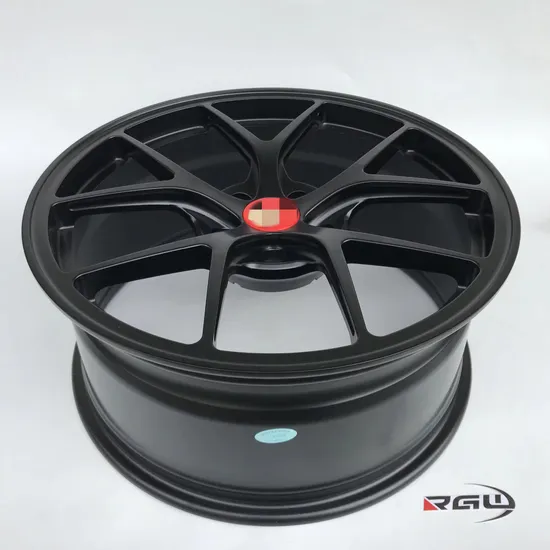 01
WHEEL RIM/HUB
Llantas de carreras de 16-20 pulgadas para BMW/Audi <h3>/Civic
View Specifications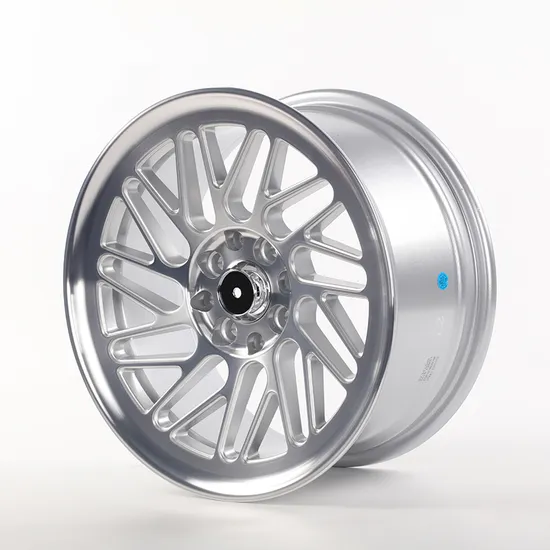 02
WHEEL RIM/HUB
Llantas de aleación de aluminio forjado de 17-22 pulgadas para coche, cromadas, de China
View Specifications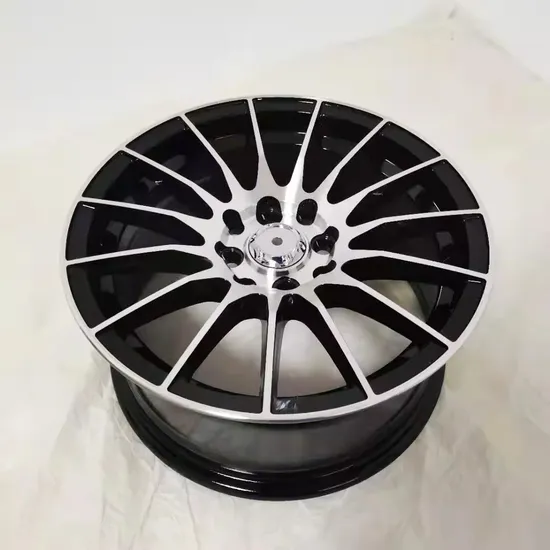 03
WHEEL RIM/HUB
Llantas de aluminio de alto rendimiento de 15 pulgadas, 4x100 y 4 tornillos para coches de carreras
View Specifications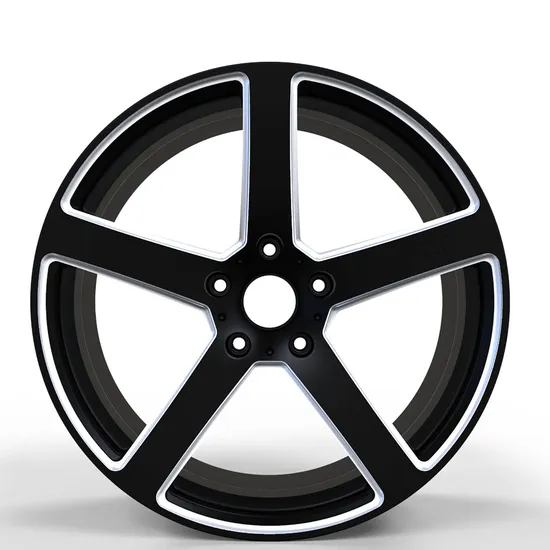 04
WHEEL RIM/HUB
Ruedas de aleación forjadas de 17-21 pulgadas 5X114.3 llantas de coche de carreras hub
View Specifications
OE Fitment Check
Not sure it fits? Send us the OE number and we'll check it.
Jinan Yoker Auto Parts matches brake discs, drums, radiators, A/C condensers and wheel rims by OE number, vehicle model and year, PCD, ET and CB, so the parts fit before they ship.
- Factory-direct quote within 24 hours
- Free samples before bulk orders
- 10% off first order for new buyers (terms apply)
- Condenser MOQ from 10 PCS
Keep Reading
Related guides on auto parts sourcing
Buying Guide · · 10 min read
Buy Alloy Wheels Best Price 2026 Wholesale Supplier
Buy Alloy Wheels Best Price 2026 by aligning raw material, process, and volume variables rather than chasing low quotes. Discover how factory-direct sourcing compresses…
Read the Guide
Buying Guide · · 7 min read
Buy Alloy Wheels Wholesale Price | Factory Direct OEM Supplier
Stop guessing your real landed cost when you Buy Alloy Wheels Wholesale Price. Discover how manufacturing processes, MOQ tiers, and hidden certification fees shape…
Read the Guide Buying Guide · · 9 min read
Car Rims Price in Ghana: 2026 Wholesale Buyer Guide
Car rims price in Ghana for 2026 wholesale buyers depends on landed costs, not just FOB quotes. This guide breaks down duty structures, finish…
Read the Guide