
Buy 15 Inch Alloy Wheels OEM Custom Manufacturer
Most buyers assume 15 inch wheels are the simplest size to produce—until they discover that tighter dimensional tolerances on smaller diameters make fitment errors far more common than on larger rims.
When you buy 15 inch alloy wheels OEM custom, the three non-negotiable parameters are PCD, offset (ET), and center bore. A deviation as small as one millimeter on any of these renders the entire batch unmountable. Equally critical is matching the paint system to the end-use climate: salt-spread roads demand a multi-layer corrosion-resistant finish, while dry inland markets prioritize UV stability over salt-fog endurance. Reputable OEM suppliers maintain MOQs as low as 100 pieces per SKU and hold multi-market certifications such as VIA, TÜV, JWL, DOT, and ISO to clear customs and build buyer trust.
I still remember the morning a long-standing North American client dumped a pallet of 15 inch alloy wheels on the showroom floor at a Las Vegas trade event. The clear coat had blistered across every single rim—like toad skin, he said. That shipment was destined for dealers around the Great Lakes region, where road crews spread rock salt liberally every winter. I had approved the Hyper Silver finish because it looked sharp in the catalog, without verifying whether the underlying primer and topcoat could survive prolonged chloride exposure. The return freight alone wiped out the margin on that entire order, and the relationship nearly collapsed. Since that day, every inquiry I handle for a buy 15 inch alloy wheels OEM custom project starts with two questions before price is even mentioned: what climate will these wheels face, and what are the exact PCD, ET, and center bore specs?
Small-diameter wheels carry a deceptive reputation. Because they use less raw material and shorter cycle times, many procurement teams treat them as entry-level items. The reality is that the same machining tolerances applied to a 20 inch rim produce proportionally larger angular errors when shrunk onto a 15 inch face. Bolt-pattern drift that would be absorbed by the lug-nut cone angle on a big wheel can leave a 15 inch hub-centric rim sitting off-center by a visible margin [NEED_CITE: dimensional tolerance stack-up effects on small-diameter alloy wheels per SAE J2975]. That is why serious buyers treat every buy 15 inch alloy wheels OEM custom order as a precision fitment exercise rather than a commodity purchase.
What Specs Must You Confirm Before Ordering 15 Inch OEM Wheels?
PCD, offset, and center bore form the fitment triangle—get any one wrong and the wheel will not mount, will vibrate, or will foul the brake caliper.
Before a single mold is cut, the buyer and the factory must align on three dimensions and one often-overlooked detail: the lug-seat type. The table below shows how each parameter behaves when mismatched, using qualitative severity bands rather than arbitrary numbers.
| Parameter | Correct Match | Minor Deviation | Gross Mismatch |
|---|---|---|---|
| PCD (bolt circle) | Flush hub contact, even lug loading | Partial thread engagement, vibration under braking | Wheel will not mount |
| Offset (ET) | Caliper clearance within design envelope | Slight fender rub at full lock or compression | Caliper contact or suspension interference |
| Center bore | Hub-centric, no vibration at highway speed | Requires ring adapter, marginal balance | Lug-nut-only load, high-speed shake |
| Lug seat (cone/ball/mag) | Even clamp force across all lugs | Gradual loosening on one or two lugs | Wheel detachment risk |
A distributor in the southeastern United States once placed a buy 15 inch alloy wheels OEM custom order for a popular compact-sedan platform. The factory matched the PCD and center bore correctly but shipped with a +35 mm offset instead of the specified +42 mm. The wheels bolted on, but at full steering lock the inner lip contacted the strut body. The entire container had to be rerouted to a rework facility overseas—a process that cost several times the original per-piece savings [NEED_CITE: offset-induced suspension clearance failures in aftermarket alloy wheels].
The lesson is straightforward: request a dimension-verification sheet from the supplier before production begins, and cross-check it against the vehicle maker’s published fitment data. Reputable manufacturers will provide this document as a standard part of the pre-production approval stage.
Which Finish Survives Your Local Road Conditions?
Paint is not a cosmetic afterthought—it is the primary determinant of how long a wheel remains presentable in its specific operating environment.
The coating system applied to a buy 15 inch alloy wheels OEM custom wheel typically consists of a pretreatment layer, a primer, a color base, and a clear topcoat. The chemistry and thickness of each layer determine resistance to salt fog, UV radiation, stone impact, and brake dust adhesion. Selecting the wrong system for the target market is the single most common cause of batch-level warranty claims.
The matrix below maps common climate zones to the finish characteristics they demand.
| Climate Zone | Primary Threat | Required Finish Profile | Unsuitable Finish |
|---|---|---|---|
| Northern North America, Northern Europe | Road salt, freeze-thaw cycles | Multi-layer with high salt-spray endurance | Single-stage gloss without corrosion primer |
| Coastal Southeast Asia, Middle East Gulf States | Humidity, saline air, intense UV | UV-stable clear with humidity-resistant primer | Matte finishes without sealed topcoat |
| Arid inland (Central US, Australian Outback) | UV fading, sand abrasion | Hard clear with abrasion resistance | Chrome (pits under sand blast) |
| Temperate urban (Western Europe, Japan) | Brake dust, mild moisture | Standard dual-layer with good chemical resistance | Uncoated machined face without sealant |
A Middle East-based modification shop ordered a batch of Hyper Silver wheels for a desert-market SUV build. The finish looked stunning indoors, but within a few months of exposure to sand-laden wind and extreme daytime heat, the surface developed a chalky haze that no amount of polishing could remove. A switch to a UV-stabilized matte gunmetal for the next production run eliminated the complaint entirely [NEED_CITE: UV and thermal degradation mechanisms of automotive wheel coatings].
Conversely, a Scandinavian distributor learned the salt lesson the hard way. Their initial buy 15 inch alloy wheels OEM custom order used a basic two-coat system that performed well in dry summer testing but began peeling within a single winter season on salted roads. The replacement order specified a three-stage system with an epoxy-based primer and a salt-fog-rated clear, and the subsequent batch showed no field failures across multiple winters.
Always ask the supplier for the coating specification sheet and confirm that the stated salt-spray endurance class matches the target market’s real-world exposure. If the supplier cannot provide this documentation in writing, treat it as a red flag.
How Does the OEM Custom Process Work From Inquiry to Delivery?
A structured OEM workflow with defined checkpoints protects both buyer and factory from costly mid-production changes.
The buy 15 inch alloy wheels OEM custom process follows a sequence of stages, each with a specific deliverable that must be approved before the next stage begins. Skipping or compressing any stage is the most reliable way to generate disputes later.
The standard workflow proceeds as follows:
-
Inquiry and parameter confirmation. The buyer submits vehicle fitment data (PCD, ET, center bore, lug seat), desired finish, and estimated volume. The factory reviews feasibility and returns a technical confirmation sheet [NEED_CITE: OEM alloy wheel development process flow per industry standard practice].
-
Quotation and MOQ agreement. Pricing is quoted per piece based on finish complexity, order quantity, and certification requirements. Custom orders typically carry a minimum order quantity that reflects mold amortization and setup costs.
-
Sample production and approval. The factory produces a small batch of samples—usually a handful of pieces—for the buyer to verify dimensions, finish color, and surface quality. This stage is non-negotiable for first-time orders.
-
Certification and compliance review. If the target market requires specific marks (VIA for Japan, TÜV for Germany, DOT for the United States, JWL, or CCC for China domestic), the factory arranges testing and provides certificates before mass production begins.
-
Mass production and in-line inspection. Production runs in batches, with dimensional and visual checks at defined intervals. Reputable factories perform runout checks on every wheel, not just random samples.
-
Final inspection, packing, and shipment. Wheels are packed per the buyer’s specification—retail boxing, pallet wrapping, or container-load bulk—and shipping documents are prepared.
A European e-commerce seller sourcing a buy 15 inch alloy wheels OEM custom line for Amazon faced a common pitfall at stage three. The initial sample was approved based on photos alone, without a physical dimension check. When the mass-production units arrived, a subset had a center bore that was marginally oversized, requiring hub rings for fitment. The seller had to source and insert rings manually before shipping to Amazon’s fulfillment centers—a labor cost that erased the price advantage of buying direct.
The fix was simple but painful: from the second order onward, the seller required a physical sample shipped by courier for hands-on verification before authorizing mass production. Lead time extended slightly, but field complaints dropped to near zero [NEED_CITE: impact of physical sample verification on aftermarket wheel return rates].
What MOQ and Certification Should You Expect?
MOQ flexibility and multi-market certification are the two levers that determine whether a factory can serve both niche testing runs and full container-load orders.
For a buy 15 inch alloy wheels OEM custom project, the minimum order quantity depends on whether the design is a modification of an existing mold or a completely new casting. Factories that maintain a library of open molds can offer significantly lower thresholds for custom-finish orders, since the structural tooling cost is already amortized. Fully new designs require higher commitments to justify mold fabrication.
Certification expectations vary by destination market. The major standards and their typical applications are:
- VIA and JWL: Required or strongly preferred for the Japanese aftermarket and many Southeast Asian markets.
- TÜV: Mandatory for road-legal use in Germany and widely recognized across the European Union.
- DOT: Expected for the United States market, confirming compliance with federal safety standards.
- ISO 9001: A baseline quality-management certification that signals systematic process control.
- CCC: Required for wheels sold within the Chinese domestic market.
A Latin American distributor expanding into the Brazilian aftermarket discovered that several competing factories could offer attractive pricing but lacked TÜV documentation. Since many Brazilian buyers source through European trading companies that demand TÜV compliance, the distributor’s initial supplier shortlist shrank considerably once certification was added as a filter. The factory ultimately selected held ISO, VIA, TÜV, DOT, and JWL certifications simultaneously—a combination that allowed the distributor to serve multiple regional channels from a single production source [NEED_CITE: certification requirements for alloy wheels across major global automotive markets].
For e-commerce sellers testing new SKUs, the ability to place a buy 15 inch alloy wheels OEM custom trial order at a low MOQ is essential. A typical test batch allows the seller to list the product, gather real customer feedback on fitment and finish, and adjust the color or size range before committing to a full container. Factories that insist on container-level minimums for every order effectively price out this iterative approach.
Conclusion
Buying 15 inch alloy wheels OEM custom successfully rests on three pillars: precise fitment parameter verification, climate-matched finish selection, and a supplier with flexible MOQs and recognized multi-market certifications. Small-diameter wheels demand tighter dimensional discipline than their larger counterparts, and paint systems must be chosen for the road conditions they will actually face—not the showroom lighting they will briefly pass through. A structured OEM process with physical sample approval and transparent certification documentation protects buyers from the costly mistakes that arise when any of these elements is treated as an afterthought.
Related Applications
Parts in This Article
Products mentioned above
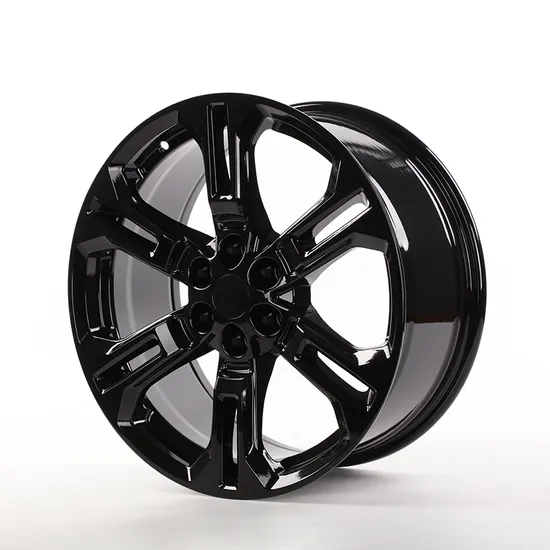 01
WHEEL RIM/HUB
Rines de rueda de automóvil de aleación de aluminio OEM de 15-21 pulgadas
View Specifications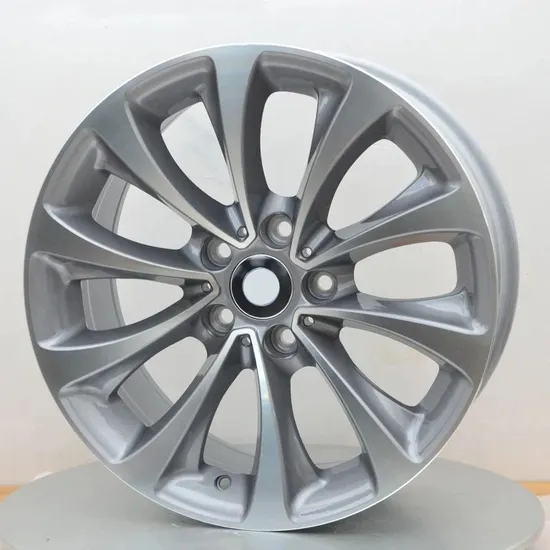 02
WHEEL RIM/HUB
18 Inch Aluminum Alloy Chrome Auto Wheel Rims OEM
View Specifications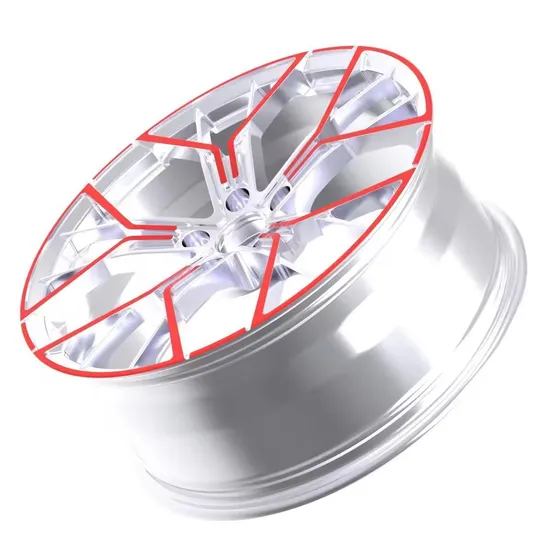 03
WHEEL RIM/HUB
Replica 17-18 Inch OEM-Style Car Alloy Wheels Rims
View Specifications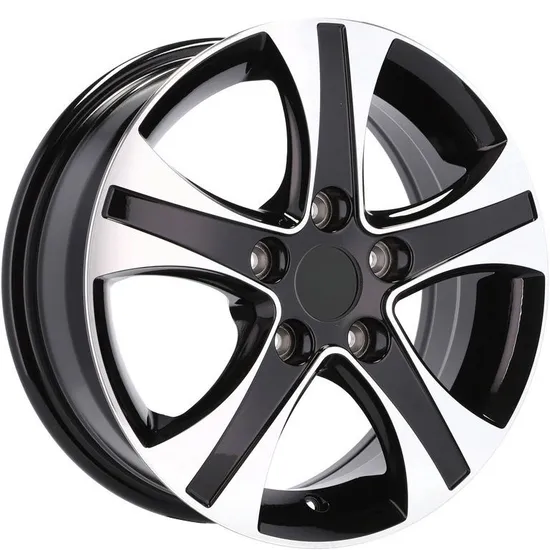 04
WHEEL RIM/HUB
17-19 Inch OEM Replacement Alloy Wheels Rims Oy17101 New
View Specifications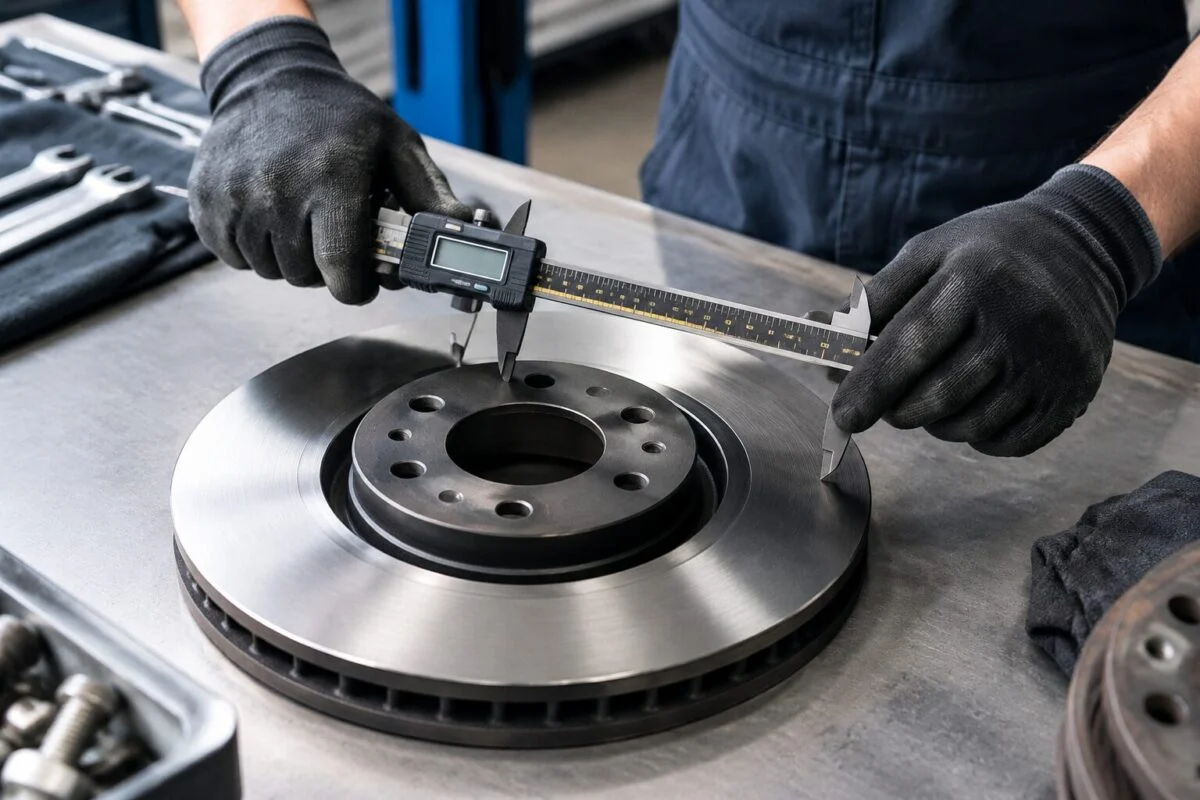
OE Fitment Check
Not sure it fits? Send us the OE number and we'll check it.
Jinan Yoker Auto Parts matches brake discs, drums, radiators, A/C condensers and wheel rims by OE number, vehicle model and year, PCD, ET and CB, so the parts fit before they ship.
- Factory-direct quote within 24 hours
- Free samples before bulk orders
- 10% off first order for new buyers (terms apply)
- Condenser MOQ from 10 PCS
Keep Reading
Related guides on auto parts sourcing
Buying Guide · · 9 min read
Wheel Rims Wholesale Supplier for Turkey: China Factory Direct OEM
Selecting the right wheel rims supplier for Turkey requires matching surface finishes to coastal salt exposure and ensuring TÜV or VIA certification for smooth…
Read the Guide
Buying Guide · · 9 min read
Alloy Wheels Price in Argentina: 2026 Wholesale Buyer Guide
Alloy Wheels Price in Argentina depends on more than factory quotes, driven by layered costs like import duties and port storage. Discover how rim…
Read the Guide
Buying Guide · · 10 min read
Buy Alloy Wheels Best Price 2026 Wholesale Supplier
Buy Alloy Wheels Best Price 2026 by aligning raw material, process, and volume variables rather than chasing low quotes. Discover how factory-direct sourcing compresses…
Read the Guide