
Buy Hyper Silver Alloy Wheels: China Factory Direct Wholesale
Hyper silver is not just another silver paint job—it is a multi-layer mirror-polish finish that demands stricter substrate preparation and environmental controls than standard silver, and sourcing hyper silver alloy wheels directly from certified Chinese factories slashes procurement costs while placing the burden of batch consistency verification squarely on the buyer.
Bulk buyers can expect factory-direct pricing substantially below European and Japanese branded equivalents, with minimum orders starting at a few dozen pieces for stock designs and one hundred pieces for custom finishes, provided they independently verify salt-spray endurance ratings, color-delta tolerance under controlled light sources, and batch traceability documentation before container loading.
I still remember standing inside a sweltering warehouse near Jeddah port, staring at row after row of hyper silver alloy wheels wrapped in shrink film that had already started to peel in the coastal humidity. A Middle East distributor had accepted a full container based on a single sample swatch and a glossy brochure. When the containers were opened, nearly every wheel showed visible shade variation under daylight—some panels leaned warm champagne, others drifted toward cool graphite. The rejection rate was devastating, demurrage charges accumulated for weeks, and the profit margin for the entire shipment evaporated before a single wheel reached a retail shelf. That kind of loss does not come from bad luck; it comes from skipping the verification steps that separate a reliable shipment from an expensive lesson [NEED_CITE: root cause analysis of coating failures in automotive wheel aftermarket supply chains].
If you are sourcing hyper silver alloy wheels for distribution, modification shops, or private-label programs, the rest of this guide walks through the工艺 differences that matter, the QC checks you must perform before signing a purchase order, the realistic lead times and minimums, the certifications that unlock specific regional markets, and the real pricing gap between factory-direct channels and trading intermediaries.
What Makes Hyper Silver Different from Standard Silver Finishes?
Most buyers assume hyper silver is simply a brighter version of regular silver paint, but the finish actually involves multiple coating layers applied over a mirror-polished substrate, making surface preparation quality the single largest determinant of final appearance and durability.
Standard silver finishes typically use a single basecoat plus clearcoat system applied over a conventionally machined or painted substrate. Hyper silver, by contrast, requires the aluminum surface to be diamond-cut or mirror-polished to a near-reflective state before any coating is applied. A tinted translucent top layer is then sprayed over this polished base, creating the signature depth and color-shift effect that changes tone depending on viewing angle and light direction [NEED_CITE: technical differentiation between hyper silver and standard silver wheel coating processes per automotive refinishing literature].
| Parameter | Standard Silver | Hyper Silver |
|---|---|---|
| Substrate Preparation | Standard machining or primer | Mirror polish or diamond-cut |
| Coating Layers | Basecoat + clearcoat | Polished base + tinted translucent + clearcoat |
| Color-Shift Effect | Minimal | Pronounced angle-dependent shift |
| Substrate Defect Visibility | Low | Extremely high |
| QC Sensitivity to Dust/Pinholes | Moderate | Critical |
| Batch-to-Batch Consistency Difficulty | Manageable | Demands controlled environment |
This structural difference means that any substrate imperfection—micro-porosity from casting, machining chatter marks, or contamination trapped under the clear layer—becomes immediately visible in hyper silver finishes in ways that standard silver would hide. A workshop accustomed to painting matte black or gunmetal wheels cannot simply switch to hyper silver without upgrading substrate inspection protocols.
I once inspected a batch destined for a Gulf Cooperation Council market where the factory had skipped the intermediate polishing inspection step. Under overhead fluorescent light in the spray booth, the wheels looked acceptable. But when I pulled them outside under direct sunlight, wave-like distortions appeared across the spoke faces—classic signs of uneven substrate preparation. The entire batch had to be stripped and reworked, delaying shipment by weeks.
For buyers, the practical takeaway is straightforward: when requesting quotes for hyper silver alloy wheels, ask the factory to document substrate preparation method, number of coating layers, and the specific curing cycle. Factories that cannot provide this level of process transparency are unlikely to deliver consistent results at scale [NEED_CITE: best practices for multi-layer wheel coating quality assurance in high-volume manufacturing].
How to Verify Factory QC Capability Before Ordering?
Color-delta measurement under standardized light sources, accelerated salt-spray testing to regional corrosion benchmarks, and film-thickness verification with calibrated gauges form the non-negotiable QC triad for any hyper silver alloy wheel order.
Walking into a factory’s QC lab tells you more about their capability than any brochure ever will. The first thing I check is whether they own a spectrophotometer capable of measuring Delta-E values under multiple light sources—D65 daylight, A-tungsten, and F-series fluorescent. Hyper silver’s translucent tint layer is notoriously sensitive to ambient lighting conditions, and a finish that matches the approved sample under booth lighting may drift noticeably under desert sunlight or showroom halogen. A responsible factory measures every production batch against the master sample and records the Delta-E reading; anything beyond a tight tolerance threshold should trigger a hold before packing [NEED_CITE: accepted Delta-E tolerance ranges for automotive wheel finish consistency in aftermarket supply].
The second checkpoint is salt-spray testing methodology. Standard neutral salt-spray testing per ASTM B117 is common, but buyers targeting Middle East, Latin American coastal, or Southeast Asian markets need to understand that real-world corrosion exposure in these regions far exceeds what a basic five-hundred-hour test simulates. Extended-duration testing, or the more aggressive Copper-Accelerated Acetic Acid Salt-Spray method, provides a more realistic picture of how the finish will hold up over multiple years of service [NEED_CITE: correlation between accelerated salt-spray test duration and real-world coastal corrosion performance for automotive wheels].
| QC Check | Basic Factory | Certified Factory |
|---|---|---|
| Color Measurement | Visual comparison only | Spectrophotometer with multi-source Delta-E |
| Salt-Spray Testing | Self-reported, short duration | Third-party lab, extended-duration per regional benchmark |
| Film Thickness | Spot check | Calibrated gauge, full-wheel mapping |
| Batch Traceability | Lot number on carton | Heat number + coating batch + inspector ID linked |
| Adhesion Verification | Tape pull | Cross-hatch per standardized method |
The third element is film-thickness mapping. Hyper silver’s visual effect depends on precise, uniform layer thickness across complex wheel geometries—deep concave centers, tight spoke intersections, and rim lip edges all challenge spray coverage consistency. A calibrated film-thickness gauge reading across multiple points on each wheel reveals whether the spray line has dialed in robot paths or is relying on manual operator skill that drifts across a shift.
A modification shop owner in the Arabian Peninsula once told me he switched suppliers after his second batch of hyper silver alloy wheels showed adhesion failure within months—clearcoat peeling in sheets from the spoke edges. The previous factory had relied on a simple tape-pull test; the new supplier performed cross-hatch adhesion testing per standardized method on every batch, plus mapped film thickness at a minimum of six points per wheel. The difference in long-term field performance was immediate and dramatic.
When evaluating a potential supplier of hyper silver alloy wheels, request copies of actual QC reports from recent production runs—not blank templates. Verify that the reports include specific Delta-E readings, salt-spray exposure hours with photographic evidence of test panel condition, and film-thickness measurement points mapped to wheel geometry. Factories that hesitate to share this documentation are signaling that their process control may not withstand scrutiny [NEED_CITE: documentation standards for automotive wheel coating quality traceability in export manufacturing].
What MOQ and Lead Time Should Bulk Buyers Expect?
Stock hyper silver alloy wheels in popular fitments can ship in small quantities with quick turnaround, while custom finishes and sizes require larger minimum commitments and longer production scheduling windows.
The minimum order landscape for hyper silver alloy wheels splits into two tiers. For stock designs—typically the highest-volume sizes serving popular passenger car and SUV platforms across Toyota, Honda, Hyundai, Nissan, and Chevrolet fitments—factories maintaining finished-goods inventory can fulfill orders starting at very modest quantities, sometimes as few as a couple of dozen pieces per SKU. This tier serves modification shops, e-commerce sellers testing new listings, and regional distributors replenishing fast-moving inventory.
Custom orders—whether involving non-standard sizes, specific bolt patterns, private-label center cap branding, or exclusive color formulations—operate on a different timeline. Minimum commitments typically start at one hundred pieces per SKU, and production scheduling must account for substrate preparation, coating line setup, curing cycle time, and QC hold periods. Realistic lead times for custom hyper silver alloy wheel orders range from two to four weeks depending on order volume and current production queue depth [NEED_CITE: typical production lead time benchmarks for custom-finish alloy wheels in Chinese export manufacturing].
| Order Type | Typical MOQ | Typical Lead Time | Best Suited For |
|---|---|---|---|
| Stock Sizes/Finishes | Low quantity per SKU | Days to one week | E-commerce, modification shops, restocking |
| Custom Sizes/Patterns | Moderate quantity per SKU | Two to four weeks | Distributors, private-label programs |
| Full OEM Programs | High volume commitment | Extended scheduling | Vehicle manufacturers, large-scale fleet |
A recurring pain point I see among first-time buyers is underestimating the time required for color approval on custom hyper silver finishes. The process typically involves the factory producing lab-drawdown samples, shipping physical samples to the buyer for approval under local lighting conditions, receiving feedback, adjusting formulation, and producing a second round if the first misses the target. This back-and-forth can add meaningful time to the overall timeline, and buyers who build this buffer into their planning avoid the frustration of missed market windows.
For buyers running seasonal promotions or launching new vehicle fitment coverage, the practical approach is to maintain a relationship with a factory that holds baseline stock in core sizes while reserving production capacity for custom runs. This hybrid model keeps inventory turnover fast on proven sellers while allowing controlled expansion into new niches with hyper silver alloy wheels that carry your branding specifications.
Communication frequency during production matters enormously. Factories that provide weekly production status updates—including photographs of wheels at each stage from machining through coating to final packing—give buyers the visibility needed to catch deviations early, when correction is still possible. Factories that go silent after order confirmation are a red flag regardless of how competitive their initial pricing appeared.
Which Certifications Matter for Middle East and Global Markets?
International quality and safety certifications are not optional marketing accessories—they are market-access requirements that determine whether your hyper silver alloy wheel shipment clears customs, passes retailer compliance audits, and carries defensible liability coverage.
The certification landscape for alloy wheels varies significantly by destination market, and buyers who assume that a single certificate covers all territories routinely discover costly gaps at the worst possible moment—during customs clearance or after a field failure triggers a liability claim.
ISO quality management system certification forms the baseline expectation for any export-oriented wheel manufacturer. It signals that the factory operates documented processes for design control, incoming material inspection, in-process quality checkpoints, and final audit procedures. However, ISO alone does not certify the wheel’s structural performance—it certifies the management system governing production [NEED_CITE: scope and limitations of ISO certification for automotive wheel manufacturing facilities].
Vehicle-specific certifications carry structural performance requirements. Japan’s JWL and VIA standards dominate requirements for wheels entering Japanese domestic and many Southeast Asian markets. Germany’s TÜV certification carries weight across European markets and signals rigorous fatigue and impact testing. The United States does not mandate a single wheel-specific certification, but DOT compliance for related components and SAE testing references frequently appear in procurement specifications. China’s CCC certification applies to wheels sold within the domestic market and increasingly serves as a baseline credibility marker for export buyers evaluating factory capability.
| Certification | Primary Market Relevance | What It Validates |
|---|---|---|
| ISO | Global baseline | Quality management system |
| JWL/VIA | Japan, Southeast Asia | Structural performance per Japanese standards |
| TÜV | Europe, global premium | Fatigue, impact, dimensional accuracy |
| DOT | United States | Regulatory compliance framework |
| CCC | China domestic | Mandatory domestic market access |
A distributor based in the Gulf region once shared that a competing supplier’s wheels failed structural verification during a random port inspection, resulting in the entire shipment being held and eventually returned. The supplier had claimed certification but could not produce valid, current test reports tied to the specific wheel designs in the container. The financial damage extended far beyond the product cost—freight, customs penalties, lost customer contracts, and reputational harm compounded over months.
When sourcing hyper silver alloy wheels for markets with active certification enforcement, request copies of current certificates and verify that the certified product range explicitly covers the specific designs and sizes you intend to order. Certificates that list only a few representative sizes while your order spans dozens of SKUs leave gaps that enforcement authorities can exploit. Factories maintaining multi-certification coverage across ISO, VIA, TÜV, DOT, JWL, and CCC demonstrate the investment in testing infrastructure and documentation discipline that serious buyers require [NEED_CITE: certification compliance requirements for alloy wheel exports to regulated international markets].
How Does Factory-Direct Pricing Compare to Trading Companies?
Sourcing hyper silver alloy wheels directly from the manufacturing factory eliminates intermediary margins that typically inflate per-piece costs substantially, while shifting responsibility for export documentation and logistics coordination to a single accountable source.
The pricing architecture in the alloy wheel supply chain contains multiple layers where costs accumulate without adding proportional value to the end buyer. Trading companies, export agents, and regional sub-distributors each add margin to cover their overhead, inventory risk, and profit targets. For high-volume buyers purchasing container-load quantities of hyper silver alloy wheels, these accumulated margins translate into a per-piece cost gap that compounds across thousands of units into significant annual expenditure differences.
Factory-direct purchasing collapses this structure. The buyer negotiates FOB pricing directly with the manufacturing facility, receives production-level transparency on material costs and finishing charges, and gains the ability to specify exact requirements—surface finish, packaging configuration, labeling, documentation—without filtering requests through an intermediary who may lack technical understanding of hyper silver coating specifications.
| Cost Factor | Trading Company Channel | Factory-Direct Channel |
|---|---|---|
| Per-Piece Product Cost | Includes intermediary margin | Production cost plus factory margin only |
| Custom Finish Communication | Filtered through non-technical staff | Direct with coating line engineers |
| QC Issue Resolution | Delayed by intermediary layer | Immediate factory accountability |
| Documentation Control | Dependent on intermediary accuracy | Factory-issued, verifiable at source |
| Volume Pricing Leverage | Limited by intermediary’s own purchasing | Direct negotiation at production scale |
The cost advantage becomes particularly pronounced on custom hyper silver finishes, where formulation adjustments, sample iterations, and small-batch coating runs require technical coordination that trading companies often struggle to manage efficiently. A buyer working through an intermediary may wait days for responses to technical queries that a direct factory relationship resolves in hours.
Beyond per-piece pricing, factory-direct relationships unlock advantages that trading companies structurally cannot offer. Exclusive design protection for private-label programs, priority production scheduling during peak seasons, direct access to engineering support for fitment modifications, and the ability to audit production processes in person all flow from a direct manufacturing relationship.
A Latin American distributor I worked with calculated that switching from a trading company to direct factory sourcing for their hyper silver alloy wheel program reduced their landed cost per unit enough to fund expanded SKU coverage across additional vehicle platforms—effectively growing their market offering without increasing total procurement spend. The transition required investing time in factory qualification and relationship building, but the return materialized within the first year of orders.
For buyers evaluating the true cost of their wheel procurement program, the analysis should extend beyond unit price to include total cost of ownership factors: defect rates, communication efficiency, documentation accuracy, and the speed of issue resolution. Factory-direct sourcing of hyper silver alloy wheels consistently outperforms intermediary channels on these operational dimensions while delivering superior unit economics at volume.
Conclusion
Hyper silver alloy wheels demand coating process discipline far beyond standard finishes, and buyers who invest in verifying substrate preparation, color-delta consistency, salt-spray endurance, and certification validity before committing to production secure both product quality and long-term supply reliability. Factory-direct sourcing from multi-certified Chinese manufacturers delivers meaningful cost advantages while placing verification responsibility on the buyer—making pre-shipment QC documentation review and factory audit capability essential procurement competencies for any serious distributor or modification business operating in demanding regional markets.
Related Applications
Parts in This Article
Products mentioned above
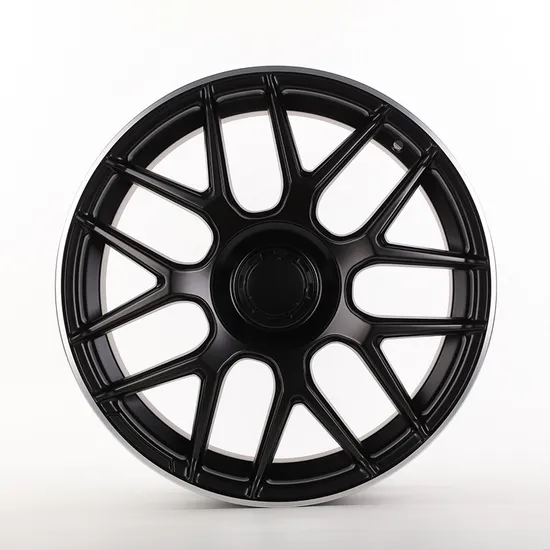 01
WHEEL RIM/HUB
22 Inch Forged Alloy Wheels 5X114.3 Hyper Silver Finish
View Specifications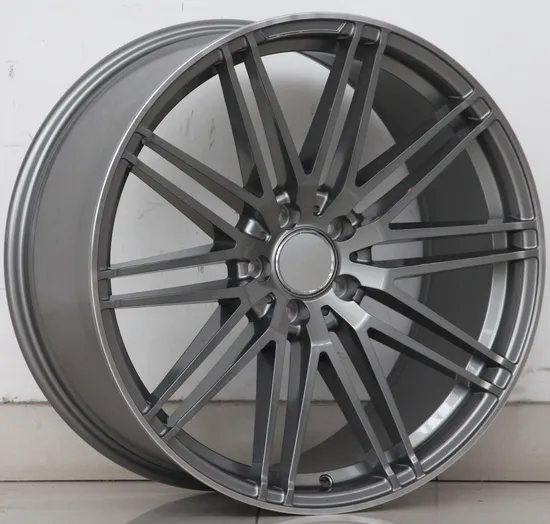 02
WHEEL RIM/HUB
Classical Design 5 Holes Hyper Black Silver Aluminum Alloy Car Wheel
View Specifications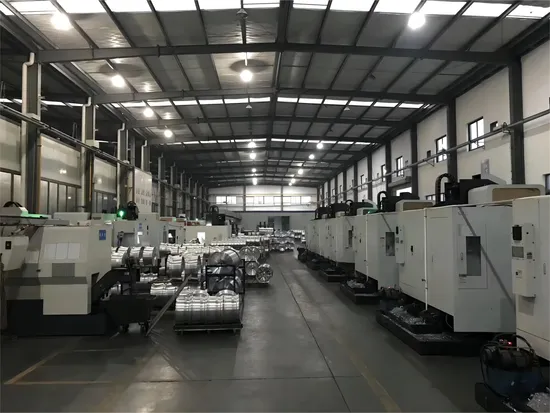 03
WHEEL RIM/HUB
Ouya Wheel 5X120 Hyper Black Machined Lip Silver Nail Alloy Car Wheel
View Specifications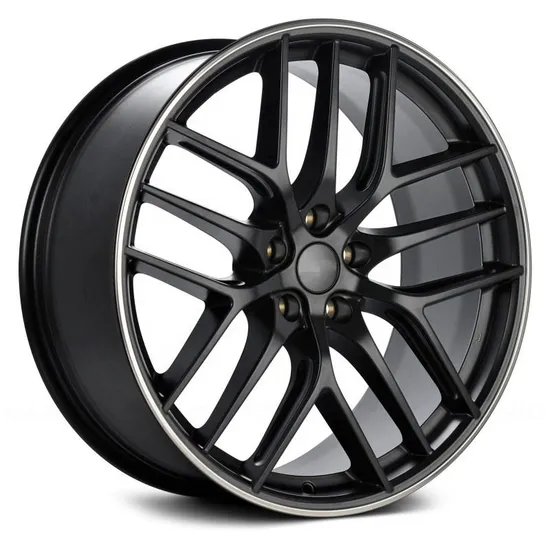 04
WHEEL RIM/HUB
Y Spokes 5 Holes Black Silver Hyper Black Alloy Car Rims
View Specifications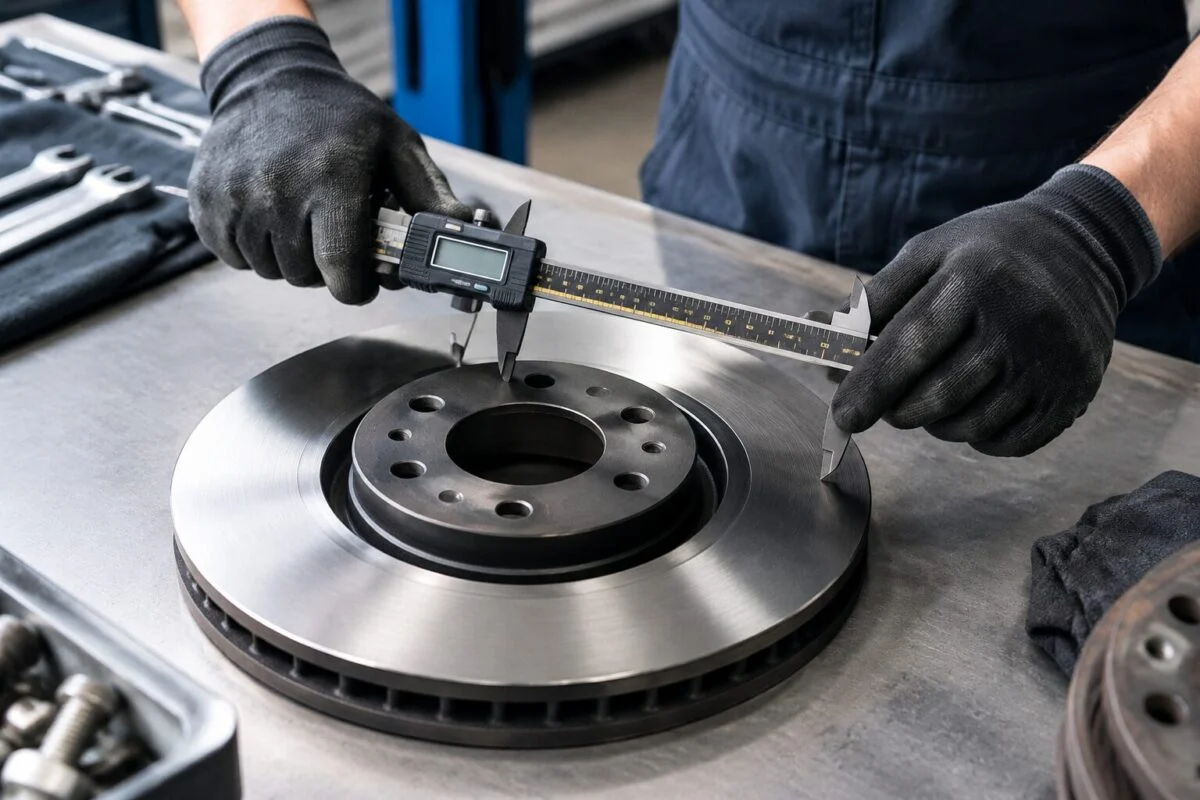
OE Fitment Check
Not sure it fits? Send us the OE number and we'll check it.
Jinan Yoker Auto Parts matches brake discs, drums, radiators, A/C condensers and wheel rims by OE number, vehicle model and year, PCD, ET and CB, so the parts fit before they ship.
- Factory-direct quote within 24 hours
- Free samples before bulk orders
- 10% off first order for new buyers (terms apply)
- Condenser MOQ from 10 PCS
Keep Reading
Related guides on auto parts sourcing
Buying Guide · · 10 min read
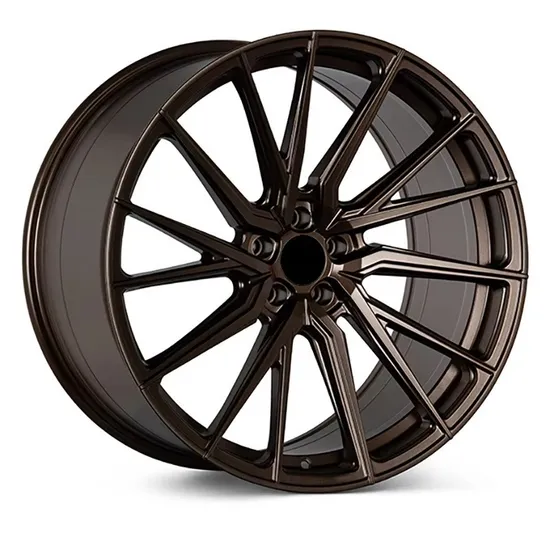
Buy Alloy Wheels Best Price 2026 Wholesale Supplier
Buy Alloy Wheels Best Price 2026 by aligning raw material, process, and volume variables rather than chasing low quotes. Discover how factory-direct sourcing compresses…
Read the Guide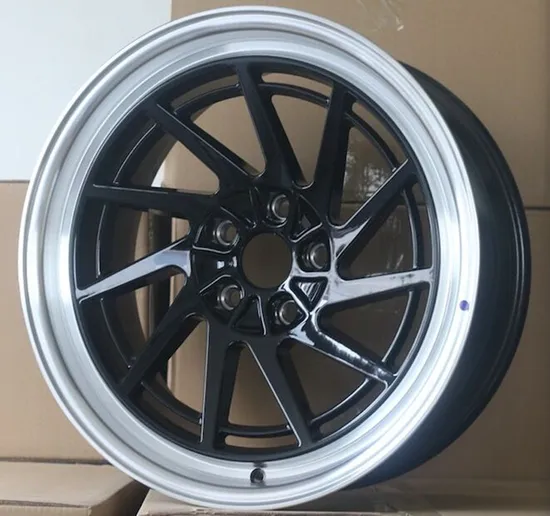
Buying Guide · · 7 min read
Buy Alloy Wheels Wholesale Price | Factory Direct OEM Supplier
Stop guessing your real landed cost when you Buy Alloy Wheels Wholesale Price. Discover how manufacturing processes, MOQ tiers, and hidden certification fees shape…
Read the Guide
Buying Guide · · 9 min read
Car Rims Price in Ghana: 2026 Wholesale Buyer Guide
Car rims price in Ghana for 2026 wholesale buyers depends on landed costs, not just FOB quotes. This guide breaks down duty structures, finish…
Read the Guide