
Buy Alloy Wheels with CE Certificate | Wholesale Supplier
Most buyers think CE is a single sticker. It is not. CE for alloy wheels is a traceable certification chain — test reports, factory audits, and a verifiable certificate number in the issuing body’s database — and without that chain, your container sits at the port.
To buy alloy wheels with CE certificate successfully, you must confirm the issuing body, verify the certificate number online, match the product scope to your order specs, and request the full documentation package — not just a scanned PDF. A supplier who cannot walk you through these steps in five minutes is not a supplier you should wire money to.
I stood at a booth in Hannover once, holding a wheel sample, when a German buyer asked for our CE certificate number. I gave it to him. He pulled out his phone, opened the TÜV database, typed it in, and looked up at me with a flat expression: "This format does not match." The shipment was already loaded. The buyer refused the goods. The entire container came back to Qingdao, and the demurrage bill alone ran into mid-five figures. That was the day I learned that CE is not a label you print — it is a system you must understand inside out. Since then, the first thing I do at any trade show is lay the certificates flat on the table and walk buyers through every field. [NEED_CITE: EU market access requirements for alloy wheel certification documentation]
Let me break down what actually matters when you source these products for resale, export, or private-label programs.
What Does CE Certification Actually Cover for Alloy Wheels?
CE marking on alloy wheels is not a blanket approval — it applies only to the specific product range, test standards, and manufacturing facility listed on the certificate. Many buyers assume that once a supplier shows a CE certificate, every wheel they produce is covered. That assumption has cost importers entire shipments.
The CE framework for alloy wheels typically references impact testing, radial fatigue testing, and bending fatigue testing under applicable European standards. [NEED_CITE: European test standards for alloy wheel structural integrity assessment] The certificate itself will specify the wheel sizes, offset ranges, load ratings, and vehicle fitments that were tested. If your order includes a size or specification not listed on that certificate, those wheels are not CE covered — regardless of what the supplier claims verbally.
Here is what I check first when a buyer sends me a certificate for review:
| Element | What to Look For | Red Flag |
|---|---|---|
| Issuing Body | Recognized notified body name and logo | Unknown institute with no online presence |
| Certificate Number | Alphanumeric code matching the body’s format | Number format inconsistent with body’s database |
| Product Scope | Exact sizes, offsets, PCD listed | Vague language like "all sizes" |
| Test Standards | Specific standard numbers cited | No standard reference at all |
| Validity Period | Clear issue and expiry dates | No expiry or expired without renewal |
| Factory Address | Matches the actual production facility | Different address from supplier’s claim |
[NEED_CITE: CE certificate component requirements for automotive wheel products in European Union]
A Middle East distributor once forwarded me a certificate from a factory in southern China. The certificate looked professional — embossed seal, gold lettering, the works. But the product scope said "aluminum alloy wheels" with no size or specification breakdown. The issuing body turned out to be a consulting firm, not a testing laboratory. The distributor avoided a full-container mistake because we caught it before the wire transfer.
When you buy alloy wheels with CE certificate, insist on seeing the original test reports behind the certificate, not just the certificate itself. The test reports show which exact wheel models were subjected to which exact tests. Without them, you are buying a piece of paper, not a compliance guarantee.
How to Verify an Alloy Wheel CE Certificate Before Ordering?
Verification is a three-step process: check the certificate number in the issuing body’s public database, confirm the factory audit report is current, and cross-reference the certified product scope against your purchase order. Skipping any one of these steps leaves you exposed.
Step one is the database check. Major certification bodies — TÜV, SGS, and other recognized notified institutions — maintain searchable online databases where you can enter the certificate number and pull up the original record. [NEED_CITE: TÜV certification database verification method for wheel products] If the number returns no results, or if the details on screen do not match the PDF the supplier sent you, stop immediately.
Step two is the factory audit. A valid CE certificate for alloy wheels is tied to a specific manufacturing facility that has passed an on-site audit. That audit has an expiry date. If the audit has expired and the factory has not renewed it, the certificate is effectively suspended — even if the certificate document itself looks current. I have seen suppliers present valid-looking certificates while the underlying factory audit had lapsed months earlier. The wheels shipped, the goods arrived, and the buyer’s customs broker flagged the documentation gap at the port of entry.
Step three is the scope match. Your purchase order lists specific sizes — say, 18-inch, 19-inch, and 20-inch wheels in certain PCD and offset configurations. The certificate must explicitly cover those sizes. If the certificate only covers up to 17 inches and you are ordering 20-inch wheels, you have a compliance gap that customs or market surveillance authorities can act on.
A European wholesale buyer I worked with developed a simple verification checklist that his procurement team runs before every order. It takes roughly fifteen minutes and has prevented multiple problematic shipments. His team cross-references the certificate number, checks the audit validity, confirms the product scope, and then requests a copy of the Declaration of Conformity signed by the manufacturer. [NEED_CITE: EU Declaration of Conformity requirements for alloy wheel importers]
CE vs TÜV vs VIA vs JWL: Which Certification Does Your Market Require?
Different markets require different certification combinations, and ordering the wrong set either wastes money on unnecessary tests or blocks your goods at the border. CE is necessary for the European Economic Area, but it is not sufficient for every market, and it is not the only certification that matters within Europe itself.
Here is how the major certification systems break down by target market:
| Market | Required Certification | Notes |
|---|---|---|
| European Union | CE + TÜV (recommended) | CE is mandatory; TÜV adds market credibility and buyer confidence |
| Japan | JWL / VIA | JWL is the Japanese Light-weight Wheel standard; VIA is the testing certification |
| United States | DOT (for certain wheel categories) | Requirements vary by wheel type and application |
| Middle East | Varies by country; CE + VIA often requested | Some channels require dual certification |
| China (domestic) | CCC | China Compulsory Certification for domestic market sales |
[NEED_CITE: International alloy wheel certification requirements by target market region]
The misconception I encounter most often at trade shows is that more certifications always equal better market access. That is not true. Each certification adds cost — testing fees, audit fees, and per-unit surcharges that get built into the piece price. If you are selling exclusively in the European aftermarket, paying for JWL certification on top of CE and TÜV does not open any new doors; it just raises your unit cost. Conversely, if your buyer in Dubai requires both CE and VIA for a specific retail channel, showing up with only CE will cost you the order.
I once watched a buyer from Latin America walk away from a supplier because the supplier could only offer CE, while the buyer’s end customers — a chain of tire shops — required DOT-marked wheels for liability reasons. The supplier had no DOT certification and no plan to obtain it. The buyer moved to a manufacturer who already held the full certification stack for his target markets.
When you buy alloy wheels with CE certificate, clarify upfront whether your target market needs additional certifications beyond CE. A supplier who holds multiple certifications — TÜV, VIA, JWL, DOT — under one roof can save you significant time and cost compared to sourcing from separate factories for each market.
What Documentation Do You Need Beyond the CE Certificate for Customs Clearance?
The CE certificate alone will not clear your goods through customs in most European ports — you need a complete documentation package including test reports, factory audit records, Declaration of Conformity, and certificate of origin. I have seen containers held at port for extended periods because the importer could produce a CE certificate but could not produce the supporting documents that customs officers requested.
The full documentation package typically includes:
- CE Certificate — the primary compliance document referencing the applicable standards
- Test Reports — detailed results from impact, radial fatigue, and bending fatigue tests
- Factory Audit Report — evidence that the manufacturing facility meets quality system requirements
- Declaration of Conformity (DoC) — manufacturer’s signed statement that the product meets all applicable EU directives
- Certificate of Origin — required for customs valuation and preferential tariff treatment
- Commercial Invoice and Packing List — standard trade documents with accurate product descriptions matching the certificate scope
[NEED_CITE: EU customs documentation requirements for alloy wheel imports]
An e-commerce seller based in the UK learned this the hard way. He sourced wheels from a factory that provided a CE certificate but no test reports and no DoC. The goods arrived at Felixstowe, and customs flagged the shipment for documentation review. The container sat at the port for an extended period, accumulating storage charges that multiplied the original cost of the goods. By the time the seller tracked down the factory and obtained the missing documents, the delay had eaten into his entire margin for that quarter.
The lesson is straightforward: before you place an order, ask the supplier for a complete list of documents they will provide with the shipment. If they hesitate or say "we can provide the certificate, that should be enough," you are looking at the wrong supplier. When you buy alloy wheels with CE certificate from a manufacturer experienced in export compliance, the documentation package is prepared as a standard part of the order process — not as an afterthought triggered by a customs hold.
How to Source CE Certified Alloy Wheels at Wholesale Pricing?
The most cost-effective way to buy alloy wheels with CE certificate is to work directly with a multi-certified manufacturer who can absorb certification costs across high production volume, offer flexible MOQ, and support private-label programs. Buying through trading companies or sourcing from single-certification factories both add layers of cost that show up in your per-unit price.
Here is what to look for in a wholesale source:
| Factor | What Matters | Why |
|---|---|---|
| Multi-Certification Holding | Supplier holds CE, TÜV, VIA, JWL, DOT, CCC | Eliminates need to source from multiple factories for different markets |
| Production Capacity | High annual output capability | Spreads fixed certification and tooling costs across more units |
| MOQ Flexibility | Low minimum for custom orders | Reduces risk for new designs and market testing |
| OEM and Private Label | In-house capability for custom branding | Avoids third-party marking fees and lead time |
| Lead Time | Short and predictable production cycles | Keeps inventory costs manageable |
[NEED_CITE: Wholesale alloy wheel sourcing cost factors for certified products]
A modification shop owner in the US started by ordering small batches of custom-designed wheels for his customer base. He needed a manufacturer who could handle low MOQ on custom designs, apply his brand markings, and ship with full certification documentation. He evaluated several suppliers and ultimately chose a multi-certified manufacturer in Shandong — one that holds ISO, TÜV, VIA, DOT, JWL, and CCC certifications across its production lines. The manufacturer’s annual capacity allows it to offer competitive pricing even on small batches, and the in-house OEM capability means the shop owner receives wheels with his branding applied at the factory, not repackaged by a middleman.
The structural warranty that the manufacturer provides — covering the wheel’s structural integrity for an extended period — gives the shop owner confidence when he stands behind his product to his own customers. That warranty is only possible because the manufacturer controls the entire production process, from casting to finishing, under certified quality systems.
When you buy alloy wheels with CE certificate at wholesale pricing, the real savings come from working with a factory that treats certification not as a marketing add-on but as a core part of its production infrastructure. The certification cost is amortized across the full production run, the documentation is generated as a routine output, and the compliance risk drops to near zero — because the factory’s reputation depends on maintaining those certifications audit after audit.
Conclusion
CE certification for alloy wheels is a traceable system, not a sticker — and buying compliant wheels at wholesale requires verifying the certificate, matching the scope, and securing the full documentation package before the order ships. Work with a multi-certified manufacturer who holds the certifications your target markets require, and treat the documentation package as a non-negotiable deliverable, not an afterthought.
Related Applications
Parts in This Article
Products mentioned above
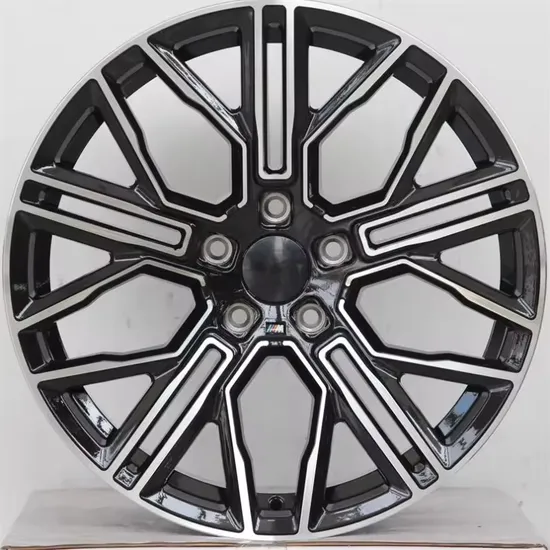 01
WHEEL RIM/HUB
19inch Car Aluminum Alloy Wheel PCD5*120 Aftermarket Sale
View Specifications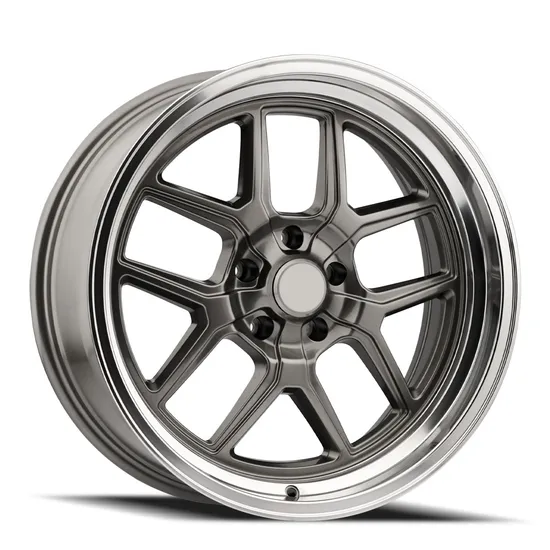 02
WHEEL RIM/HUB
19-Inch 5X120 PCD Et35 Custom Alloy Wheels for Performance
View Specifications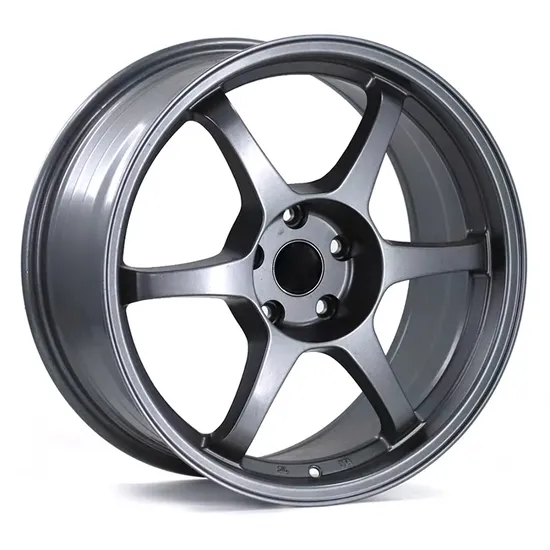 03
WHEEL RIM/HUB
Flow Form Rims 15X6.5 4Holes 6Spokes Lightweight Racing Alloy Wheels
View Specifications 04
WHEEL RIM/HUB
20 22 Inch 5 Hole 120 Luxury Car Alloy Wheels Rim
View Specifications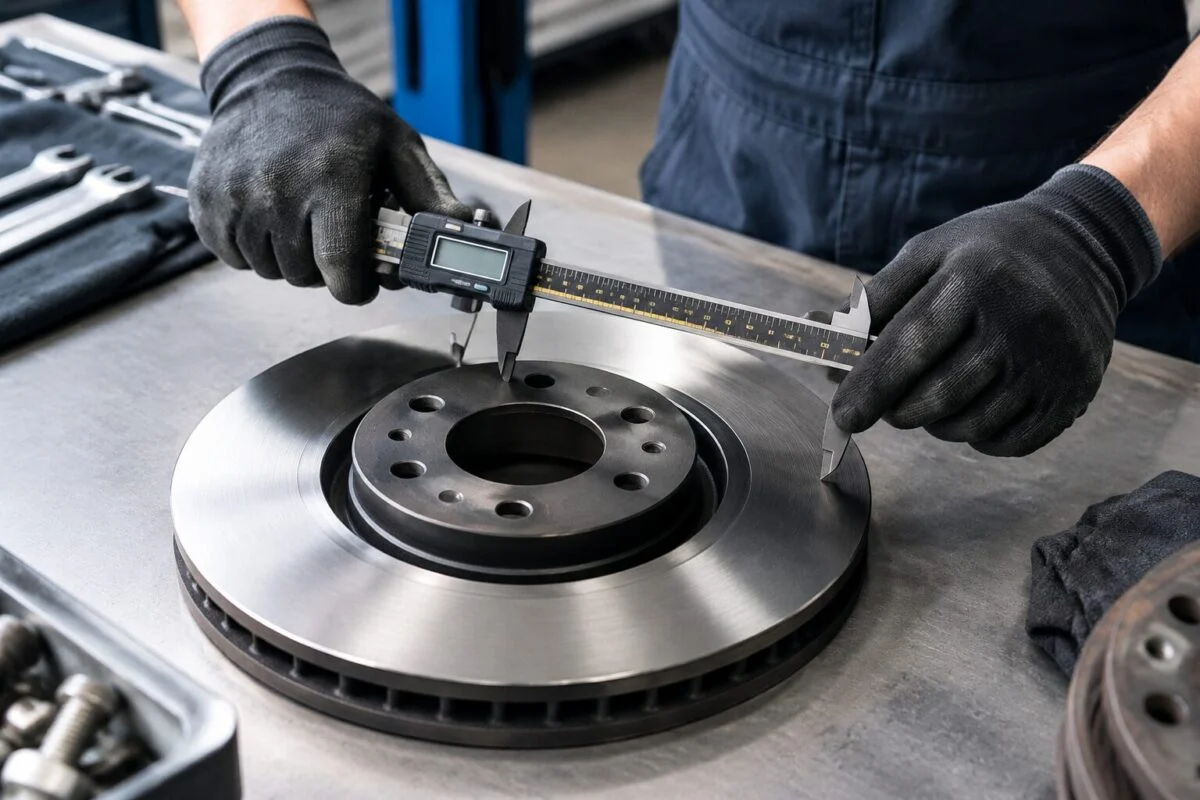
OE Fitment Check
Not sure it fits? Send us the OE number and we'll check it.
Jinan Yoker Auto Parts matches brake discs, drums, radiators, A/C condensers and wheel rims by OE number, vehicle model and year, PCD, ET and CB, so the parts fit before they ship.
- Factory-direct quote within 24 hours
- Free samples before bulk orders
- 10% off first order for new buyers (terms apply)
- Condenser MOQ from 10 PCS
Keep Reading
Related guides on auto parts sourcing
Buying Guide · · 10 min read
Buy Alloy Wheels Best Price 2026 Wholesale Supplier
Buy Alloy Wheels Best Price 2026 by aligning raw material, process, and volume variables rather than chasing low quotes. Discover how factory-direct sourcing compresses…
Read the Guide
Buying Guide · · 7 min read
Buy Alloy Wheels Wholesale Price | Factory Direct OEM Supplier
Stop guessing your real landed cost when you Buy Alloy Wheels Wholesale Price. Discover how manufacturing processes, MOQ tiers, and hidden certification fees shape…
Read the Guide
Buying Guide · · 9 min read
Car Rims Price in Ghana: 2026 Wholesale Buyer Guide
Car rims price in Ghana for 2026 wholesale buyers depends on landed costs, not just FOB quotes. This guide breaks down duty structures, finish…
Read the Guide