
Alloy Wheels Price in Argentina: 2026 Wholesale Buyer Guide
The real cost of importing alloy wheels to Argentina is never the FOB price you see on a proforma invoice.
Alloy wheel prices in Argentina for 2026 are driven by a layered cost structure: raw aluminum ingot pricing, surface treatment complexity, rim diameter, container load efficiency, ocean freight volatility, Argentine import duties under the Mercosur Common External Tariff, and port storage demurrage at Buenos Aires. A buyer comparing only factory quotes will consistently underestimate landed cost by a significant margin.
I still think about a container of 17-inch matte black wheels that sat at the Puerto Nuevo terminal for nearly three weeks because the importer’s customs broker missed a documentation window. When the boxes were finally cracked open at the warehouse, the clear coats were already peeling. The salt-spray test reports from the factory were perfectly fine. The problem was not the wheels—it was the humid river-air exposure during port dwell time. That single shipment taught me that alloy wheel price in Argentina is as much a packaging and logistics equation as it is a manufacturing one. [NEED_CITE: average vessel dwell time at Puerto Nuevo terminal by cargo type]
Let me walk you through how each layer actually moves the number, and where buyers routinely get surprised.
What Factors Actually Determine Alloy Wheel Prices in Argentina in 2026?
Alloy wheel prices in Argentina are shaped by six interlocking variables, and the factory quote is only the first one.
The base aluminum A356 ingot price on the Shanghai Futures Exchange sets the raw material floor, and this fluctuates monthly. [NEED_CITE: A356 aluminum alloy price trend on Shanghai Futures Exchange 2025-2026] When ingot prices rise, foundries adjust cast wheel pricing within a billing cycle, but the pass-through is rarely one-to-one because long-term supply contracts often lock pricing for a quarter.
Surface treatment is where quotes diverge sharply. A standard gloss black painted wheel costs noticeably less to produce than a machined-face with lip chrome, and a full mirror-polish chrome-plated wheel can carry a factory price that is multiples of the painted equivalent. The chemistry and labor intensity differ, and so does the rejection rate at QC—chrome plating废品率 runs substantially higher than powder coating, and that scrap cost is baked into the unit price. [NEED_CITE: comparative scrap rate between chrome plating and powder coating in aluminum wheel manufacturing]
Rim diameter matters in two directions. Larger diameters use more aluminum per piece, so the material cost climbs. But the less obvious factor is how diameter affects container loading density, which I will detail in the next section.
Argentine import duties sit on top of everything. Alloy wheels falling under NCM code 8716.90 are subject to the Mercosur Common External Tariff, and the effective rate includes both the TEC base and statistical taxes. [NEED_CITE: NCM 8716.90 import duty rate under Mercosur TEC 2026] This is a non-negotiable layer that every buyer must model before comparing supplier quotes.
Exchange rate exposure is the silent multiplier. The Argentine peso’s official and parallel rates diverge significantly, and the ability to repatriate profits or pay suppliers in USD depends on Central Bank access approvals. [NEED_CITE: Argentine peso official vs parallel exchange rate gap 2026] Buyers who price deals only at the official rate often find their real cost base is meaningfully higher.
Finally, domestic freight from Buenos Aires ports to inland distribution centers in Córdoba or Mendoza adds another tier, especially for full-container deliveries where weight matters.
A distributor in Rosario once showed me his landed-cost spreadsheet. He had built it entirely around the FOB quote and a flat freight estimate. When the actual invoice arrived, the gap between his projection and reality was large enough to wipe out the margin on the entire batch. The missing lines were port storage, customs broker fees, and the statistical tax. Alloy wheel price in Argentina cannot be modeled with a two-line formula.
How Do Different Sizes and Finishes Impact the Landed Cost?
Bigger wheels cost more per piece at the factory, but the per-piece freight and handling cost does not scale linearly—and that is where the real surprise hides.
Let me lay out how diameter affects container loading, because this is the single most misunderstood cost driver for South American buyers.
| Rim Diameter | Approximate Pieces per 20ft Container | Approximate Pieces per 40ft HC | Load Density Trend |
|---|---|---|---|
| 15-16 inch | High volume | Maximum volume | Dense stacking |
| 17-18 inch | Standard volume | High volume | Efficient |
| 19-20 inch | Reduced volume | Standard volume | Noticeably lower |
| 21-22 inch | Significantly reduced | Reduced volume | Substantially lower |
| 23-24 inch | Minimal | Low volume | Highly inefficient |
[NEED_CITE: standard container loading plan for stacked alloy wheels by diameter range]
The table tells the story: a 40ft high-cube packed with 17-inch wheels carries a full order quantity that simply cannot be matched by 22-inch wheels in the same box. When you divide the ocean freight cost by the number of pieces, the per-unit freight for 22-inch wheels is meaningfully higher. For a Buenos Aires buyer, this means the alloy wheel price in Argentina for large-diameter SKUs carries a hidden freight penalty that does not appear on the factory invoice.
Surface finish adds another dimension. Chrome-plated wheels require individual protective wrapping and foam separators to prevent transport scratching, because chrome damage is immediately visible and unsellable. Painted wheels are more forgiving and can use simpler dividers. This affects both packaging material cost at the factory and handling care at the destination port.
A tuning shop in Buenos Aires specialized in staggered fitments—19-inch front, 20-inch rear—for European sedan platforms. They ordered mixed containers regularly. When we ran the numbers together, they realized that the 20-inch rear wheels were costing them disproportionately more in freight allocation than the 17-inch wheels they sold for popular Japanese nameplates. They restructured their SKU mix to lead with high-volume 17- and 18-inch sizes and only stock 20-inch as special-order. Their per-container margin improved noticeably without changing suppliers.
The lesson is straightforward: if your warehouse sells mostly 17- and 18-inch wheels, your landed cost per piece will be structurally lower than a competitor whose catalog skews toward 20-inch and above, even if your factory unit prices are identical.
FOB vs. CIF: Which Shipping Term is More Cost-Effective for Argentine Buyers?
Neither term is universally cheaper—the right choice depends on whether your team has direct experience clearing goods at Puerto Nuevo or Puerto Zarate.
FOB means you control the ocean freight booking, the insurance, and the arrival logistics. CIF means the seller arranges freight and insurance to the named port, and you take over from the moment the vessel arrives.
For buyers who have a trusted freight forwarder with a Buenos Aires desk and a customs broker who files DJAI declarations smoothly, FOB usually delivers a lower total cost. You negotiate freight rates directly, you choose the shipping line, and you control the documentation timeline. [NEED_CITE: DJAI import declaration process requirements Argentina 2026]
For buyers importing their first few containers, or those who do not have a dedicated logistics person, CIF removes a layer of operational risk. The seller’s forwarder handles the booking, and if there is a documentation mismatch, the seller’s team is incentivized to fix it because the cargo is still technically their responsibility until the port of discharge.
I worked with a distributor in Córdoba who insisted on FOB for every order because he believed it was always cheaper. On one shipment, his forwarder missed a SIRA licensing window, and the container sat at terminal for an extended period. The demurrage and storage fees were substantial. He later admitted that on that single shipment, a CIF arrangement would have been less painful because the seller’s forwarder would have had stronger incentive to keep the documentation clean.
| Decision Factor | FOB Advantage | CIF Advantage |
|---|---|---|
| Freight cost control | Direct negotiation | Seller absorbs booking complexity |
| Documentation risk | Buyer manages | Seller incentivized to coordinate |
| Port demurrage exposure | Buyer bears full risk | Partially mitigated by seller’s forwarder |
| Best suited for | Experienced importers | First-time or low-frequency buyers |
[NEED_CITE: SIRA import license processing timeline Argentina]
The alloy wheel price in Argentina under CIF will always look higher on the proforma because the seller builds a freight buffer into the unit price. But that buffer is often smaller than the cost of a single demurrage incident for a buyer who mismanages the arrival process.
How to Avoid Hidden Costs: Packaging and Port Storage Pitfalls in Buenos Aires?
The Argentine climate and port infrastructure create specific risks that generic export packaging does not address—and the cost of ignoring this shows up in claims, not in quotes.
Buenos Aires sits on the Río de la Plata, and the humidity levels at port terminals are consistently high, especially during the summer months. Wheels wrapped in standard single-layer VCI paper and stacked loosely in a container will develop surface oxidation if the container sits at the terminal for more than a short window.
We developed a South America-specific packaging protocol after the matte black peeling incident I mentioned earlier. The protocol uses a multi-layer approach: individual wheel bags with sealed VCI lining, foam separators rated for high humidity, and desiccant packs sized to the container volume. The outer carton is double-wall corrugated with a moisture-resistant coating. This packaging adds a small amount to the factory unit cost, but it has effectively eliminated port-dwell oxidation claims on our Argentina shipments.
Port storage is the other trap. Puerto Nuevo charges demurrage on a tiered daily scale, and the rate escalates sharply after the initial free days. [NEED_CITE: Puerto Nuevo terminal demurrage rate schedule for general cargo] A buyer who has not pre-arranged truck pickup and has not confirmed that the customs broker has all original documents ready will watch those daily charges compound.
A wholesale buyer in Buenos Aires once told me that he now treats port storage fees as a line item in his cost model, not as an exception. He schedules his customs clearance to begin before the vessel even berths, using pre-arrival documentation submission. His trucks are booked to pick up within the free storage window on virtually every container. His alloy wheel price in Argentina is lower than competitors who treat port dwell as unavoidable.
The practical checklist is short but non-negotiable:
- Confirm packaging specification with the factory before production, not after
- Submit all import documentation to the customs broker at least several days before vessel arrival
- Pre-book inland transport and confirm truck availability for the day after customs release
- Build a port-dwell contingency buffer into the landed cost model
Conclusion
Alloy wheel price in Argentina is a full-chain calculation, not a factory quote.
Raw material, surface treatment, diameter-driven load efficiency, import duties, exchange rate exposure, packaging resilience, and port logistics all compound into the final number a buyer pays. Buyers who model only the FOB quote will consistently underestimate their real cost, and those who invest in South America-specific packaging and proactive customs coordination will structurally outperform competitors who treat these variables as afterthoughts.
Related Applications
Parts in This Article
Products mentioned above
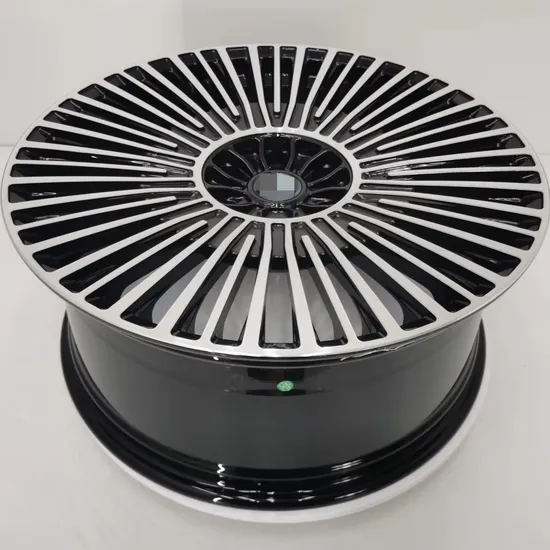 01
WHEEL RIM/HUB
A356 Aluminum Alloy 6 Holes Black Machined Car Wheel Rim
View Specifications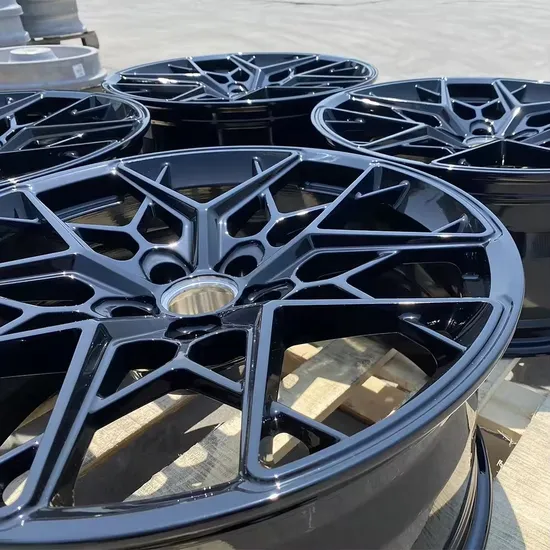 02
WHEEL RIM/HUB
A356 Aluminum 5-Hole Black Aftermarket Car Wheel Rim
View Specifications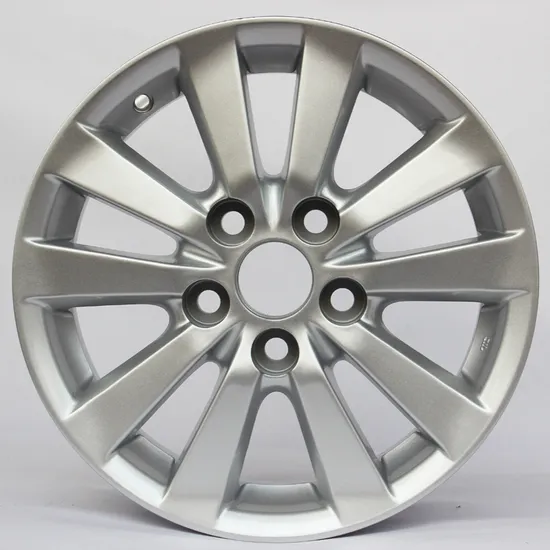 03
WHEEL RIM/HUB
15 Inch A356.2 Aluminum SUV Alloy Wheel Rim Silver Custom
View Specifications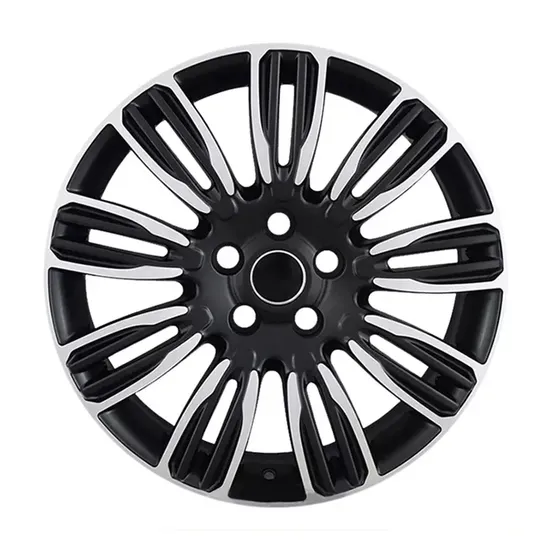 04
WHEEL RIM/HUB
16-22 Inch Merc A356 Aluminum Alloy Wheel Rims Hot Selling
View Specifications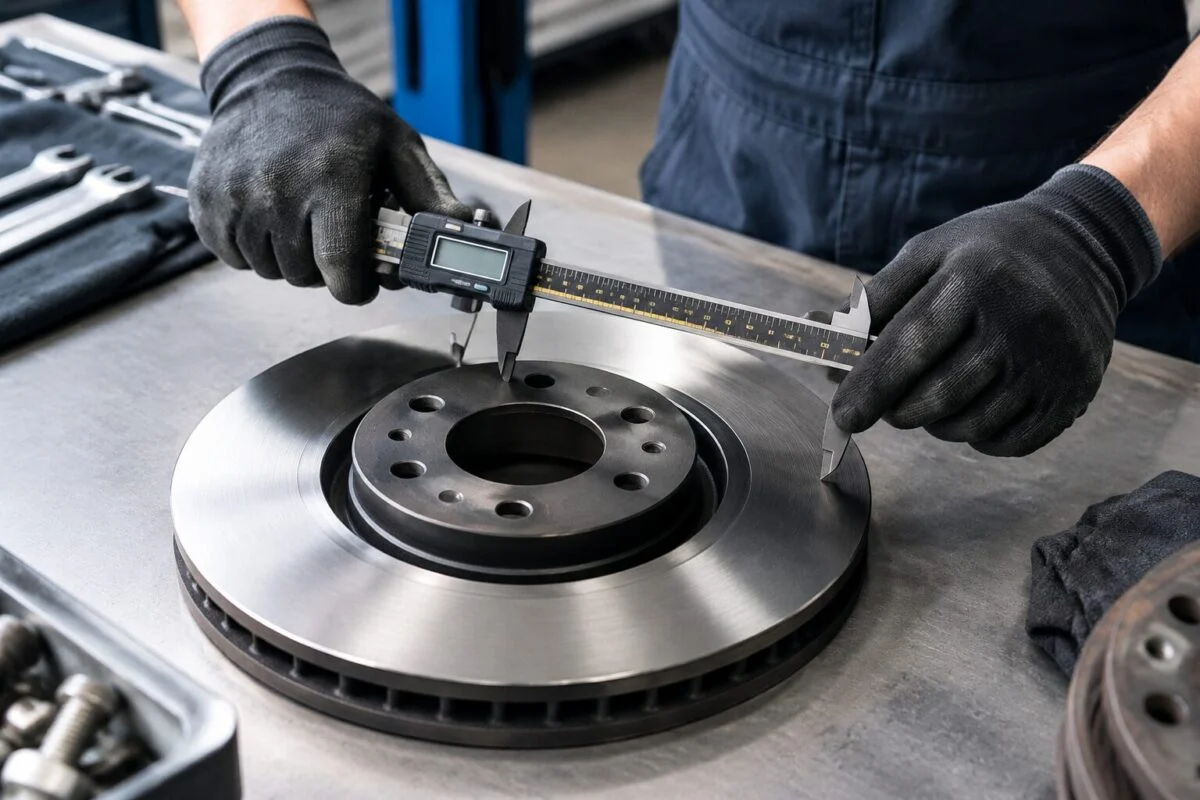
OE Fitment Check
Not sure it fits? Send us the OE number and we'll check it.
Jinan Yoker Auto Parts matches brake discs, drums, radiators, A/C condensers and wheel rims by OE number, vehicle model and year, PCD, ET and CB, so the parts fit before they ship.
- Factory-direct quote within 24 hours
- Free samples before bulk orders
- 10% off first order for new buyers (terms apply)
- Condenser MOQ from 10 PCS
Keep Reading
Related guides on auto parts sourcing
Buying Guide · · 9 min read
Buy 15 Inch Alloy Wheels OEM Custom Manufacturer
Buy 15 inch alloy wheels OEM custom with confidence by mastering PCD, offset, and climate-specific finishes. Avoid costly fitment errors and corrosion failures with…
Read the Guide
Buying Guide · · 9 min read
Wheel Rims Wholesale Supplier for Turkey: China Factory Direct OEM
Selecting the right wheel rims supplier for Turkey requires matching surface finishes to coastal salt exposure and ensuring TÜV or VIA certification for smooth…
Read the Guide
Buying Guide · · 10 min read
Buy Alloy Wheels Best Price 2026 Wholesale Supplier
Buy Alloy Wheels Best Price 2026 by aligning raw material, process, and volume variables rather than chasing low quotes. Discover how factory-direct sourcing compresses…
Read the Guide