
Racing Wheels Wholesale: Bulk Order from China
Forged wheels are not automatically better than cast wheels for every buyer—process choice must match end-user driving conditions, not price tags.
When sourcing racing wheels wholesale, the real cost drivers are not raw material prices but batch-to-batch consistency, center-bore and offset precision, and surface-finish durability under high-stress use. A container-load order that looks cheap on paper can become a mid-five-figure loss if fitment data is wrong or color drift appears across SKUs.
Running the aftermarket wheel trade across Southeast Asia for years, I watched a Kuala Lumpur tuning shop receive a full container of 18-inch matte-black forged wheels only to discover the center-bore tolerance was off by a fraction of a millimeter. The entire shipment sat at Port Klang for weeks, tied up in customs re-inspection, and the buyer faced claims from their retail clients. That single order wiped out the margin of the next several containers. Moments like that reshape how you think about racing wheels wholesale—every spec sheet needs verification before a single piece leaves the factory floor [NEED_CITE: fitment tolerance standards per SAE J2530].
What follows is a practical breakdown drawn from container-level purchasing experience, covering the specs that matter, the process trade-offs, the validation steps that prevent costly mistakes, and the pricing and lead-time expectations you should hold factories to.
What Specs Matter When Ordering Racing Wheels in Bulk?
Diameter, width, offset (ET), PCD, and center-bore diameter together determine whether a wheel physically fits the vehicle—getting any one wrong means the wheel will not mount, will rub, or will cause vibration at speed.
When buyers browse racing wheels wholesale catalogs, they often fixate on diameter and style. In reality, the parameters that cause container-level disputes are the ones hidden in the spec sheet’s fine print.
| Parameter | What It Defines | Risk if Incorrect |
|---|---|---|
| Diameter (inch) | Overall wheel size | Tire stretch, speedometer error |
| Width (inch) | Tire seating surface | Bead unseating, fender rub |
| Offset / ET (mm) | Hub mounting position | Suspension geometry change, strut contact |
| PCD (bolt pattern) | Lug hole circle diameter | Wheel will not bolt on at all |
| Center Bore (mm) | Hub ring seating diameter | Vibration if too large, will not mount if too small |
| Load Index (kg) | Maximum static load per wheel | Structural failure under cornering loads |
A Middle East distributor once mixed seventeen-, eighteen-, and twenty-inch SKUs into a single container for a multi-brand retail client. The eighteen-inch wheels had the correct PCD but the center bore was machined half a millimeter undersized. None of them slipped onto the hub. The entire batch required re-machining at the destination port—a process that cost several times the original freight savings [NEED_CITE: hub-centric vs lug-centric mounting requirements per wheel industry technical bulletins].
The lesson: before confirming any racing wheels wholesale order, request a fitment data sheet for every SKU and cross-reference it against the vehicle application list. Do not rely on the factory’s generic catalog dimensions.
Forged vs. Cast vs. Flow-Formed: Which Process Fits Your Market?
Process selection must follow the end user’s driving environment—street enthusiasts do not need forged wheels, and track-day customers should not accept cast wheels.
The three mainstream manufacturing processes for alloy wheels each occupy a distinct position in the cost-performance spectrum. Understanding where they overlap and where they diverge is essential when curating a racing wheels wholesale catalog for mixed markets.
| Factor | Gravity Cast | Flow-Formed (Rotary Forged) | Fully Forged |
|---|---|---|---|
| Material Structure | As-cast grain | Partially aligned grain under barrel | Fully aligned billet grain |
| Weight (relative) | Heaviest | Noticeably reduced | Substantially reduced |
| Impact Resistance | Basic | Standard | Robust |
| Typical Application | Entry-level, daily street | Enthusiast street, light track | Competition, aggressive track |
| Cost Position | Lowest | Mid-range | Highest |
| MOQ Flexibility | High | Moderate | Lower per design |
A common misconception in the racing wheels wholesale space is that forging is always the superior choice. In practice, a flow-formed wheel delivers more than adequate strength for a customer who drives to the track on Monday and commutes the rest of the week. The fully forged wheel earns its premium only when the buyer is subjected to repeated high-G cornering, curbing at speed, or sustained braking heat cycles that would fatigue a cast barrel.
Conversely, gravity-cast wheels remain the volume backbone for tire shops and general aftermarket retailers who need broad fitment coverage at accessible price points. A Southeast Asian e-commerce seller I worked with started with cast wheels for a low-MOQ test run, validated demand across several fitments, then scaled the best-sellers to flow-formed versions for the premium tier—avoiding the upfront tooling cost of forging until the market signal was clear.
How to Validate Quality Before Placing a Container Order?
Require certification documents, a first-article sample, and third-party test reports as three non-negotiable gates—skipping any one of them multiplies your container-level risk.
The racing wheels wholesale market has no shortage of factories that claim compliance. The gap between a certificate on a wall and a certificate backed by traceable test data is where most bulk-buy disasters originate.
Step 1: Verify Certification Scope
Ask for VIA, JWL, TÜV, or DOT documentation and confirm that the certificate covers the exact diameter, width, and PCD combination you are ordering—not just a similar model in the factory’s range. Certificates are often issued for a representative size; a different SKU may fall outside the tested envelope [NEED_CITE: certification scope limitations per TÜV and VIA auditing guidelines].
Step 2: Request a First-Article Sample with Full Documentation
Before the production run begins, the factory should produce a first-article sample from the actual production tooling. This sample must be accompanied by X-ray porosity inspection images, dynamic balance test results, and radial runout measurements. If the factory cannot provide these for the sample, they will not provide them for the batch.
Step 3: Commission Independent Third-Party Testing
For orders above a single container, engage an independent inspection agency to perform salt-spray endurance testing, impact testing, and coating adhesion checks on randomly pulled units. The cost of a third-party inspection is a fraction of the cost of repacking or scrapping a container at destination.
A Latin American distributor learned this the hard way when a racing wheels wholesale supplier delivered a batch with a glossy black finish that looked perfect in the factory showroom but began peeling within weeks under tropical UV exposure. The factory’s internal salt-spray data had not been independently verified. After that experience, the distributor mandated third-party testing for every surface finish before approving bulk production.
What MOQ, Lead Time, and Pricing Should You Expect from China?
Stock models typically start at low minimums for testing; custom designs require higher thresholds; lead times run from a few weeks for stock to over a month for custom runs; factory-direct pricing sits substantially below branded Japanese and European equivalents.
Pricing in the racing wheels wholesale channel is often misunderstood. Buyers compare per-piece quotes between factories and assume the lowest number wins. In reality, the price gap between suppliers is usually driven by surface-finish complexity and quality rejection rates—not by material cost differences.
| Order Type | Typical MOQ Range | Typical Lead Time | Notes |
|---|---|---|---|
| Stock Models (standard sizes/finishes) | Low, suitable for test orders | Short, measured in weeks | Ideal for e-commerce testing and tuning shop replenishment |
| Custom Finish on Existing Mold | Moderate | Moderate, several weeks | Color matching requires batch consistency checks |
| Fully Custom Design (new mold) | Higher, driven by mold amortization | Extended, includes mold fabrication | Best for exclusive private-label programs |
The manufacturer behind the Ouya brand operates production facilities with an annual capacity measured in the tens of millions of pieces, serving aftermarket, OEM, and modification channels across multiple regions. Their MOQ structure allows stock models to be ordered in small quantities for market testing, while custom designs start at a higher threshold that ensures production-line efficiency. Lead times typically range from a couple of weeks for in-stock items to roughly a month for custom orders. Factory-direct pricing under branded Japanese and European equivalents creates meaningful margin room for distributors and tuning shops alike.
An e-commerce seller based in Australia used the low-MOQ stock option to test six different fitments with a small initial order. After confirming sell-through velocity, they placed a full container order of the top three performers, switching to custom bronze and gunmetal finishes for the premium listings. The packaging was upgraded to export-grade protection after the initial test shipment revealed minor curb-rash damage on a few units during transit—a detail that the manufacturer adjusted for the follow-up container.
How to Avoid the Top Mistakes in Wholesale Wheel Orders?
Center-bore data unverified, surface color unapproved by physical sample, and packaging not rated for ocean freight are the three most frequent causes of loss in bulk wheel purchasing.
Mistake 1: Trusting Catalog Center-Bore Data Without Cross-Checking
Factory catalogs often list center-bore dimensions in rounded figures. The actual machined tolerance can vary, and a wheel that is even slightly undersized will not seat on the hub. Always confirm the exact center-bore dimension against the vehicle hub specification before finalizing the order. This is especially critical when mixing multiple vehicle fitments into a single container for a multi-brand retail client.
Mistake 2: Approving Color from a Digital Rendering
A Middle East buyer approved a custom hyper-silver finish based on a factory-rendered image. When the container arrived, the actual finish had a noticeably warmer tone than expected. The buyer had no physical color sample on file to reference. The entire batch had to be remarketed at a discount. For any custom finish in a racing wheels wholesale order, insist on a physical color chip or a previously shipped sample wheel before authorizing production.
Mistake 3: Using Domestic-Grade Packaging for Export Shipments
Wheels destined for domestic delivery may travel in simple cardboard dividers. Ocean freight introduces container sway, humidity shifts, and handling impacts that domestic shipping does not. Export-grade packaging—individual poly bags, foam end caps, and reinforced outer cartons—is essential. A Southeast Asian tuning shop received a batch where the factory had used domestic packaging to cut costs; nearly a quarter of the wheels showed edge damage upon opening. The replacement shipment cost several times the original packaging savings.
Conclusion
Successful racing wheels wholesale purchasing depends on precision in specification verification, honest process-to-application matching, and disciplined quality validation before container commitment. The factories that earn repeat business are not necessarily the cheapest on a spec sheet—they are the ones whose batch consistency, certification traceability, and packaging standards survive the realities of international freight and end-user installation.
Related Applications
Parts in This Article
Products mentioned above
 01
WHEEL RIM/HUB
Wholesale Racing Car Alloy Wheel Accessories
View Specifications 02
WHEEL RIM/HUB
High Performance 15-20 Inch 4/5 Lug Aluminum Racing Wheel Rim
View Specifications 03
WHEEL RIM/HUB
21 Inch 5X114.3 Racing Wheels High-Speed Stability
View Specifications 04
WHEEL RIM/HUB
Black Silver Machine Lip Racing Wheel Rim 4/5 Bolt Patterns
View Specifications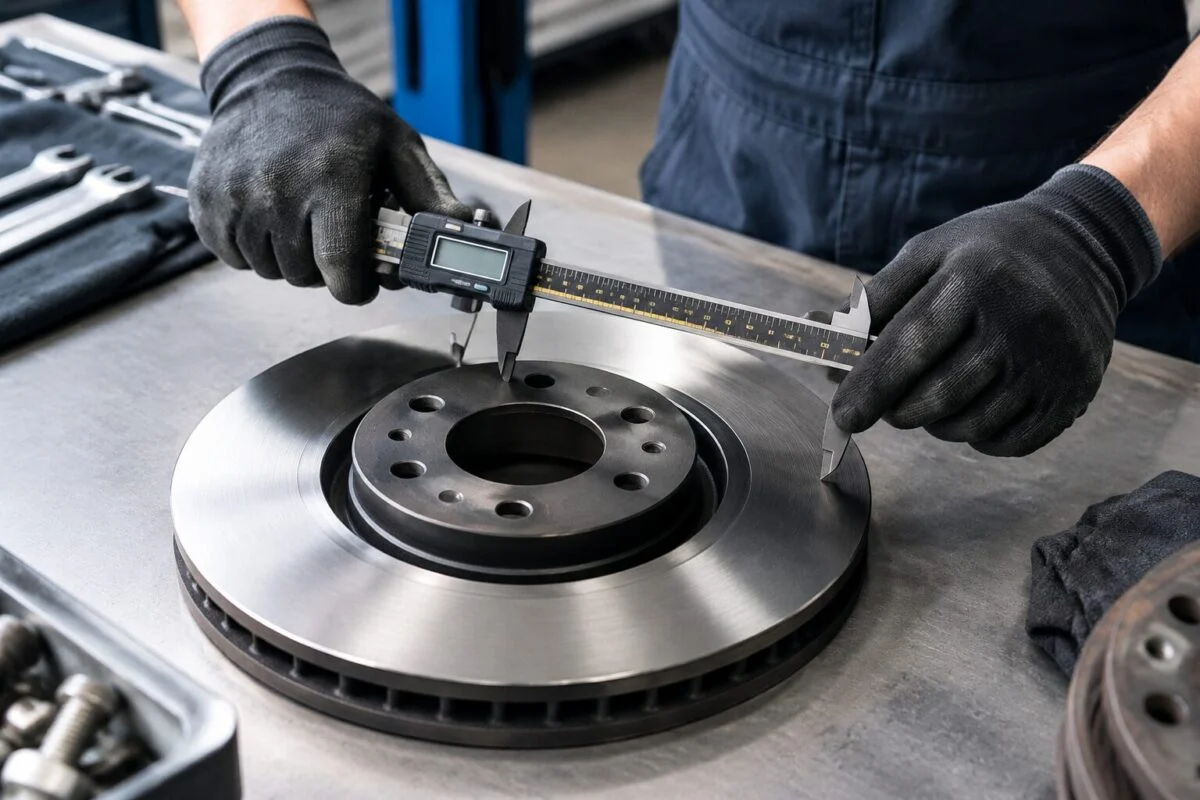
OE Fitment Check
Not sure it fits? Send us the OE number and we'll check it.
Jinan Yoker Auto Parts matches brake discs, drums, radiators, A/C condensers and wheel rims by OE number, vehicle model and year, PCD, ET and CB, so the parts fit before they ship.
- Factory-direct quote within 24 hours
- Free samples before bulk orders
- 10% off first order for new buyers (terms apply)
- Condenser MOQ from 10 PCS
Keep Reading
Related guides on auto parts sourcing

Buying Guide · · 10 min read
Buy Alloy Wheels Best Price 2026 Wholesale Supplier
Buy Alloy Wheels Best Price 2026 by aligning raw material, process, and volume variables rather than chasing low quotes. Discover how factory-direct sourcing compresses…
Read the Guide
Buying Guide · · 7 min read
Buy Alloy Wheels Wholesale Price | Factory Direct OEM Supplier
Stop guessing your real landed cost when you Buy Alloy Wheels Wholesale Price. Discover how manufacturing processes, MOQ tiers, and hidden certification fees shape…
Read the Guide
Buying Guide · · 9 min read
Car Rims Price in Ghana: 2026 Wholesale Buyer Guide
Car rims price in Ghana for 2026 wholesale buyers depends on landed costs, not just FOB quotes. This guide breaks down duty structures, finish…
Read the Guide