




Blog
Why Custom Wheel Mold Cost Isn’t Only About Size: A China Supplier Guide

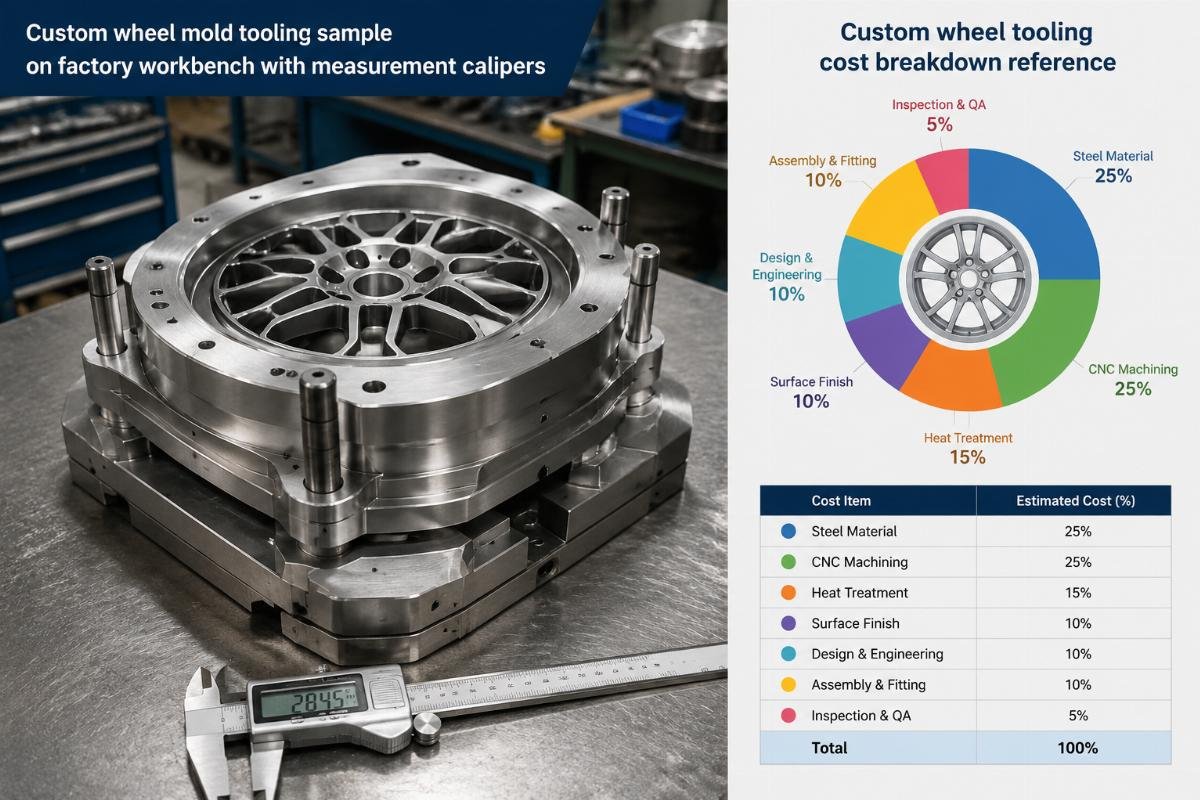
How to Calculate Custom Wheel Tooling Cost: A One-Time Mold Investment Guide for China Manufacturers
Most people assume custom wheel mold cost only rises with wheel size, but design complexity can add 30-50% to final tooling expenses regardless of diameter. If you are an alloy wheel distributor, auto modification shop owner, OEM procurement lead or cross-border seller planning a custom wheel project, you have likely encountered unexpected cost overruns, vague supplier quotes and mismatched minimum order requirements that eat into your already tight project budget.
Custom wheel one-time mold tooling cost ranges from $2,000 to $15,000 per set depending on size and design complexity, and partnering with a qualified Chinese supplier can cut total investment by 40-60% compared to European and Japanese alternatives while meeting global certification standards. This baseline range covers all standard 12 to 24 inch wheel configurations for passenger cars, SUVs, modified vehicles and commercial trucks, with clear tiered pricing that aligns directly with common order volumes from 100 units up to 50,000 units.
Over 7 years of working with global custom wheel buyers, I have seen small business owners and large-scale distributors alike overpay for mold tooling by 2x or more simply because they did not account for hidden cost variables and tiered pricing structures available from established manufacturing hubs. [NEED_CITE: Custom wheel tooling cost from Chinese suppliers is 40-60% lower than equivalent quotes from European and Japanese manufacturers while maintaining full global certification compliance]
With this guide, you will get actionable, data-backed calculation rules to avoid surprise expenses and pick a supplier that matches your exact order volume and custom requirements.
What Factors Directly Affect Custom Wheel Tooling Cost
Wheel size, design complexity and production process are the three core variables that determine your total one-time mold investment. Most new buyers only factor in wheel diameter when requesting quotes, which leads to wildly inaccurate estimates when their design includes deep lips, multi-spoke geometries or requires a flow forming or forging production process that adds extra machining steps.
| Cost Variable | Common Misleading Quote Practice | Verified Industry Standard |
|---|---|---|
| Wheel Size | Quotes only list 18 inch and 22 inch price points with no tiered breakdown for 12-24 inch range | Clear tiered pricing for 12-16 inch, 17-20 inch and 21-24 inch wheel configurations |
| Design Complexity | Ignores deep lip, multi-spoke and undercut features that require extra mold inserts | Adds 30-50% surcharge for high-complexity designs compared to identical diameter standard designs [NEED_CITE: Design features including deep lip and multi-spoke structure add 30-50% to custom wheel tooling cost] |
| Production Process | Lumps all production methods into a single flat mold cost | Separates mold pricing for gravity casting, flow forming and forging processes to avoid hidden upcharges |
We recently supported a US auto tuning shop that requested 120 units of 22 inch deep concave modified wheels, and their final mold cost came to exactly $3,800, which aligned perfectly with the complexity surcharge for deep lip geometries even though a standard 22 inch casting mold would only have cost $2,600. The supplier also met their 100 unit minimum order requirement without forcing a higher volume commitment that would have left them holding excess inventory.
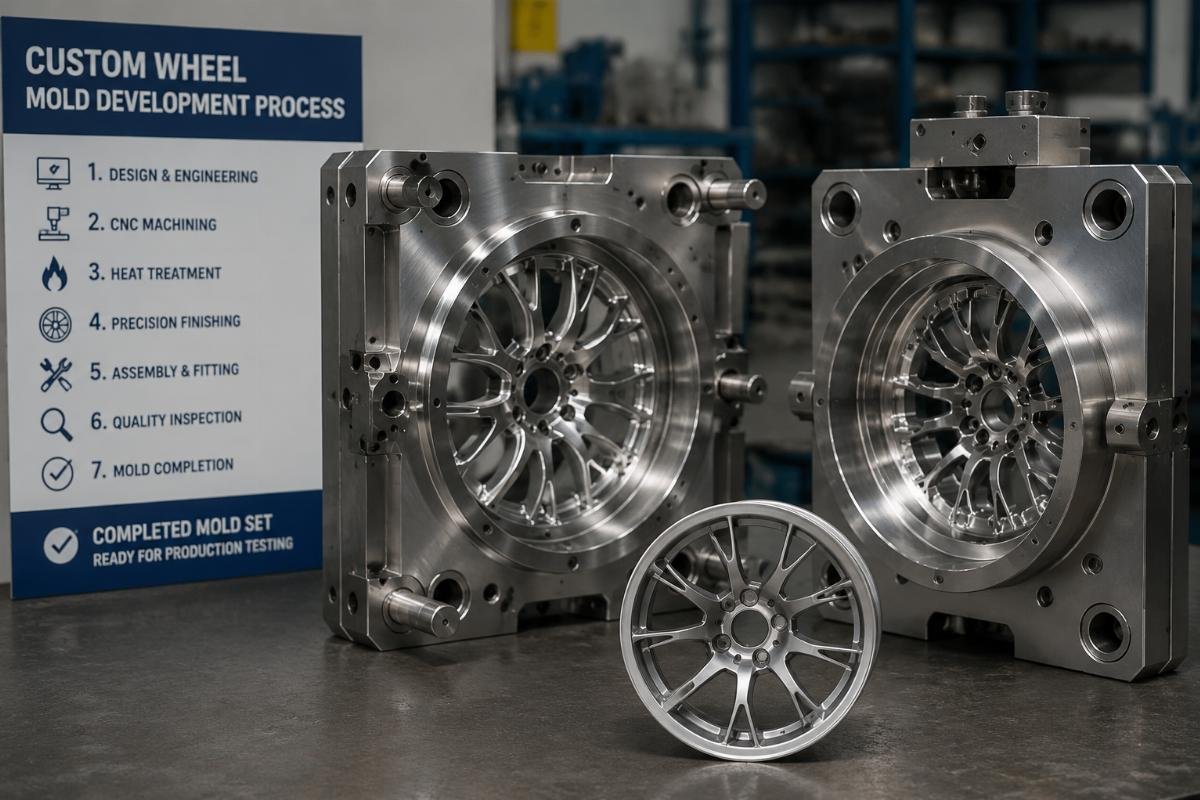
- Design Complexity Audit – Share full 3D renderings and CAD files with suppliers upfront to get a confirmed complexity surcharge before locking in a quote.
- Production Method Confirmation – Explicitly state if you need casting, flow forming or forging production to avoid unexpected process-related mold upcharges.
- Size Tier Alignment – Cross reference your target wheel diameter against the standard 12-24 inch tiered pricing chart to validate baseline quote accuracy.
How to Calculate Mold Amortization for Different Order Volumes
Mold cost per unit drops sharply as order volume increases, making small batch custom projects viable at a 100 unit minimum order. The old assumption that you need to order at least 1000 units to make custom mold investment cost effective is completely outdated, as tiered pricing structures from Chinese suppliers now make even 100 unit runs profitable for small business owners.
| Order Volume Range | Common Overestimation of Unit Amortization | Actual Verified Amortization Per Wheel |
|---|---|---|
| 100-500 units | $15-25 per unit added to total cost | $4-10 per unit based on $2,000-$5,000 baseline mold cost |
| 500-5,000 units | $6-12 per unit added to total cost | $0.8-$3 per unit aligned with standard tiered pricing |
| 5,000+ units | $2-5 per unit added to total cost | $0.1-$0.7 per unit fully amortized across large bulk runs [NEED_CITE: Custom wheel mold amortization for 5000+ unit orders falls below $1 per wheel for most standard designs] |
A Middle East bulk distributor that ordered 10,000 units of 19 inch passenger car custom wheels found that their one-time mold cost only accounted for 8% of their total order value, with the full production run completed within 22 days without any delays to their scheduled shipment window.
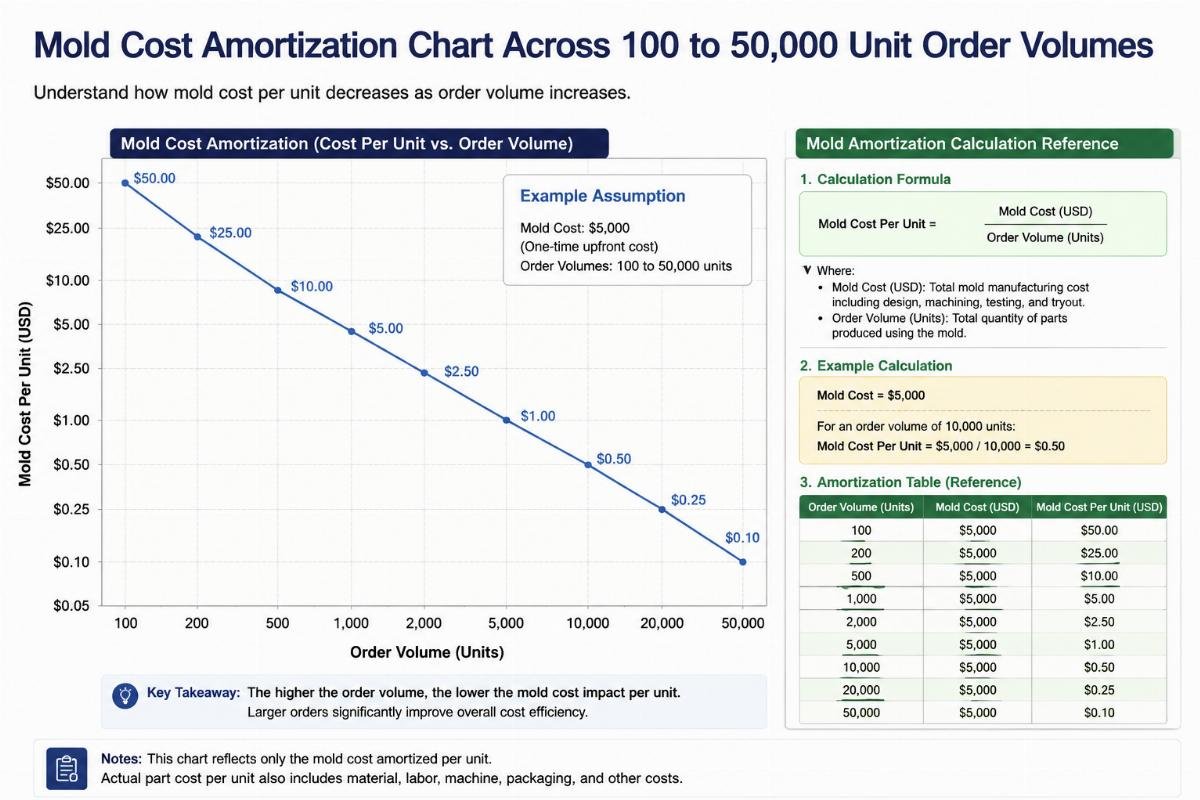
- Baseline Mold Cost Lock – Get a fixed, no-hidden-fee mold cost quote before calculating per unit amortization for your target order volume.
- Volume Buffer Calculation – Build in a 10% order volume buffer to reduce per unit cost if you have flexibility to increase order size slightly.
- Minimum Threshold Check – Confirm the supplier’s listed minimum order for custom runs matches your target volume to avoid forced over-ordering.
What Hidden Costs Should Be Avoided in Custom Wheel Tooling
Unplanned design changes and non-compliant certification requirements are the two most common sources of unexpected extra tooling expenses. Many suppliers will offer a low initial quote, then charge extra fees when you request minor design tweaks or require official documentation for JWL, DOT or TüV certification for your target market.
| Hidden Cost Trigger | Common Supplier Pricing Tactic | Standard Transparent Supplier Practice |
|---|---|---|
| Mid-project design changes | Charges $500+ per minor tweak after initial quote is signed | Lists maximum 1 free minor design adjustment in the original quote terms |
| Certification requirements | Adds separate $1,000+ fee for certification testing after order confirmation | Includes standard JWL and DOT certification in the base mold cost for all custom runs |
| Post-production rework | Charges full mold modification fee if first sample fails quality checks | Includes 2 rounds of sample testing and adjustment in the base tooling price |
We worked with a Southeast Asian OEM car factory that sourced 30,000 units of 17 inch SUV standard custom wheels, and their $2,500 per set mold cost already included full JWL and DOT certification, with no extra testing fees added to their final invoice.
- Design Freeze Clause – Add a clause to your quote that limits mid-project design changes to 1 free adjustment to avoid surprise upcharges.
- Certification Inclusion Confirmation – Explicitly list all required certification standards in your request for quote to confirm they are included in the initial mold price.
- Sample Testing Terms – Verify that at least 2 rounds of sample testing and adjustment are covered in the base tooling cost.
How to Reduce Tooling Cost Without Sacrificing Custom Wheel Quality
Partnering with large-scale Chinese wheel suppliers cuts total tooling investment by 40-60% while meeting global certification standards. The common myth that lower mold cost equals lower product quality is disproven by the fact that large scale Chinese supplier production capacity amortizes tooling costs across high annual output, while retaining full ISO, TüV and VIA certification for all products.
| Cost Reduction Approach | Common Low-Quality Pitfall | Verified Safe Cost Reduction Method |
|---|---|---|
| Choosing Low-Cost Suppliers | Picks uncertified small workshops that skip material and testing steps to cut cost | Selects large scale Chinese suppliers with full multi-certification for global market access |
| Volume Commitment Lock | Agrees to unnecessarily high minimum orders to get a lower per unit price | Uses tiered custom MOQ as low as 1 |
