
Alloy Wheel Rims 12-24 Inch Wholesale Supplier for Sale OEM Custom
- By author
- Buying Guide
Alloy Wheel Rims 12-24 Inch Wholesale Supplier for Sale OEM Custom
Retail shelf pricing for alloy wheels in Australia carries a markup that has nothing to do with metal cost. The real price gap between a Melbourne tire shop display and a factory-direct container shipment sits in the 40-60% range, driven by certification overhead, distribution layers, and small-batch logistics rather than raw material differences. Australian buyers who understand the manufacturing method, certification tier, and volume-based pricing structure can cut per-unit landed cost dramatically without sacrificing structural integrity.
I still remember a shipment that got held up at Jebel Ali because the center bore on a batch of 20-inch MAT cast rims measured 73.0 instead of 73.1. The Dubai buyer sent me a video of him standing at the port with a digital caliper, pointing at the hub ring gap. That 0.1 mm deviation turned a full container into dead stock for weeks. Since then, I check center bore, PCD, and offset on every pallet before it leaves the loading bay. Pictures on a screen mean nothing if the physical spec does not match the vehicle hub. When you search for wheel rims price in Australia, the number you see on a local website is the end of a long cost chain, and understanding each link is what separates a profitable import operation from an expensive lesson.
Let me walk you through what actually determines what you pay, where the hidden costs sit, and how to build a comparison framework that protects your margin.
What Factors Determine Wheel Rims Price in Australia?
Four variables control the final price tag: manufacturing process, certification level, order volume, and surface treatment complexity. Everything else—marketing claims, brand positioning, showroom overhead—is noise layered on top of these four.
The manufacturing method sets the baseline cost. A gravity-cast rim and a flow-formed rim from the same mold design can differ in material cost and machining time by a factor of two to three. Certification adds a fixed overhead per SKU that only makes sense at scale. A JWL or VIA tested wheel carries testing and documentation costs that a non-certified clone simply ignores. Volume determines how much of that fixed cost gets absorbed per unit. Surface treatment—whether it is a standard machined face, a multi-layer gloss black, or a custom color match—adds labor hours and chemical costs that scale with complexity rather than diameter.
| Factor | Entry-Level Spec | Mid-Range Spec | Premium Spec |
|---|---|---|---|
| Manufacturing | Gravity cast | MAT cast | Flow-formed / forged |
| Certification | None | Self-reported | JWL / VIA / TÜV verified |
| Volume Tier | Sample batch | Mid volume | Full container |
| Surface | Single coat paint | Machined face + clear | Multi-layer custom color |
| Batch Consistency | Sample-level | Batch-level | Full batch-level traceable |
| Documentation | Self-reported | Partial test report | Full mill cert and test data |
[NEED_CITE: Australian Customs tariff classification for alloy wheels and applicable duty rates]
A tire retailer in Sydney once showed me his purchase orders side by side. The same 18-inch five-spoke design, one sourced from a local distributor and one quoted direct from a Shandong factory. The per-piece gap was substantial enough that even after adding sea freight and GST, the direct import landed well below the wholesale shelf price. The catch was that the direct route required committing to a full container mix, which his storage situation could not handle at first. That volume threshold is where most small buyers miscalculate.
The takeaway is straightforward. If you are buying twenty pieces for a one-off custom build, the per-unit cost will always look high. If you are building recurring inventory for a retail or modification shop, the math shifts entirely once you cross the container-load threshold.
How Do Different Manufacturing Methods Affect Wheel Pricing?
The gap between gravity casting, MAT casting, and flow forming is not a marketing story. It is a structural and cost reality that shows up in weight, strength, and price.
Gravity casting pours molten aluminum into a steel mold and lets it solidify under atmospheric pressure. The process is cheap, fast, and produces a rim that is heavier and more porous at a microscopic level. These wheels dominate the budget end of the market and are fine for stock replacement applications where load and lateral stress stay within factory parameters.
MAT cast, sometimes called low-pressure cast with enhanced cooling, uses controlled pressure and directional solidification to reduce porosity and improve grain structure. The result is a rim that is noticeably lighter than a gravity-cast equivalent while retaining adequate strength for most passenger car and light SUV applications. This is the process that occupies the largest share of the aftermarket volume because it balances cost and performance. [NEED_CITE: comparative weight and porosity data across casting methods per SAE or JIS standards]
Flow forming, also called rotary forging or spin forming, takes a cast preform and subjects the barrel section to high-pressure roller forming while it rotates. The barrel wall thins down, the grain structure elongates along the contour, and the final product approaches forged-wheel strength at a fraction of the cost of a full forged blank. Flow-formed rims are the standard choice for performance applications, staggered fitments, and any situation where unsprung weight matters.
| Process | Weight vs Baseline | Structural Density | Typical Price Position | Best Application |
|---|---|---|---|---|
| Gravity cast | Heaviest | Basic | Lowest | Stock replacement, budget retail |
| MAT cast | Noticeably reduced | Standard | Mid-range | Aftermarket volume, general fitment |
| Flow-formed | Substantially reduced | Robust | Premium | Performance, staggered, modified vehicles |
A modification shop in Brisbane was importing a popular concave mesh design in gravity cast because the price looked right. Within months, they had two customer complaints about hairline cracks near the valve stem hole on wheels that had seen less than a year of normal driving. Switching the same design to MAT cast eliminated the complaints. The per-piece cost went up, but the warranty return rate dropped to near zero, and the net margin actually improved.
When you evaluate wheel rims price in Australia across different quotes, the first question to ask is which process the quote is based on. A gravity-cast quote and a flow-formed quote for the same visual design are not comparable prices. They are different products.
What Are the Hidden Costs When Importing Wheel Rims to Australia?
The FOB price on a proforma invoice is the starting line, not the finish line. Freight, duty, port charges, compliance documentation, and quality inspection all add layers that can reshape your real landed cost.
Ocean freight from a Chinese port to Melbourne, Sydney, or Brisbane fluctuates with container availability and seasonal demand. A twenty-foot container of mixed-size alloy wheels carries a certain number of pieces depending on diameter and packaging. The per-piece freight share drops as you fill the container more efficiently, which is why a well-planned mixed-size load matters more than chasing the lowest FOB number on a single SKU. [NEED_CITE: average ocean freight rate trends for China to Australia container shipping]
Australian customs duty on alloy wheels falls under a specific tariff heading, and the rate depends on the material classification and any applicable trade agreements. GST applies on top of the duty-paid value. These are not optional line items, and any supplier quote that pretends otherwise is either naive or deliberately misleading.
Compliance documentation is where inexperienced buyers get caught. Australian customs may request proof of origin, material composition declarations, and in some cases evidence that the product meets relevant vehicle safety standards. Having a supplier who can provide complete and consistent documentation—commercial invoice, packing list, certificate of origin, and any applicable test certificates—prevents delays at the border. A container held at port for missing paperwork costs more per day than the entire documentation package would have cost upfront.
Quality inspection before shipment is another cost that buyers skip until it bites them. A third-party inspection covering dimensional accuracy, surface finish, dynamic balance, and paint adhesion on a sample basis before the container is sealed catches problems that are extremely expensive to resolve after arrival. The cost of a pre-shipment inspection is a small fraction of the cost of a rejected batch or a customer return wave.
| Cost Component | Visibility at Quote Stage | Impact on Landed Cost |
|---|---|---|
| FOB unit price | Fully visible | Baseline |
| Ocean freight | Estimated, fluctuates | Noticeable per-piece share |
| Customs duty | Determined by classification | Fixed percentage addition |
| GST | Calculated on duty-paid value | Standard rate applied |
| Port and handling | Partially visible | Variable by port |
| Compliance documentation | Often overlooked | Critical for clearance speed |
| Pre-shipment inspection | Optional, frequently skipped | Prevents major downstream loss |
A wholesale buyer in Perth learned this the hard way when a shipment arrived with inconsistent center bore sizing across three different size SKUs. The supplier had not run a pre-shipment inspection, and the documentation package was incomplete, which delayed customs clearance by weeks. By the time the issue was sorted, the buyer had paid storage fees, re-inspection costs, and lost sales during the peak fitment season. The original FOB price had looked excellent. The real landed cost, including the fallout, told a very different story.
When you compare wheel rims price in Australia from different supply channels, make sure you are comparing landed cost on the same basis. A slightly higher FOB price from a supplier who handles documentation cleanly and runs pre-shipment inspections will almost always beat a lower FOB price from a supplier who creates problems at the border.
How to Compare Wheel Rim Prices Across Suppliers?
A single per-piece number tells you almost nothing. A proper comparison requires a matrix that covers process, certification, MOQ, lead time, documentation capability, and quality control protocol.
Start with the manufacturing process. Confirm whether the quote is for gravity cast, MAT cast, or flow-formed. If the supplier cannot or will not state this clearly, treat the quote as unreliable.
Next, check certification status. JWL, VIA, TÜV, and DOT certifications are not just marketing badges. They represent actual testing investment and ongoing quality oversight. A supplier who holds multiple certifications has demonstrated the ability to maintain consistent production standards across batches. [NEED_CITE: requirements and testing protocols for JWL and VIA wheel certification]
MOQ and lead time determine whether the supplier fits your business model. A stock-model MOQ of twenty pieces works for a modification shop testing a new fitment. A custom-order MOQ of one hundred pieces works for a distributor building private-label inventory. A supplier who cannot meet your volume requirement is not a valid comparison point, regardless of how attractive the per-piece price looks.
Documentation capability is non-negotiable for Australian imports. The supplier must be able to provide a complete and consistent document package for every shipment. If they hesitate or ask you to handle it yourself, you are taking on risk that you may not realize until the container reaches the port.
Quality control protocol separates serious manufacturers from trading companies reselling output from unknown workshops. Ask specifically about dynamic balance testing, runout inspection, paint adhesion testing, and pre-shipment audit procedures. The answers will tell you whether you are dealing with a factory that controls its own output or a middleman who hopes the factory got it right.
| Comparison Dimension | What to Verify | Red Flag |
|---|---|---|
| Manufacturing process | Clearly stated, matches price level | Vague or evasive answer |
| Certification | Verifiable certificates, current dates | Self-reported only |
| MOQ flexibility | Matches your order pattern | Rigid or unrealistically low |
| Lead time | Realistic for custom or stock | Promises that ignore production reality |
| Documentation | Full package offered proactively | Buyer must arrange independently |
| Quality control | Specific testing steps named | General assurances only |
An e-commerce seller in Melbourne was comparing three suppliers for a popular 19-inch staggered fitment. Supplier A had the lowest per-piece price but no certification and vague answers about quality control. Supplier B was moderately priced, held TÜV certification, and provided a detailed inspection protocol. Supplier C was the most expensive per piece but offered the shortest lead time and the lowest MOQ. The seller chose Supplier B for the main inventory order and Supplier C for the initial test batch. Supplier A was dropped after the first sample order showed inconsistent paint finish and one wheel out of spec on dynamic balance.
Building this comparison matrix takes more time than simply sorting quotes by price. It also prevents the expensive mistakes that come from choosing on price alone. When you evaluate wheel rims price in Australia properly, the cheapest quote often turns out to be the most expensive choice.
Where Can Australian Buyers Source Quality Wheel Rims at Factory Price?
Direct engagement with a multi-certified Shandong manufacturer bypasses the distribution layers that inflate Australian shelf pricing.
Jinan Yoker Auto Parts operates under the Ouya trademark with an annual production capacity that serves aftermarket, OEM, and modification markets globally. The product range covers alloy wheels from 12-inch through 24-inch across passenger cars, SUVs, luxury and modified vehicles, trucks, racing applications, and motorcycles. Surface finishes include machined face, chrome, gloss and matte black, bronze, gunmetal, hyper silver, and full custom paint.
The certification portfolio includes ISO, VIA, TÜV, DOT, JWL, and CCC, covering the major market access requirements across multiple regions. This multi-certification capability means that the same production line and quality system that serves one market can support Australian import compliance without requiring a separate production run or documentation workaround.
MOQ starts at twenty pieces for stock models and one hundred pieces for custom orders. Lead time runs in the 15 to 30 day range depending on order complexity and current production scheduling. This flexibility allows a modification shop to test a new fitment with a small batch before committing to a full container, or a distributor to build private-label inventory at a scale that matches actual demand.
Complementary product categories include wheel accessories such as center caps, lug nuts, spacers, hubcaps, TPMS sensors, and valve stems, which allows buyers to consolidate sourcing and reduce the logistics complexity of managing multiple suppliers.
For Australian buyers evaluating wheel rims price in Australia, the factory-direct route offers a structural cost advantage that no local distributor can match on equivalent specifications. The combination of multi-certification coverage, flexible MOQ, and complete documentation support removes the typical barriers that make import sourcing feel risky. The price difference is real, and it comes from eliminating intermediaries rather than cutting corners on material or process.
Conclusion
The real cost of alloy wheels in Australia is determined at the factory gate, not the retail shelf. Understanding manufacturing methods, certification requirements, volume thresholds, and landed cost composition allows buyers to make sourcing decisions based on actual value rather than surface pricing. Direct factory engagement with a certified, flexible manufacturer converts that understanding into measurable margin improvement.
Related Applications
Parts in This Article
Products mentioned above
 01
WHEEL RIM/HUB
19inch Car Aluminum Alloy Wheel PCD5*120 Aftermarket Sale
View Specifications 02
WHEEL RIM/HUB
19-Inch 5X120 PCD Et35 Custom Alloy Wheels for Performance
View Specifications 03
WHEEL RIM/HUB
Flow Form Rims 15X6.5 4Holes 6Spokes Lightweight Racing Alloy Wheels
View Specifications 04
WHEEL RIM/HUB
20 22 Inch 5 Hole 120 Luxury Car Alloy Wheels Rim
View Specifications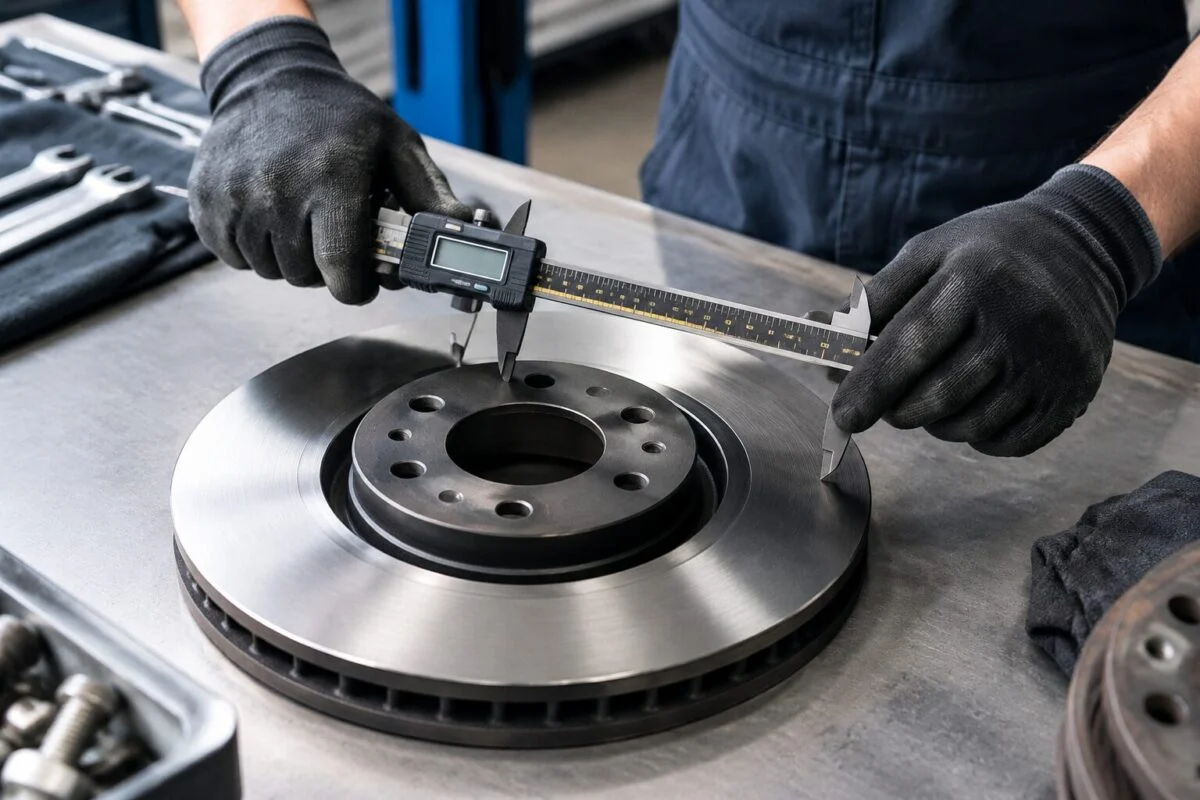
OE Fitment Check
Not sure it fits? Send us the OE number and we'll check it.
Jinan Yoker Auto Parts matches brake discs, drums, radiators, A/C condensers and wheel rims by OE number, vehicle model and year, PCD, ET and CB, so the parts fit before they ship.
- Factory-direct quote within 24 hours
- Free samples before bulk orders
- 10% off first order for new buyers (terms apply)
- Condenser MOQ from 10 PCS
Keep Reading
Related guides on auto parts sourcing

Buying Guide · · 9 min read
Alloy Wheels Price in USA: 2026 Wholesale Supplier Guide
Navigate US alloy wheel wholesale prices by mastering cost drivers beyond rim size. Discover how manufacturing process, DOT certification, and hidden fees like tooling…
Read the Guide
Buying Guide · · 10 min read
Alloy Wheels Price in UK: 2026 Wholesale Supplier Guide
Navigate the 2026 alloy wheels price UK market by understanding how surface finish and certification drive costs more than diameter. Discover why factory-direct sourcing…
Read the Guide Buying Guide · · 13 min read
Alloy Wheels Price in Canada: 2026 Wholesale Supplier Guide
Stop relying on low FOB quotes that hide hidden costs. This 2026 guide breaks down the real alloy wheels price Canada buyers pay, covering…
Read the Guide