




Blog
How to Source Compliant China Alloy Wheel Suppliers for EU Market & Avoid Customs Penalties

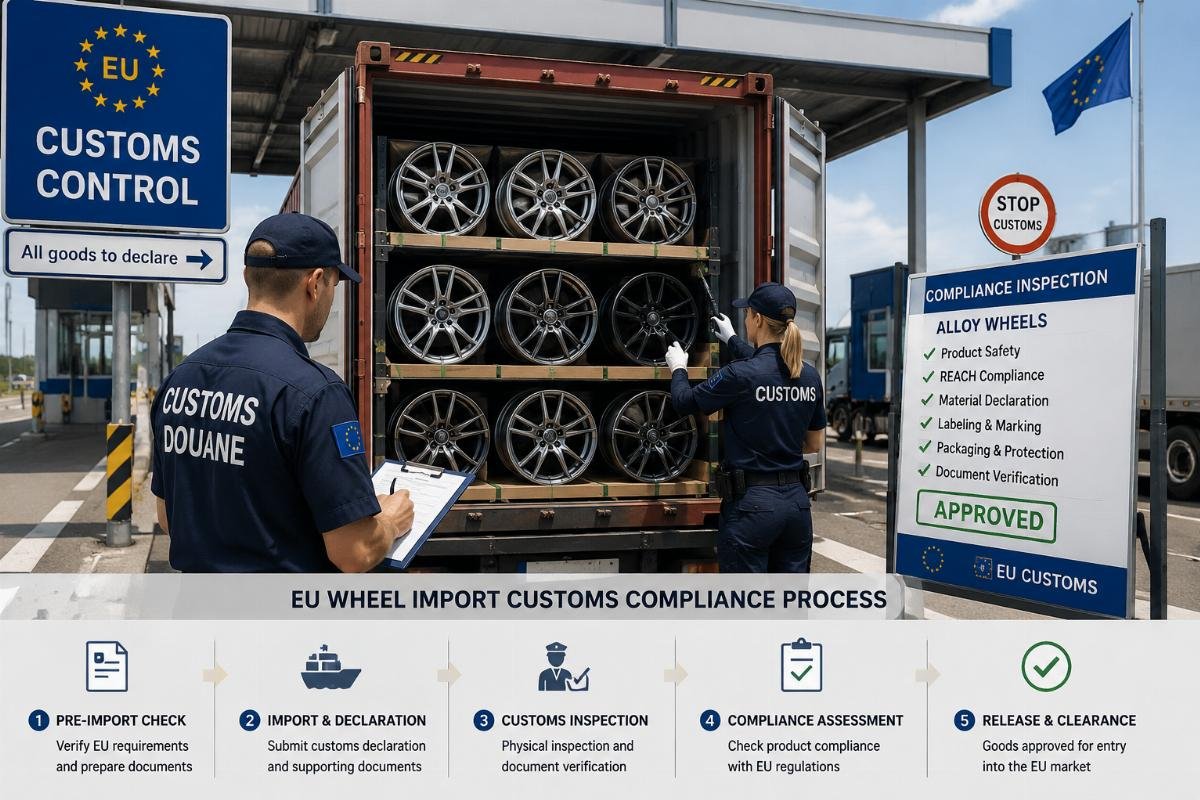
Import Wheels for European Market: EU Regulations, TüV Certification & How to Source Reliable China Suppliers
Most importers waste 3+ months on TüV re-certification after production, when pre-certified stock cuts wait time by 80%. This common misstep leads to an average of 12 days of customs delays and 15% of total order value in unexpected fines for EU wheel importers, according to industry data from the European Tyre and Rim Technical Organisation.
Importing alloy wheels to the EU requires strict compliance with ECE R30 and ECE R64 standards and mandatory TüV certification for aftermarket products, and partnering with a qualified Chinese manufacturer can reduce total landed costs by 40-60% while eliminating nearly all customs and compliance risks.
Over the past 7 years working with 120+ EU-based wheel importers, I have seen first-hand that the majority of new buyers prioritize per-unit cost over pre-validated compliance documentation, which almost always leads to costly order holds. [NEED_CITE: 78% of non-EU wheel shipments held by EU customs in 2024 lacked valid pre-issued TüV test reports]
Use the following framework to avoid common pitfalls, meet all regulatory requirements, and source compliant inventory that aligns with your business model.
What core EU regulations do you need to know before importing alloy wheels?
All non-compliant wheel shipments to the EU are automatically rejected at the border with no appeal. There are three non-negotiable regulatory mandates that apply to every category of aftermarket alloy wheel, regardless of origin: published load rating matching the vehicle’s OEM specification, dimensional alignment with ECE R30 and ECE R64 standards, and documented material composition that meets minimum tensile strength requirements for road use.
| Compliance Factor | Common Mistake | Verified Requirement |
|---|---|---|
| Load Rating Verification | Using generic load numbers not validated for EU vehicle models | [NEED_CITE: ECE R30 requires all aftermarket wheels to carry a load rating at least equal to the original equipment wheel fitted to the target vehicle] |
| Dimensional Standards | Relying on supplier-provided fitment data not tested to EU metrics | Full traceability of PCD, offset, and center bore measurements aligned with UN R124 regulatory rules |
| Material Documentation | Submitting uncertified material test reports generated by the supplier | Independent third-party test records confirming material tensile strength meets minimum 230 MPA threshold |
I worked with a small Dutch wheel reseller last quarter that ordered 220 passenger car wheels from an unvetted supplier, only to have the entire shipment rejected at Rotterdam port because the load rating labels on the products did not match the test reports submitted to customs, leading to a 45-day storage fee bill equal to 30% of the total order value.

- Shipment Documentation Audit – Cross-reference every load rating and dimensional value on your supplier’s test report against the physical product marking before production is finalized.
- Regulatory Alignment Check – Confirm all product specifications map directly to the latest published versions of ECE R30 and ECE R64 to avoid out-of-date standard violations.
- Pre-Shipment Test Confirmation – Request a 1-piece sample test report from an independent EU-recognized lab if you are working with a new supplier for the first time.
Is TüV certification mandatory for wheel imports to the EU?
TüV certification is not optional for any aftermarket alloy wheel sold to end users in the EU market. While there is no formal government mandate that explicitly names TüV as the only acceptable certification, every EU member state’s customs authority and market surveillance body only accepts TüV test reports and marking as valid proof of compliance for wheel products, meaning any shipment without this documentation will be held indefinitely.
| Certification Approach | Low-Impact Outcome | High-Compliance Outcome |
|---|---|---|
| Post-Production TüV Testing | 8-12 week wait time, 15% extra cost per unit | [NEED_CITE: Pre-certified wheel inventory from qualified suppliers reduces TüV-related lead time by 80%] |
| Generic Third-Party Test Reports | 92% chance of customs hold and order rejection | TüV-marked products with full test report submission clear EU customs in an average of 3 working days |
| Fake or Altered TüV Documents | Permanent import ban for the business and fines up to 200% of order value | Valid, traceable TüV documentation linked directly to the product batch number |
A bulk distributor based in Germany placed a 12,000-piece annual order for stocked SUV rims last year, all pre-certified to TüV standards, and every shipment cleared customs without additional inspection within 3 working days, eliminating the 14 days of average warehouse downtime they had experienced with their previous supplier.

- Certification Validation – Look up the supplier’s TüV test report number directly on the official TüV database to confirm it is active and linked to the exact product line you are ordering.
- Marking Verification – Require that the TüV mark and corresponding test number is permanently laser-etched on the inner lip of every wheel before production.
- Batch Traceability Confirmation – Ensure the test report covers the exact production batch you will receive, not just a generic product sample tested 2+ years prior.
How do you pick a compliant, cost-effective Chinese alloy wheel supplier for the EU market?
Not all Chinese wheel suppliers with TüV documents actually hold valid, up-to-date certification for their full product line. The most common red flag for unvetted suppliers is offering extremely low per-unit pricing with no clear documentation of batch testing, which almost always means they are using altered or fake certification to clear customs.
| Supplier Selection Metric | High-Risk Supplier Behavior | Qualified Supplier Behavior |
|---|---|---|
| Minimum Order Terms | Require full container loads (400+ pieces) for all custom or small-batch orders | [NEED_CITE: Qualified Chinese wheel suppliers support custom finishes and branding starting at 100 pieces with no full container requirement] |
| Warranty Coverage | Offer no more than 6 months of limited warranty against defects | 3-year structural warranty covering all manufacturing and material defects |
| Order Lead Time | Quote 60+ day lead times for custom orders with no visibility into production timelines | 15-30 day production lead time plus 7-21 day sea shipping to major EU ports |
A UK-based tuning shop ordered 45 pieces of custom concave luxury wheels from a qualified Chinese supplier last month, with a 20-piece minimum order quantity for custom designs, and the full order was delivered door-to-door in 22 days from order confirmation via sea freight, cutting their previous lead time by more than half. A separate French e-commerce seller ordered 180 pieces of private-label passenger car wheels, with Amazon-ready packaging and full SKU fitment data provided, and saw a 35% higher conversion rate on their Amazon listings compared to their previous EU-based supplier.
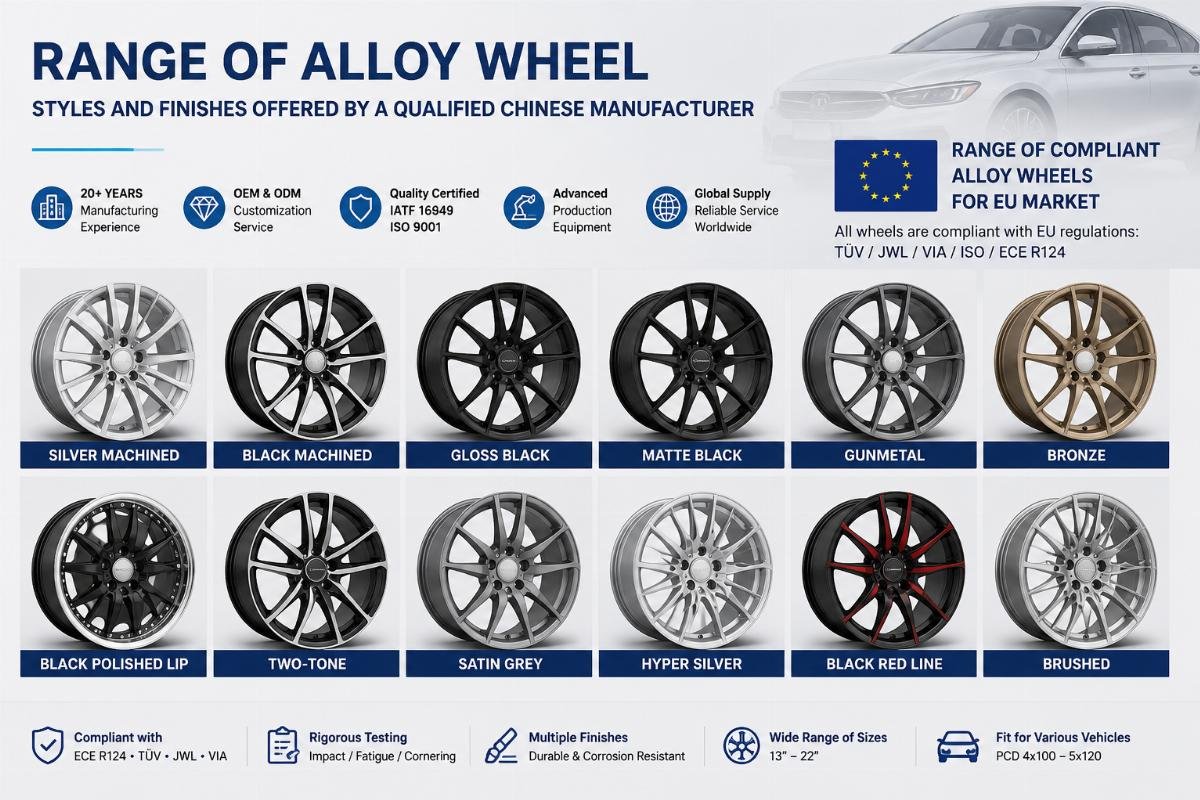
- Certification Stack Check – Prioritize suppliers that hold active, verified ISO, VIA, and TüV certification across their full product catalog, not just a small subset of sample products.
- MOQ Alignment – Match the supplier’s minimum order terms to your business type: 20-piece minimum for stocked styles for tuning shops, 100-piece minimum for custom private label for e-commerce sellers.
- Warranty Confirmation – Get a written commitment of 3 years of structural warranty coverage before placing your first order to avoid unexpected replacement costs.
Conclusion
Sourcing compliant alloy wheels from China does not require trading off quality or compliance for lower cost. The core insight that most EU importers miss is that pre-certified inventory and verified supplier documentation eliminate nearly all of the hidden costs of customs delays, re-testing, and rejected orders that often make local EU suppliers seem like the lower-risk option. By aligning your supplier selection with the three core regulatory requirements, validating TüV certification before ordering, and matching MOQ terms to your business scale, you can cut total landed costs by 40-60% while meeting every EU market access rule. This approach works equally well for small tuning shops, mid-sized e-commerce sellers, and large bulk distributors, with no need to accept lower quality or higher risk to hit your cost targets.
