
Nissan Wheel Fitment Guide: Replica Wheels Wholesale Supplier
Most buyers assume all Nissan models share the same bolt pattern — they don’t. Nissan’s lineup mixes 4-lug, 5-lug, and even 6-lug configurations across sedans, SUVs, and trucks, and a single millimeter off in center bore diameter can turn a full container into a return shipment.
The three non-negotiable fitment parameters for any Nissan replica wheel are PCD (bolt pattern), center bore diameter, and ET (offset). Missing any one of these guarantees installation failure or structural risk.
I learned this the hard way. Years ago, we loaded a container of replica wheels bound for the Middle East — looked perfect on paper, matched the drawing specs. When the container reached the port, the buyer’s installation team found the center bore was off by roughly two millimeters. Not a single wheel fit. The entire container came back, and the demurrage and port handling fees alone ran into mid-five figures. That single mistake burned more profit than the entire order was worth. Since then, I’ve built every Nissan wheel shipment around verified fitment data before a single piece hits the pallet. [NEED_CITE: Nissan OEM wheel specification database by model year and trim]
Getting the data right is the difference between a smooth container rollout and a logistics nightmare. Let’s walk through exactly what you need to know.
What Are the Key Fitment Specs for Nissan Wheels?
PCD, center bore, and ET — three numbers, zero margin for error.
These three parameters form the mechanical handshake between wheel and hub. Get them right, and the wheel seats perfectly, loads evenly, and rotates without vibration. Get even one wrong, and you’re looking at vibration, premature bearing wear, or outright refusal to mount.
PCD (Pitch Circle Diameter) defines the bolt pattern — the number of lug holes and the diameter of the circle they form. Nissan uses several PCD standards across its lineup: 4×114.3 for older compacts, 5×114.3 for most sedans and crossovers, and 5×120 for certain performance and truck applications. Mixing these up is the single most common sourcing error I see in bulk orders. [NEED_CITE: SAE J293 wheel mounting interface standard for bolt pattern measurement]
Center bore is the machined hole in the back of the wheel that centers it on the hub. Nissan’s mainstream center bore sits at 66.1mm, with some older models at 66.2mm. The hub-centric fitment is critical — it carries the vehicle’s weight, not the lug nuts. A wheel with a center bore even slightly too large will vibrate at highway speeds if the hub ring fails. A bore too small won’t mount at all. [NEED_CITE: hub-centric vs lug-centric wheel mounting load distribution analysis]
ET (offset) is the distance in millimeters from the wheel’s centerline to the hub mounting surface. Too much positive offset pushes the wheel inward, risking caliper or suspension contact. Too little positive offset (or negative) pushes the wheel outward, causing fender rub under compression. For Nissan applications, offset typically ranges between +35 and +50 depending on model and wheel width. A deviation of just five millimeters from spec alters scrub radius and accelerates wheel bearing degradation. [NEED_CITE: wheel offset impact on suspension geometry and bearing load per vehicle dynamics engineering reference]
Here’s what happens when these specs go wrong in real sourcing scenarios:
| Parameter | Correct Spec | Wrong Spec | Consequence |
|---|---|---|---|
| PCD | 5×114.3 | 5×120 | Wheel will not mount on hub |
| Center Bore | 66.1mm | 64.1mm | Wheel physically blocked from installation |
| Center Bore | 66.1mm | 73.1mm | Requires hub ring; high-speed vibration risk if ring fails |
| Offset | +45 | +35 | Tire contacts fender liner under full compression |
| Offset | +45 | +55 | Caliper clearance insufficient; brake drag |
A buyer in Southeast Asia once ordered a batch of low-offset replica wheels for a Nissan crossover. The wheels looked aggressive and sold well initially. But when customers loaded the vehicle for family trips, the tires scraped the inner fender under compression. The return and exchange cycle stretched for weeks, and the buyer’s reputation with local customers took a lasting hit.
The takeaway is simple: never assume. Always cross-reference the exact model year, trim, and factory wheel size before placing a bulk order.
Nissan Wheel Fitment Chart by Model
Nissan’s fitment data varies significantly even within a single model name — Altima, Maxima, Rogue, and Pathfinder each carry multiple configurations across generations.
This is where most sourcing mistakes compound. Buyers often request "Nissan 5-lug fitment" as if it’s a single spec. It isn’t. Let’s break down the mainstream models. [NEED_CITE: Nissan factory wheel specification archive by model generation]
Altima: The Altima has been a 5×114.3 platform for multiple generations, with a 66.1mm center bore. Offset typically falls between +40 and +50 depending on the factory wheel diameter (16" through 19"). The key trap here is pre-generation models that used 4×114.3 — if your target market includes older Altima vehicles, you need both bolt patterns in stock.
Maxima: Also 5×114.3 with 66.1mm center bore, but offset runs slightly different due to the wider track. Factory wheels on higher trims with 19" or 20" diameters carry offset around +40 to +45. The Maxima’s brake caliper clearance is tighter than the Altima, so replica wheels with thick spoke bases can cause interference — always verify caliper clearance before committing to a design.
Rogue: The Rogue uses 5×114.3 and 66.1mm center bore as well, but offset ranges from +45 to +50. The Rogue’s suspension geometry is less forgiving of offset deviation than the Maxima’s, meaning even a small offset error translates directly into fender contact under load.
Pathfinder: Newer Pathfinder models (post-redesign) shifted to 5×114.3 with 66.1mm center bore. However, older generations and certain truck-based variants used 6-lug patterns. This is a critical split — if you’re supplying the aftermarket in regions where older Pathfinders are still common, you need 6-lug inventory alongside the 5-lug.
| Model | PCD | Center Bore | Typical Offset Range | Notes |
|---|---|---|---|---|
| Altima (recent gen) | 5×114.3 | 66.1mm | +40 to +50 | Older gen: 4×114.3 |
| Maxima | 5×114.3 | 66.1mm | +40 to +45 | Tight caliper clearance on high trims |
| Rogue | 5×114.3 | 66.1mm | +45 to +50 | Sensitive to offset deviation |
| Pathfinder (new gen) | 5×114.3 | 66.1mm | +45 to +50 | Older gen: 6-lug available |
An e-commerce seller in Latin America once ordered a large batch of 5×114.3 replica wheels, assuming universal Nissan coverage. When the inventory arrived, they discovered a significant portion of their local customer base drove older Nissan models on 4×114.3. The 5-lug wheels sat in the warehouse, unsellable to those customers, tying up capital for months.
The lesson: build your Nissan wheel inventory by cross-referencing model year ranges in your target market, not by brand name alone.
How to Verify Replica Wheel Fitment Before Bulk Order
A structured four-step verification process eliminates the vast majority of fitment-related returns and complaints.
After years of watching buyers get burned by skipping verification, I’ve seen a clear pattern: those who follow a disciplined check process almost never face container-level fitment failures. Here’s the method. [NEED_CITE: wheel fitment verification protocol for aftermarket replica wheel sourcing]
Step One — Pull Factory Data. Start with the OEM specification for the exact model year, trim, and factory wheel size you’re replicating. This means PCD, center bore, offset, wheel width, and diameter. Do not rely on generalizations like "Nissan 5-lug." The data must be model-specific. Cross-reference at least two independent sources — the manufacturer’s service manual and a recognized fitment database.
Step Two — Measure Physical Samples. Before committing to a bulk order, obtain production samples from the manufacturer. Measure the PCD with a calibrated bolt pattern gauge, verify center bore with a digital caliper, and confirm offset using a straight edge and depth measurement. Compare every dimension against the factory spec. At this stage, even sub-millimeter deviations are catchable and correctable.
Step Three — Dry-Fit on Vehicle. Mount the sample wheel on the actual vehicle hub — or a verified hub fixture — without tire. Check for caliper clearance at all rotation points, confirm the wheel seats flush against the hub face, and verify that the lug nuts engage the correct thread depth. This step catches design-specific interference that dimensional data alone cannot reveal.
Step Four — Road Test Under Load. Install the wheel with tire, inflate to spec, and conduct a road test that includes highway speeds, hard braking, and full-compression bumps. Listen for vibration, monitor for any steering pull, and re-torque after the first hundred kilometers. This final step validates real-world performance under dynamic conditions. [NEED_CITE: aftermarket wheel dynamic testing protocol for vibration and structural integrity]
A buyer in North America once skipped Step Three — they verified dimensions, trusted the manufacturer’s data sheet, and shipped directly to customers. Several customers reported vibration at highway speeds. Investigation revealed the replica wheel’s spoke design created a slight imbalance pattern that the factory wheel’s different spoke geometry avoided. The recall and replacement cost dwarfed the original order value.
Following these four steps adds time upfront, but it prevents the far greater cost of post-shipment failures. For any Nissan wheel fitment guide used in wholesale sourcing, this verification protocol should be non-negotiable.
Common Fitment Mistakes and How to Avoid Them
The three most expensive mistakes in Nissan replica wheel sourcing all stem from assumptions: assuming PCD is uniform, assuming center bore can be fixed with rings, and assuming small ET deviations don’t matter.
Let’s dismantle each one.
Mistake One — Assuming Uniform PCD Across Nissan Models. As covered earlier, Nissan uses 4-lug, 5-lug, and 6-lug patterns across different models and generations. The assumption that "Nissan equals 5×114.3" leads to stocking the wrong pattern for significant portions of the addressable market. The fix: segment your inventory planning by model year range and verify PCD for each segment independently. [NEED_CITE: Nissan bolt pattern variation across model generations and trim levels]
Mistake Two — Relying on Hub Rings to Fix Center Bore Mismatch. When a replica wheel’s center bore is larger than the vehicle hub, buyers often plan to use plastic or aluminum hub rings to fill the gap. This works in theory. In practice, hub rings are a secondary solution — they’re not structural. Under sustained highway speeds, pothole impacts, or temperature cycling, hub rings can crack, deform, or shift. The result is wheel vibration that mimics a balance problem but is actually a centering failure. The only reliable fix is matching the center bore to factory spec at the manufacturing stage. If a manufacturer cannot hold the correct center bore tolerance, that’s a signal to look elsewhere. [NEED_CITE: hub ring failure modes under sustained dynamic loading conditions]
Mistake Three — Dismissing Small Offset Deviations. An offset that’s three to five millimeters off from spec might seem negligible. It isn’t. Offset directly determines the wheel’s lateral position relative to the suspension pickup points. A deviation of five millimeters alters the scrub radius, changes the leverage arm on the wheel bearing, and shifts the tire’s contact patch relative to the steering axis. Over time, this accelerates bearing wear, increases steering effort, and can cause premature tire wear on the inner or outer shoulder. The vehicle may feel fine initially, but the damage accumulates. [NEED_CITE: wheel offset deviation impact on wheel bearing service life and scrub radius geometry]
| Mistake | Root Cause | Real-World Consequence | Corrective Action |
|---|---|---|---|
| Wrong PCD ordered | Assumed uniform Nissan pattern | Wheels physically won’t mount | Verify PCD by model year and trim |
| Hub ring dependency | Center bore mismatch accepted | High-speed vibration, ring failure | Require hub-centric bore at manufacturing |
| Offset deviation ignored | Assumed small difference is safe | Bearing wear, tire wear, handling change | Match offset to factory spec within tolerance |
A workshop in the Middle East once accepted a batch of replica wheels where the offset was nominally close to spec but consistently deviated by several millimeters across the batch. Customers began returning vehicles with steering complaints and uneven tire wear within months. The workshop absorbed the warranty costs and lost client trust — a loss far exceeding the price difference between a quality-manufactured wheel and a loosely toleranced one.
These mistakes are preventable. They all trace back to the same root cause: treating fitment data as approximate rather than exact.
Why Choose a Factory with Nissan Fitment Expertise
A manufacturer that maintains verified fitment data for every Nissan model and validates each production batch against that data eliminates the sourcing risk that causes the majority of wholesale returns.
Not all replica wheel factories operate this way. Many produce wheels to generic dimensions and expect buyers to sort out fitment compatibility on their end. This approach transfers all the risk downstream — to you, the buyer, and ultimately to your end customer.
A factory with genuine Nissan fitment expertise does several things differently. First, it maintains a complete specification database covering PCD, center bore, offset, width, and diameter for every Nissan model and generation it produces wheels for. This data isn’t assembled from memory or guesswork — it’s verified against OEM references and updated as new models enter the market. [NEED_CITE: aftermarket wheel manufacturer quality management system requirements for fitment data accuracy]
Second, it implements batch-level dimensional inspection. Every production run is sampled and measured against the spec sheet before packaging. PCD is checked with go/no-go gauges, center bore is verified with calibrated instruments, and offset is confirmed on a fixture. Wheels that fall outside tolerance are rejected before they reach the pallet.
Third, it provides documentation that supports your compliance and customer service needs. Fitment data sheets, dimensional inspection reports, and material certifications travel with the shipment. When your customer asks whether a wheel fits their specific Nissan, you have verifiable data to answer — not a guess.
Working with a manufacturer that holds these capabilities changes the economics of your business. You spend less time handling returns, less capital tied up in unsellable inventory, and less reputation damage from fitment failures. The wheels arrive ready to sell, backed by data you can stand behind.
For buyers building a Nissan-focused wheel program — whether for wholesale distribution, e-commerce, or modification shop supply — partnering with a manufacturer that treats fitment data as a core competency rather than an afterthought is the single highest-leverage decision you can make.
Conclusion
Nissan wheel fitment is not a single spec — it’s a matrix of PCD, center bore, and offset values that vary by model, generation, and trim. Getting these three parameters right through verified data, physical sample measurement, and disciplined validation is what separates profitable wholesale wheel sourcing from costly return cycles. Treat every number as exact, every assumption as a risk, and every batch as requiring proof before shipment.
Related Applications
Parts in This Article
Products mentioned above
 01
WHEEL RIM/HUB
Offerroad Beadlock Aluminum Alloy Wheels for 4X4 SUV Toyota/BMW/Audi/Jeep/Nissan/VW
View Specifications 02
WHEEL RIM/HUB
5X114.3 Alloy Wheel Casting for Nissan - Classic Rims Hub
View Specifications 03
WHEEL RIM/HUB
China Toyota/BMW/Audi/Jeep/Nissan/VW Replica Aluminum Alloy Wheels
View Specifications 04
WHEEL RIM/HUB
New Model 20inch*8.5j PCD6*139.7 Wheels for Nissan
View Specifications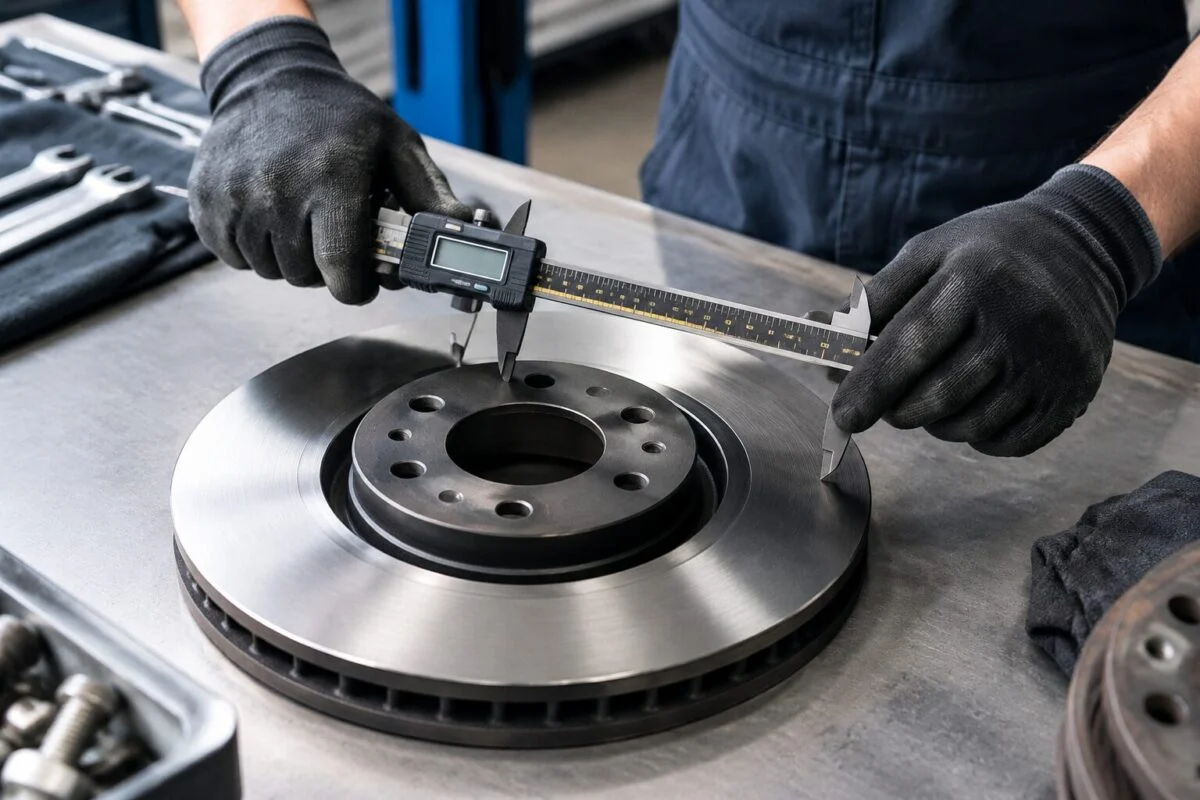
OE Fitment Check
Not sure it fits? Send us the OE number and we'll check it.
Jinan Yoker Auto Parts matches brake discs, drums, radiators, A/C condensers and wheel rims by OE number, vehicle model and year, PCD, ET and CB, so the parts fit before they ship.
- Factory-direct quote within 24 hours
- Free samples before bulk orders
- 10% off first order for new buyers (terms apply)
- Condenser MOQ from 10 PCS
Keep Reading
Related guides on auto parts sourcing

Buying Guide · · 10 min read
Buy Alloy Wheels Best Price 2026 Wholesale Supplier
Buy Alloy Wheels Best Price 2026 by aligning raw material, process, and volume variables rather than chasing low quotes. Discover how factory-direct sourcing compresses…
Read the Guide
Buying Guide · · 7 min read
Buy Alloy Wheels Wholesale Price | Factory Direct OEM Supplier
Stop guessing your real landed cost when you Buy Alloy Wheels Wholesale Price. Discover how manufacturing processes, MOQ tiers, and hidden certification fees shape…
Read the Guide
Buying Guide · · 9 min read
Car Rims Price in Ghana: 2026 Wholesale Buyer Guide
Car rims price in Ghana for 2026 wholesale buyers depends on landed costs, not just FOB quotes. This guide breaks down duty structures, finish…
Read the Guide