
14 Inch Alloy Wheels Wholesale Supplier & Factory Direct Price 2026
- By author
- Buying Guide
14 Inch Alloy Wheels Wholesale Supplier & Factory Direct Price 2026
Most buyers assume 14 inch alloy wheels are cheap and simple to ship, but a single millimeter off in bolt pattern turns an entire container into scrap metal at the destination port.
The 14 inch alloy wheels price in 2026 is primarily driven by three factors: surface finish complexity, certification tier, and order volume structure. FOB pricing ranges from budget-tier painted finishes to premium machined-face options, with certification costs adding noticeable premiums for VIA, TÜV, and DOT compliance. Buyers must verify PCD, offset, and center bore before placing any order, as parameter mismatches lead to full-container rejections and extended port demurrage.
I still remember a shipment we prepared for a West African client a few years back. They wanted to switch from steel to aluminum on a popular sedan fitment, and the unit price looked attractive on paper. Nobody double-checked the offset value against their local axle specs. When the container reached Lagos, not a single wheel seated properly. The cargo sat at the port for months, and the demurrage fees ended up dwarfing the original invoice. That kind of loss doesn’t happen because the wheels were defective—it happens because the paperwork didn’t match the road. [NEED_CITE: common causes of wheel fitment rejection at African ports per trade dispute records]
Once you understand how pricing layers stack up and which specs actually matter, sourcing 14 inch alloy wheels from China becomes a structured process rather than a gamble.
What Determines 14 Inch Alloy Wheel Pricing in 2026?
Surface finish, certification level, and order quantity form the three pillars that shape every 14 inch alloy wheels price quotation you receive from a Chinese factory.
The base alloy cost is relatively stable across manufacturers, so the real variation comes from what happens after casting. A basic gloss black finish requires fewer processing steps and less quality control overhead than a full machined face with clear coat, and that difference shows up directly in the per-piece quote. Certification adds another layer—factories holding VIA, TÜV, or DOT stamps carry higher fixed costs for testing, auditing, and documentation, and those costs distribute across each wheel in the order. [NEED_CITE: cost structure breakdown of alloy wheel manufacturing by finish and certification tier]
Volume matters more than most buyers realize. A full-container order of a single SKU spreads setup and sampling costs across thousands of units, while a mixed-container order with multiple fitments and colors forces the factory to manage separate production runs, each with its own mold handling and color-matching cycle. The per-piece price gap between these two scenarios is substantial.
I’ve seen Middle East modification shops order small batches across dozens of color options. The unit cost per wheel climbs noticeably compared to a distributor loading a single finish in container volume. But the trade-off is inventory flexibility—they can test market response without committing to thousands of identical units.
14 Inch Alloy Wheel Price Matrix by Finish & Certification
Different finish and certification combinations create clear pricing tiers, and matching the right combination to your market avoids both overpayment and clearance failures.
The table below maps typical FOB pricing positions for 14 inch alloy wheels based on surface treatment and certification status. Prices are expressed as relative tiers rather than fixed quotes, since raw material fluctuations and order specifics shift actual numbers.
| Finish Type | Basic Certification | VIA / JWL Certified | TÜV / DOT Certified |
|---|---|---|---|
| Gloss Black / Silver | Entry Tier | Mid Tier | Upper-Mid Tier |
| Matte Black / Bronze | Mid Tier | Upper-Mid Tier | Premium Tier |
| Machined Face with Clear Coat | Mid Tier | Upper-Mid Tier | Premium Tier |
| Chrome Plated | Upper-Mid Tier | Premium Tier | Highest Tier |
| Full Custom Paint (multi-color) | Premium Tier | Highest Tier | Highest Tier |
[NEED_CITE: alloy wheel surface treatment cost comparison by finish type in China export market]
A few counterintuitive patterns emerge here. Many buyers assume machined face always costs more than solid color, but in certain African and Latin American markets, matte black commands a premium due to higher rejection rates during quality inspection—the finish shows casting imperfections more readily, so factories price in additional sorting labor. Chrome plating sits at the top tier not just because of material cost, but because environmental compliance requirements for plating facilities have tightened significantly, reducing the number of qualified suppliers. [NEED_CITE: environmental compliance impact on chrome plating availability in China wheel industry]
Certification tier affects more than just the sticker price. Wheels shipped without proper certification to markets requiring it face customs delays or outright rejection. I’ve watched shipments get held at Middle Eastern ports because the documentation didn’t match the certification stamps on the wheels themselves. The cost of re-exporting or destroying non-compliant cargo far exceeds the upfront certification premium.
Critical Specs to Verify Before Ordering 14 Inch Wheels
PCD, offset, center bore, and load rating must be confirmed in writing before production begins—parameter errors are the leading cause of full-container rejection at destination ports.
The spec verification process starts with the vehicle fitment database. A 14 inch wheel might fit a Toyota Vios, a Hyundai Accent, and a Chevrolet Spark, but each application demands different offset ranges and center bore dimensions. Ordering wheels based on diameter alone, without cross-referencing the complete fitment profile, is the most common mistake I see among first-time importers. [NEED_CITE: wheel fitment parameter verification checklist per SAE and JWL standards]
| Parameter | What It Controls | Risk if Wrong |
|---|---|---|
| PCD (Pitch Circle Diameter) | Bolt hole alignment | Wheels physically cannot mount |
| Offset (ET) | Wheel position relative to hub | Rubbing, handling instability, suspension damage |
| Center Bore (CB) | Hub centering | Vibration, lug nut stress, premature bearing wear |
| Load Rating | Weight capacity | Safety failure under load, liability exposure |
| Wheel Width | Tire fitment range | Tire bead seating failure, incorrect speedometer |
[NEED_CITE: wheel fitment failure modes and port rejection statistics by parameter type]
Here’s a scenario that plays out repeatedly: a buyer in Latin America orders 14 inch alloy wheels for a popular compact car. The PCD is correct, but the offset is off by a few millimeters. The wheels bolt on, but the tire rubs against the fender liner at full steering lock. The end customer complains, the retail shop refuses to pay, and the buyer is stuck with inventory that technically fits but functionally fails. The wheels aren’t defective by manufacturing standards—they’re just wrong for the application.
Another layer involves hub-centric versus lug-centric design. Many 14 inch wheels for aftermarket applications rely on the lug nuts to center the wheel, which requires precise torque specifications. If the center bore is slightly oversized without proper ring adapters, vibration issues emerge at highway speeds. This isn’t a wheel quality problem—it’s a spec communication problem.
I always recommend that buyers send a physical sample wheel or a detailed fitment sheet with vehicle VIN numbers before confirming any bulk order. The cost of express shipping a sample is negligible compared to the cost of a misfit container.
MOQ, Lead Time & Shipping Terms for Bulk Buyers
Stock models and custom production carry dramatically different minimum order quantities and lead times, and understanding this split determines your total landed cost structure.
For 14 inch alloy wheels, factories typically maintain inventory of high-volume fitments in standard finishes like gloss black and silver. These stock items can ship in small quantities—even single-piece orders for testing—because the wheels are already produced and warehoused. The trade-off is limited customization: you get what’s available, not what you specifically need.
Custom orders follow a different rhythm. A new color match requires paint mixing and spray booth setup. A new PCD or offset demands mold modification or, in some cases, entirely new casting molds. These setup activities carry fixed costs that only make sense when spread across a meaningful production run. [NEED_CITE: alloy wheel manufacturing MOQ structure and lead time factors by order type]
| Order Type | Typical MOQ Range | Production Lead Time | Customization Level |
|---|---|---|---|
| Stock Models (standard fitments/finishes) | Low MOQ, even single pieces | Immediate to short dispatch | None—select from available inventory |
| Semi-Custom (existing mold, new color) | Moderate MOQ | Short to moderate production cycle | Color and finish selection |
| Full Custom (new mold, new spec) | Higher MOQ | Extended production cycle | Complete spec and design control |
[NEED_CITE: alloy wheel order type classification and fulfillment timeline comparison]
Shipping terms interact with these timelines in ways that affect your cash flow. FOB pricing puts the buyer in control of freight forwarding, which works well if you have established logistics partners. CIF pricing bundles freight into the wheel cost, simplifying the transaction but reducing your visibility into actual shipping expenses. For first-time buyers, I recommend starting with CIF to understand the total landed cost, then shifting to FOB once you’ve built freight relationships.
Payment structures also vary. Stock orders often allow flexible terms because the factory has already absorbed production risk. Custom orders typically require deposit coverage for mold costs and raw material commitment. The exact split depends on the buyer-supplier relationship and order history.
A tire shop chain in Southeast Asia learned this the hard way. They wanted custom-branded 14 inch wheels in a specific bronze finish, but their initial order quantity fell below the factory’s custom production threshold. The solution was to combine their order with another buyer’s similar spec request, sharing the mold cost and reaching the minimum volume together. The lead time extended slightly, but the per-unit cost dropped to a viable level.
How to Source 14 Inch Alloy Wheels from China Factories Safely
Selecting a multi-certified factory and establishing a written parameter confirmation process reduces rejection risk to near zero, transforming wheel sourcing from a gamble into a repeatable supply chain operation.
The factory selection process starts with certification verification. A factory holding ISO quality management certification demonstrates baseline process control. Adding VIA, TÜV, or DOT certification shows commitment to specific market standards—VIA for Japan, TÜV for Europe, DOT for the United States. A factory carrying multiple certifications has demonstrated flexibility across regulatory environments, which usually correlates with stronger internal quality systems. [NEED_CITE: international wheel certification requirements by target market and compliance standards]
But certification alone doesn’t guarantee smooth transactions. The critical step is establishing a parameter confirmation workflow before any production begins. This means:
- Buyer submits complete fitment specifications including vehicle application, PCD, offset, center bore, load rating, and desired finish
- Factory responds with written confirmation of each parameter, referencing specific mold numbers and production batches
- Both parties approve a technical drawing or spec sheet before the factory releases materials for production
- Pre-shipment samples are verified against the approved spec sheet, with measurement documentation
This workflow adds a few days to the order cycle, but it prevents the catastrophic delays that occur when wheels arrive at the port and don’t fit. I’ve seen buyers skip this step to save time, only to spend months resolving disputes and sourcing replacement inventory.
Factory communication patterns also matter. A supplier who responds to technical questions with vague assurances ("don’t worry, it will fit") is a red flag. A supplier who asks for VIN numbers, requests fitment photos, and confirms measurements in writing is demonstrating the kind of diligence that protects your investment.
Warranty terms provide another layer of protection. A factory offering a multi-year structural warranty against manufacturing defects signals confidence in their casting and machining processes. This warranty should cover material failures, not cosmetic issues—cosmetic standards should be agreed upon separately through approved sample references.
The Ouya brand wheels we supply follow this exact confirmation workflow. Every order, whether stock or custom, goes through parameter verification before production releases. Our factory holds ISO, VIA, TÜV, DOT, JWL, and CCC certifications, covering the major global markets. We offer flexible MOQ starting from small quantities for stock models, with custom orders scaling based on spec complexity. The three-year structural warranty backs every wheel we ship.
Conclusion
The 14 inch alloy wheels price you pay reflects finish complexity, certification depth, and order structure—but the real cost risk lies in unverified specifications. Parameter mismatches turn affordable wheels into expensive port liabilities, while proper confirmation workflows and multi-certified factory partnerships create a sourcing foundation that scales reliably across markets and order volumes.
Related Applications
Parts in This Article
Products mentioned above
 01
WHEEL RIM/HUB
Casting Wheels 13-22 Inch Aluminum Alloy Car Rims Wholesale
View Specifications 02
WHEEL RIM/HUB
Ouya 5X120 5X112 17-20 Inch Alloy Car Wheel Hub Rim Wholesale
View Specifications 03
WHEEL RIM/HUB
15 Inch Aluminum Sport Car Alloy Wheel Rim Mag Wholesale
View Specifications 04
WHEEL RIM/HUB
Replica Alloy Wheels 15-18 Inch Aluminum Auto Rims Wholesale
View Specifications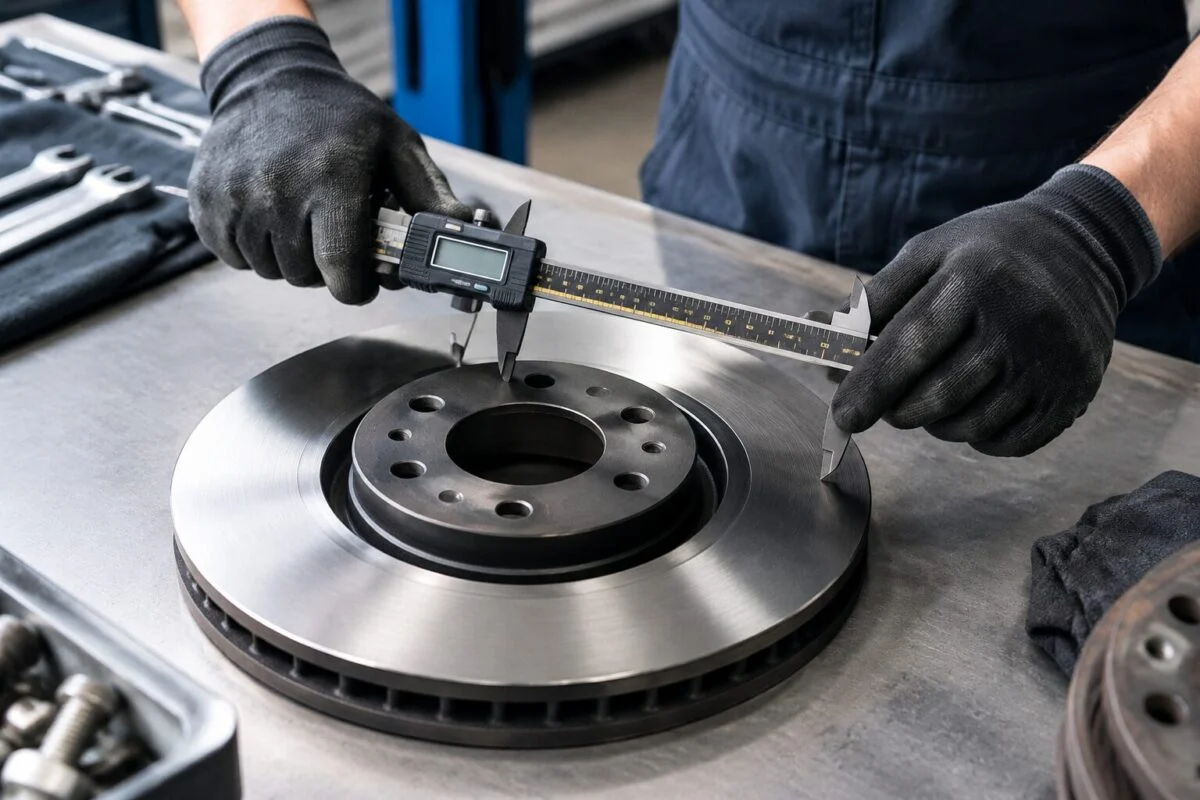
OE Fitment Check
Not sure it fits? Send us the OE number and we'll check it.
Jinan Yoker Auto Parts matches brake discs, drums, radiators, A/C condensers and wheel rims by OE number, vehicle model and year, PCD, ET and CB, so the parts fit before they ship.
- Factory-direct quote within 24 hours
- Free samples before bulk orders
- 10% off first order for new buyers (terms apply)
- Condenser MOQ from 10 PCS
Keep Reading
Related guides on auto parts sourcing

Buying Guide · · 9 min read
Car Rims Supplier for Pakistan: China Factory Direct OEM Wholesale
Sourcing from a reliable Car Rims Supplier for Pakistan requires verified VIA/JWL certification and fitment data matched to local road conditions. Avoid customs delays…
Read the Guide
Buying Guide · · 9 min read
SUV Alloy Wheels 12″-24″ Wholesale Supplier | OEM & Bulk for Sale
Selecting the best alloy wheels for SUV requires precise PCD, ET, and load index matching to prevent costly fitment failures. Verify VIA or TÜV…
Read the Guide Buying Guide · · 9 min read
Car Rims Wholesale Supplier for Kazakhstan: China Factory Direct
Secure a reliable China factory direct car rims wholesale supplier for Kazakhstan with JWL, VIA, and TUV certifications. Reinforced designs withstand harsh Central Asian…
Read the Guide