
Buy 22 Inch Alloy Wheels Factory Direct Price
Factory-direct pricing for 22 inch alloy wheels looks straightforward on a quotation sheet, but the real cost hides in certification gaps, handling damage, and batch inconsistency that surface months after the container arrives.
When sourcing 22 inch alloy wheels factory direct price, buyers typically see 40-60% savings versus branded alternatives, but true value depends on certification compliance for your target market, batch consistency across production runs, and proper logistics handling from the factory floor to your warehouse.
I still remember a shipment of 22-inch MAT finish wheels we sent to a modification shop in Ho Chi Minh City. The owner called within days—three sets failed dynamic balance testing on his machine. He demanded a full return. I flew down, watched his forklift operator drive the forks straight through the spoke gaps to lift the pallets, and found every single wheel had deformed flange edges. The wheels left our facility perfectly balanced. By the time they reached his rack, they were scrap. That visit changed how I structure every quotation: an unloading diagram and a re-test protocol now ride alongside the price breakdown. Factory pricing only protects your margin when the delivery chain respects the product. [NEED_CITE: alloy wheel damage distribution during logistics handling per industry field reports]
Understanding what actually sits behind a 22 inch alloy wheels factory direct price quote requires walking through material inputs, certification overhead, and the hidden costs that appear long after the invoice is paid.
What Determines 22 Inch Alloy Wheel Factory Direct Pricing?
Factory-direct pricing for 22 inch alloy wheels reflects raw material costs, production scale, certification overhead, and logistics optimization—not simply the absence of a middleman markup.
A 22 inch alloy wheels factory direct price quotation typically breaks into four cost layers: aluminum alloy ingot procurement, machining and heat treatment, surface finishing, and certification amortization. The alloy itself—usually A356 or equivalent—accounts for a substantial portion of the base cost, and LME aluminum price fluctuations ripple through quotations within weeks. [NEED_CITE: aluminum alloy A356 pricing correlation with finished wheel cost structure]
Machining involves low-pressure die casting or gravity casting, followed by CNC turning, drilling, and hub-bore precision cutting. Heat treatment (T6 solution aging) adds structural integrity but consumes energy and time. Surface finishing—whether machined face, matte black, hyper silver, or full custom paint—introduces its own cost curve. A basic gloss black finish costs noticeably less than a multi-step machined-face-and-painted combination.
Certification amortization is where many buyers get surprised. Wheels carrying VIA, TÜV, DOT, JWL, or CCC markings require ongoing testing, audit fees, and documentation maintenance. A factory offering a 22 inch alloy wheels factory direct price without any recognized certification may appear cheaper initially, but the savings vanish the moment a customs authority holds your container or a liability claim lands on your desk. [NEED_CITE: certification cost amortization impact on alloy wheel per-unit pricing]
At Ouya, our 12-inch through 24-inch production range allows us to spread certification and tooling costs across a broader SKU base, which is part of why our 22 inch alloy wheels factory direct price sits well below Japanese and European branded equivalents. But the price advantage only matters if the certification matches your destination market.
How Do MOQ Requirements Impact Total Procurement Cost?
Lower MOQ enables market testing but raises per-unit cost; bulk container orders unlock volume pricing but demand inventory capital, storage space, and confidence in batch consistency.
The MOQ question is where 22 inch alloy wheels factory direct price discussions get real. A modification shop in Dubai once ordered a small batch of custom bronze-finish 22-inch wheels—just enough to photograph, list online, and gauge customer reaction. The per-piece cost was noticeably higher than a full-container quote would have been. But that same shop scaled to multiple container orders within a year once the style proved popular. The initial small batch was not a loss; it was market validation priced at a premium.
Stock models typically carry lower MOQ thresholds because the factory already holds tooling and raw material. Custom finishes, custom offsets, or vehicle-specific hub bore configurations require dedicated setup, which pushes the MOQ higher. At our facility, stock models start at a low threshold suitable for testing, while custom orders require a modestly larger commitment that still remains accessible for growing businesses. [NEED_CITE: MOQ tier pricing structure impact on per-unit alloy wheel cost]
Here is where the trap sits: some buyers insist on the lowest possible MOQ for every order, treating each purchase as a standalone transaction. But small batches cannot reveal batch-to-batch consistency issues. A production run of a few dozen wheels might pass every quality check, while the next run of several hundred—under slightly different furnace conditions or operator shifts—shows porosity variations that only X-ray inspection would catch. The 22 inch alloy wheels factory direct price on a small batch looks attractive until you realize you have no data on whether the factory can hold tolerances at scale.
| Factor | Low MOQ Trial | Full Container Order |
|---|---|---|
| Per-unit pricing | Noticeably higher | Substantially reduced |
| Batch consistency data | Sample-level only | Full batch-level verifiable |
| Custom finish feasibility | Limited options | Full color and finish range |
| Inventory risk | Minimal | Requires storage planning |
| Certification documentation | Sample certificates | Full batch traceability |
An e-commerce seller in São Paulo learned this the hard way. She tested a popular mesh-pattern 22-inch wheel with a small batch, listed it on a major marketplace, and the first dozens sold without issue. When she reordered a larger quantity, the hub center bore tolerance drifted slightly—enough to cause fitment complaints and returns. The return rate ate her margin entirely. The lesson: MOQ flexibility matters, but so does using the trial batch to stress-test consistency before scaling. [NEED_CITE: batch consistency failure rate correlation with MOQ size in aftermarket wheels]
Which Certifications Matter for Your Target Market?
Regional certification requirements determine whether your 22 inch alloy wheels factory direct price savings survive customs clearance—or whether your shipment gets held, rejected, or exposed to liability claims.
Certification is the single most misunderstood element of factory-direct wheel sourcing. Many buyers treat it as an optional add-on, assuming that a wheel that looks right and balances well will perform right. The regulatory reality is far less forgiving.
For the United States, DOT compliance is the baseline entry requirement. Without it, customs can hold or reject the shipment entirely. Japan requires JWL (or JWL-VIA for certain categories). European markets demand ECE or TÜV markings depending on the country. China’s domestic market and certain export corridors require CCC. Australia has its own standards. Selling uncertified wheels in a regulated market does not just risk a shipment—it risks product liability exposure that can dwarf the original purchase price. [NEED_CITE: regional alloy wheel certification requirements comparison across major import markets]
| Certification | Primary Market | Testing Scope | Liability Protection |
|---|---|---|---|
| DOT | United States | Structural impact, dynamic balance | Full regulatory compliance |
| VIA / JWL | Japan | Durability, radial fatigue | Robust |
| TÜV / ECE | Europe | Dynamic cornering fatigue, impact | Robust |
| CCC | China / select exports | Comprehensive domestic standard | Full |
| No certification | Unregulated markets | None verifiable | Vulnerable |
A distributor in Southeast Asia once chose the lowest 22 inch alloy wheels factory direct price available—from a workshop with no recognized certification. The wheels sold well initially. Then a vehicle equipped with those wheels struck a pothole, a spoke fractured, and the driver was injured. The liability claim exceeded the total value of every wheel that distributor had ever purchased. The certification premium he skipped was a fraction of the legal exposure he accepted.
Our multi-certification portfolio—ISO, VIA, TÜV, DOT, JWL, and CCC—exists because different buyers operate in different regulatory environments. When you request a 22 inch alloy wheels factory direct price from us, the quotation always specifies which certifications are included and which markets they cover. No ambiguity. [NEED_CITE: alloy wheel structural failure liability case studies in unregulated markets]
How to Verify Quality Without Visiting the Factory?
Third-party inspection reports, sample testing protocols, and batch traceability systems provide remote quality assurance when physical factory audits are not feasible.
Not every buyer can fly to Shandong to inspect the production floor. The 22 inch alloy wheels factory direct price advantage only holds if you can verify quality from a distance. Here is the framework that works.
First, request a pre-production sample and run your own fitment and balance test on your local equipment. Do not rely solely on the factory’s in-house report. A modification shop in the Middle East learned to do this after receiving a sample batch that looked perfect in photos but had a subtle paint adhesion issue that only appeared after several weeks of road use and brake dust exposure. Their sample testing protocol now includes an accelerated salt-spray exposure test before approving any custom finish. [NEED_CITE: remote alloy wheel quality verification protocols for import buyers]
Second, require batch-level traceability. Every wheel should carry a production date code, heat-treat batch identifier, and casting lot number. When a fitment issue surfaces six months later, you need to trace it back to a specific production window—not just a vague "factory quality problem." Our traceability system links each wheel to its casting date, T6 treatment cycle, and finishing line assignment.
Third, engage a third-party inspection service for container-load orders. SGS, Bureau Veritas, and similar firms can perform on-site random sampling, dimensional checks, X-ray porosity inspection, and dynamic balance verification before the container is sealed. The cost is modest relative to the container value and eliminates the "open the container and discover surprises" scenario.
| Verification Method | What It Catches | When to Use |
|---|---|---|
| Pre-production sample testing | Fitment, balance, finish adhesion | Before any bulk order |
| Batch traceability codes | Production consistency, recall precision | Every order |
| Third-party pre-shipment inspection | Porosity, dimensional drift, balance | Container-load orders |
| X-ray porosity check | Internal casting defects | Custom or high-value finishes |
A Latin American e-commerce operator now requires Amazon-ready packaging with individual wheel protection, SKU-level fitment data sheets, and a pre-shipment inspection report for every reorder. Her return rate dropped noticeably after implementing this protocol, and her marketplace listings carry fitment confidence that translates into conversion. The 22 inch alloy wheels factory direct price she pays includes these quality assurance steps—because skipping them costs far more in returns and negative reviews. [NEED_CITE: third-party inspection effectiveness in reducing alloy wheel import defect rates]
What Hidden Costs Appear After the Invoice?
Import duties, port handling fees, last-mile delivery, damage claims, and inventory holding costs often exceed the wheel price itself—total landed cost modeling prevents budget surprises.
The 22 inch alloy wheels factory direct price on the proforma invoice is just the starting line. The total landed cost includes ocean freight (or air freight for urgent samples), import duties based on HS classification, port terminal handling charges, customs brokerage, inland trucking to your warehouse, and—frequently—damage claims from handling errors during transit or unloading.
A distributor in West Africa received a container of 22-inch wheels where nearly a dozen units had curb-rash-style damage on the lip edges. Investigation revealed the container had been properly loaded and secured at the factory, but the receiving warehouse used an untrained forklift operator who dragged the forks across the wheel faces during destacking. The claim was rejected because the factory’s loading inspection photos showed the wheels left in perfect condition. The replacement cost and customer goodwill loss exceeded the savings the distributor had celebrated when comparing our 22 inch alloy wheels factory direct price against branded alternatives. [NEED_CITE: alloy wheel damage claim rejection rate due to receiving-end mishandling]
Total landed cost modeling should include:
- Ocean freight per CBM or per container (20ft vs 40ft vs 40ft HC)
- Import duty rate for your HS code in the destination country
- Port handling and terminal charges
- Customs clearance and brokerage fees
- Inland transportation to final warehouse
- Packaging reinforcement cost if your logistics chain involves multiple handoffs
- Inventory holding cost for slow-moving SKUs
Our quotation process includes a landed cost estimation worksheet because we have seen too many buyers celebrate a low unit price and then discover that freight and duties erased the advantage. A 22 inch alloy wheels factory direct price only delivers real savings when the full supply chain cost is visible before the purchase order is signed. [NEED_CITE: total landed cost breakdown for alloy wheel imports by destination region]
Conclusion
The real 22 inch alloy wheels factory direct price is not what appears on the invoice—it is what you pay after customs, after transit, after fitment, and after the first customer complaint. Certification alignment, MOQ strategy, remote quality verification, and landed cost modeling transform a cheap quotation into a genuinely profitable sourcing decision.
Related Applications
Parts in This Article
Products mentioned above
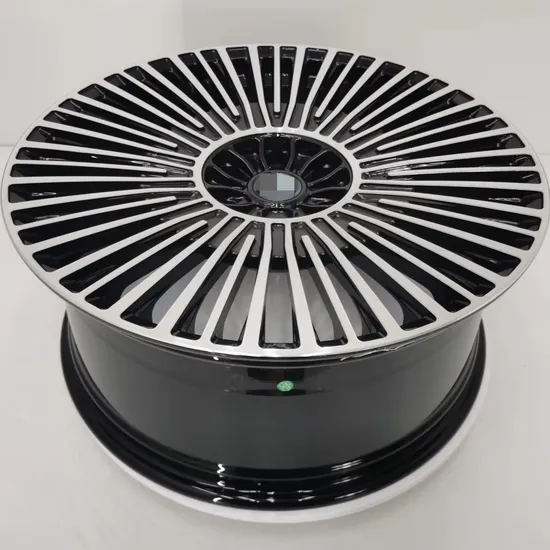 01
WHEEL RIM/HUB
Rin de rueda de coche mecanizado negro de aleación de aluminio A356 con 6 agujeros
View Specifications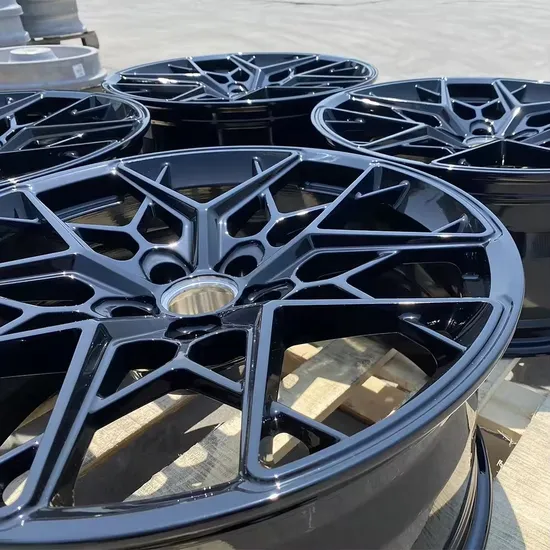 02
WHEEL RIM/HUB
A356 Aluminum 5-Hole Black Aftermarket Car Wheel Rim
View Specifications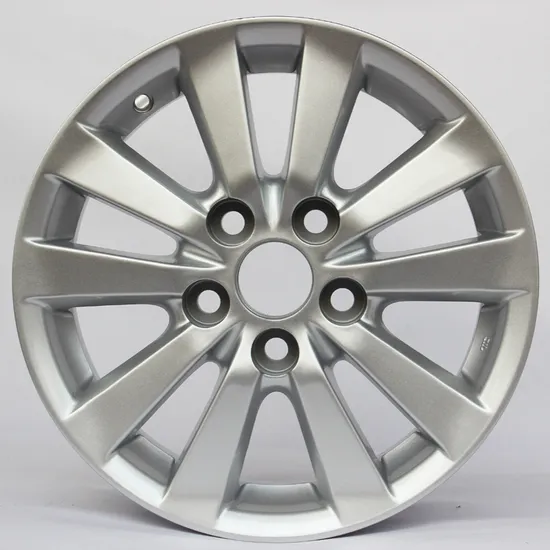 03
WHEEL RIM/HUB
Rin de aleación de aluminio A356.2 para SUV de 15 pulgadas plateado personalizado
View Specifications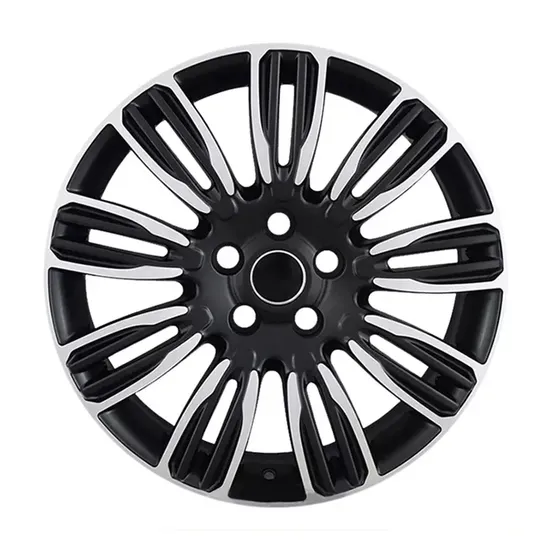 04
WHEEL RIM/HUB
16-22 Inch Merc A356 Aluminum Alloy Wheel Rims Hot Selling
View Specifications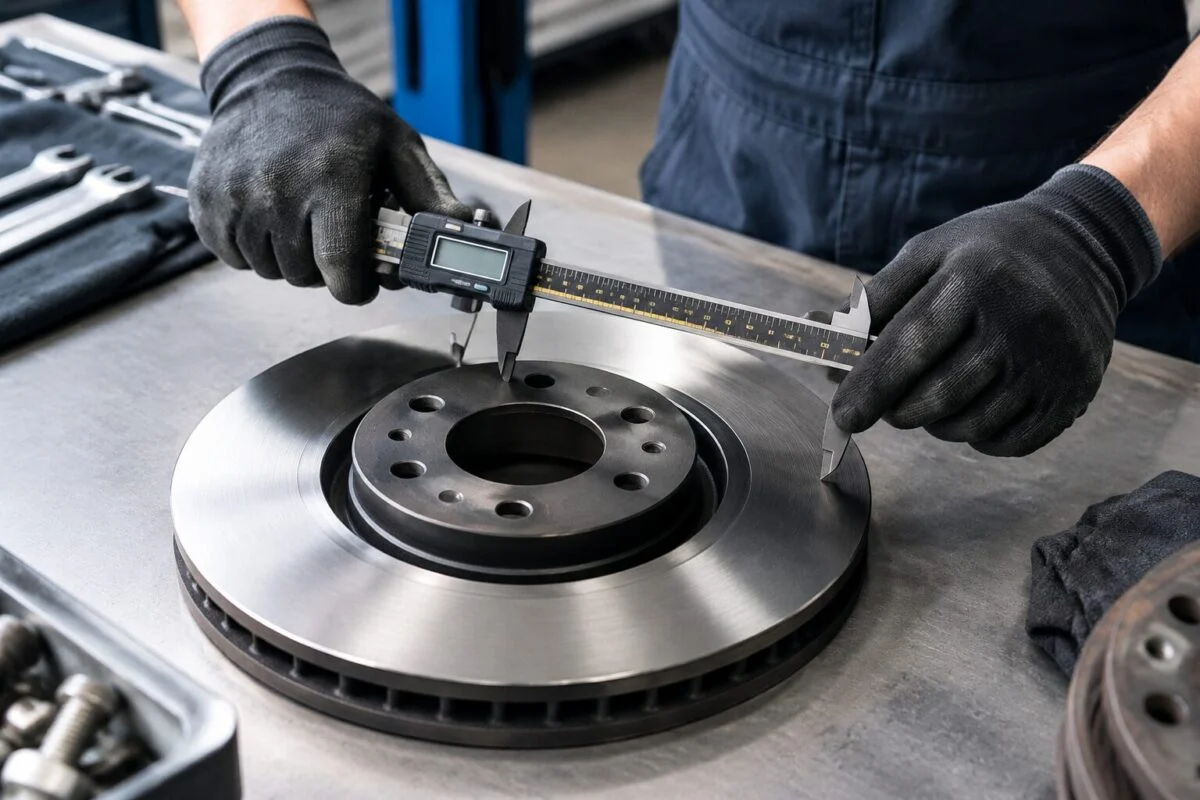
OE Fitment Check
Not sure it fits? Send us the OE number and we'll check it.
Jinan Yoker Auto Parts matches brake discs, drums, radiators, A/C condensers and wheel rims by OE number, vehicle model and year, PCD, ET and CB, so the parts fit before they ship.
- Factory-direct quote within 24 hours
- Free samples before bulk orders
- 10% off first order for new buyers (terms apply)
- Condenser MOQ from 10 PCS
Keep Reading
Related guides on auto parts sourcing
Buying Guide · · 10 min read
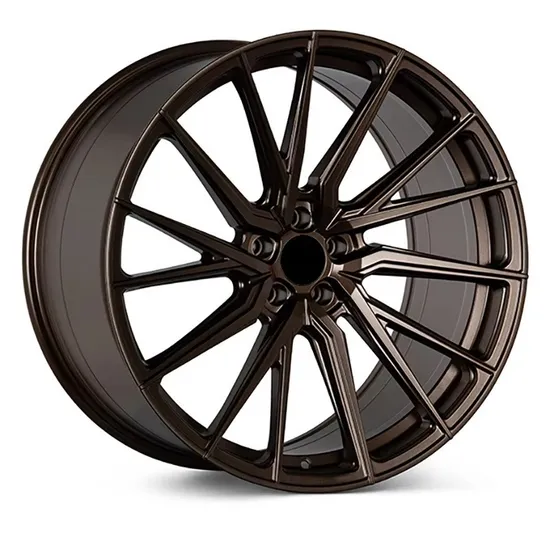
Alloy Wheel Rims 12-24 Inch Wholesale Supplier Factory Direct Price
Navigate the 2026 car rims price Poland market with clarity on wholesale tiers, manufacturing processes, and hidden import costs. Discover how factory-direct sourcing from…
Read the Guide
Buying Guide · · 9 min read
Car Rims Price in Russia: 2026 Wholesale Supplier Guide
Car Rims Price in Russia depends on four cost layers beyond the factory invoice. Sourcing factory-direct from China compresses middleman margins by a substantial…
Read the Guide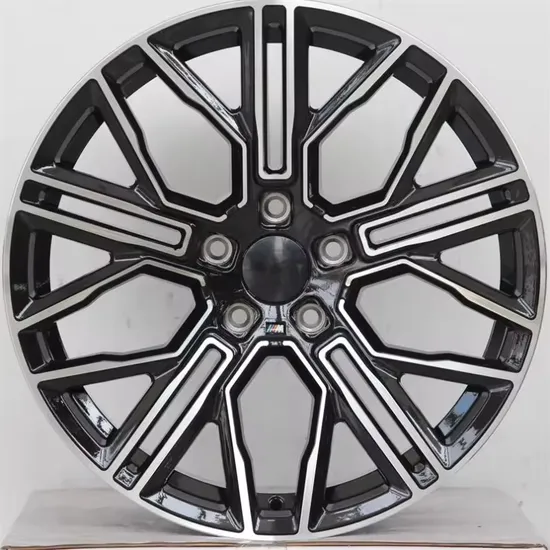
Buying Guide · · 7 min read
Buy Alloy Wheels China Wholesale Supplier
Sourcing from a reliable Buy Alloy Wheels China Supplier requires evaluating certifications, MOQ flexibility, and factory transparency beyond unit cost. Avoid liability by verifying…
Read the Guide