
China Factory Direct Wheel Rims Supplier for Canada | Ouya OEM/ODM Wholesale
- By author
- Buying Guide
China Factory Direct Wheel Rims Supplier for Canada | Ouya OEM/ODM Wholesale
The cheapest wheel rim quote from China is never the cheapest wheel rim in Canada.
Sourcing alloy wheels from China for the Canadian market hinges on three non-negotiable pillars: JWL/VIA/DOT certification alignment with Canadian import law, winter-adapted offset and load specs for SUV and truck platforms, and exact matching between certification marks, commercial invoice, and bill of lading. Fail any one, and the container sits at the port while demurrage devours margin.
I still remember a 40-foot container of matte black 20-inch rims destined for a distributor in Ontario. The wheels were gorgeous, the pricing was aggressive, and the production quality passed every internal check. What killed the shipment was a single line on the packing list: the product description read "alloy wheel accessories" while the certification stamps on the rim spoke "DOT JWL VIA." Canadian border agents flagged the mismatch, the container was held for document reconciliation, and the buyer ended up paying storage fees that nearly wiped out the entire order profit. That was the turning point in my career — moving from logistics paperwork to the front line of wheel sourcing, where I learned that a missing stamp costs more than a bad paint job. [NEED_CITE: Canadian Border Services Agency documentation requirements for alloy wheel imports]
Let me walk you through what actually matters when you pick a wheel rims supplier for Canada, straight from the loading dock to the customs broker’s desk.
What Certifications Does a Wheel Rim Need for the Canadian Market?
JWL and VIA are the baseline; DOT is the North American gateway; missing either triggers customs rejection, not a warning.
Canada does not have its own standalone wheel certification system. Instead, Transport Canada recognizes JWL (Japan Light Alloy Wheel), VIA (Vehicle Inspection Association), and DOT (U.S. Department of Transportation) markings as proof of structural compliance for aftermarket alloy wheels. [NEED_CITE: Transport Canada recognized wheel certification standards for aftermarket alloy rims]
Here is how the certification landscape breaks down for a buyer building a Canada-focused catalog:
| Certification | Scope | Canadian Acceptance | Verification Method |
|---|---|---|---|
| JWL | Japanese passenger car standard | Fully recognized | Stamped on rim inner barrel |
| VIA | Japanese third-party tested JWL | Fully recognized, higher trust | Stamped alongside JWL |
| DOT | U.S. FMVSS 110/120 compliance | Required for North American market | Stamped on rim back pad |
| TÜV | European technical inspection | Accepted but not mandatory | Certificate number on rim |
| None / Self-reported | No third-party validation | High rejection risk at port | Not verifiable |
A Middle Eastern buyer once asked me why his Canadian customer rejected a container despite the wheels passing visual inspection. The answer was simple: the factory had stamped "JWL" on the rim but could not produce the original JWL test report for that specific size and PCD combination. Canadian customs does not accept self-declared JWL — the test report must trace back to a certified laboratory. [NEED_CITE: JWL certification traceability requirements for export markets]
This is where a wheel rims supplier for Canada with a complete multi-certification system — JWL, VIA, DOT, TÜV, and ISO — changes the risk profile entirely. When the factory holds original test reports for every size in your catalog, the customs broker files the entry with confidence, and the container clears within days instead of weeks.
How to Choose the Right Offset and Load Rating for Canadian Vehicles?
Canadian vehicle mix skews heavily toward SUVs and pickup trucks; offset tolerance is tighter than most Asian markets; wrong offset means caliper interference, not just a visual complaint.
The Canadian aftermarket wheel market is dominated by 17-inch through 20-inch fitments for SUVs and light trucks — platforms like the Toyota 4Runner, Ford F-150, Chevrolet Silverado, and RAM 1500. These vehicles carry higher gross axle weight ratings than passenger sedans, which means load rating is not a suggestion — it is a safety threshold. [NEED_CITE: Canadian aftermarket wheel size distribution by vehicle segment]
Offset selection for Canadian trucks requires particular attention. Many popular North American truck platforms call for a positive offset in the range of +25 to +44 millimeters, depending on model year and trim. A wheel with too little positive offset pushes the wheel outward, increasing scrub radius and stressing wheel bearings — a failure mode that shows up after a few Canadian winters of salt and pothole impact. Too much positive offset tucks the wheel inward, causing brake caliper contact on larger rotor setups common in North American trim levels.
| Fitment Category | Typical Diameter | Load Rating Need | Offset Range | Common Risk if Mismatched |
|---|---|---|---|---|
| Mid-size SUV | 17-18 inch | Standard passenger | +25 to +35 mm | Bearing wear, fender rub |
| Full-size SUV | 18-20 inch | Light truck rated | +25 to +44 mm | Caliper interference |
| Half-ton pickup | 18-20 inch | Light truck rated | +25 to +44 mm | Hub contact, stud stretch |
| Heavy-duty pickup | 20 inch | Heavy-duty rated | +30 to +44 mm | Structural overload |
A tuning shop in Alberta ordered a batch of deep-concave 20-inch wheels for a fleet of Silverados. The wheels looked perfect in the product photos. When they arrived, the offset was +18 millimeters — a spec designed for Japanese domestic market sedans. The wheels sat nearly two inches proud of the fender, and the shop owner faced a choice: eat the cost or machine spacers and void the wheel warranty. The shop chose to eat the cost. [NEED_CITE: Offset and load rating specifications for North American truck platforms]
A reliable wheel rims supplier for Canada will maintain a dedicated fitment database cross-referenced to North American vehicle applications, not just Japanese or European catalogs. This means every custom order is checked against the target vehicle’s hub bore, bolt pattern, offset window, and load rating before the mold goes into production.
Which Surface Finish Withstands Canadian Winter Road Conditions?
Glossy machined faces look stunning in the showroom but chip and corrode under road salt; powder-coated matte and gunmetal finishes survive multiple Canadian winters with minimal maintenance.
Canada’s winter maintenance strategy relies heavily on sodium chloride and calcium chloride-based de-icing compounds spread across highways and city roads from November through March. These compounds are highly corrosive to bare or thinly coated aluminum surfaces. [NEED_CITE: Canadian municipal road salt composition and corrosion impact on alloy wheels]
Here is how common surface finishes perform under sustained salt exposure:
| Surface Finish | Salt Spray Resistance | Typical Failure Mode in Canadian Winter | Recommended Use |
|---|---|---|---|
| Full mirror polish | Vulnerable | Pitting, oxidation within one season | Show cars, summer-only use |
| Gloss machined face | Vulnerable | Clear coat peeling at spoke edges | Mild winters, frequent washing |
| Hyper silver | Resistant | Minor edge corrosion after extended exposure | All-season passenger cars |
| Matte black powder coat | Robust | Minimal degradation over multiple seasons | Trucks, SUVs, harsh climates |
| Gunmetal powder coat | Robust | Excellent long-term retention | Premium aftermarket, fleet use |
| Bronze powder coat | Resistant | Stable color, minor fade at edges | Enthusiast builds |
A distributor in Quebec reported that his glossy machined-face wheels generated return claims from retail customers after a single winter season. The clear coat was lifting at the spoke tips where road salt accumulated and moisture trapped underneath. Switching the same wheel design to a matte black powder-coated finish eliminated the return pattern almost immediately. [NEED_CITE: Powder coating versus liquid paint corrosion resistance on aluminum alloy wheels]
When you source from a wheel rims supplier for Canada, insist on powder-coated finishes for any SKU destined for provinces with active winter road treatment programs. The per-piece cost difference is marginal; the return-rate difference is dramatic.
What Are the MOQ, Lead Time, and Shipping Terms from China to Canada?
Factory-direct MOQ can be as low as a hundred pieces for custom orders; lead time runs between fifteen and thirty days; FOB and CIF terms both work but shift risk differently.
The traditional assumption is that Chinese wheel factories only deal in full-container bulk orders. That is outdated. Modern production lines — particularly those serving the global aftermarket and modification segments — have retooled to handle smaller batch sizes without sacrificing per-piece pricing consistency.
| Order Type | Typical MOQ | Production Lead Time | Best Shipping Term |
|---|---|---|---|
| Stock sizes, standard finish | Low MOQ available | Short cycle | FOB or CIF |
| Custom finish, existing mold | Moderate MOQ | Standard cycle | FOB preferred |
| Fully custom design, new mold | Higher MOQ | Extended cycle with mold phase | CIF for buyer convenience |
| Mixed-SKU container | Flexible per SKU | Standard cycle | FOB with consolidated loading |
A modification shop in British Columbia needed a staggered fitment set — 20-inch front, 22-inch rear — in a custom bronze finish. The total quantity was well under a full container. The factory accommodated the mixed order by grouping it with other Canadian-bound SKUs in a shared container, keeping per-piece freight costs reasonable and lead time within the standard window. [NEED_CITE: Chinese alloy wheel factory flexible MOQ practices for aftermarket buyers]
The critical point is this: when you work directly with a wheel rims supplier for Canada that controls its own production scheduling, you get transparency on lead time and the ability to consolidate mixed orders. Trading companies add a layer of cost and reduce your control over production priority.
How to Avoid Customs Delays When Importing Wheels from China?
The bill of lading product description, the HS code, and the certification stamps on the physical wheel must tell the exact same story — any divergence triggers inspection, holds, and demurrage.
This is where most first-time importers lose money. Not on the wheel price. Not on freight. On the paperwork.
Canadian customs requires that the commercial invoice, the packing list, the bill of lading, and the certificate of origin all align on three elements: the product description, the HS classification code, and the declared country of manufacture. For alloy wheels, the HS code falls under a specific heading for aluminum road vehicle wheels. [NEED_CITE: Canadian customs HS code classification for aluminum alloy vehicle wheels]
The most common failure patterns I have seen:
- The invoice says "wheel rims" but the bill of lading says "auto parts" — customs flags it for description mismatch.
- The HS code is correct but the certificate of origin lists a different factory address than the one on the JWL test report — customs questions authenticity.
- The wheels arrive with DOT stamps, but the importer did not include the DOT compliance declaration in the entry package — the shipment is held pending verification.
| Document Element | Correct Alignment | Common Error | Consequence |
|---|---|---|---|
| Product description | Matches across all documents | Invoice vs. B/L mismatch | Inspection hold |
| HS code | Correct wheel-specific code | Generic auto parts code | Re-classification delay |
| Certification marks | Physical stamps match declared certs | Stamps present but no test report | Document rejection |
| Country of origin | Matches factory on test reports | Different entity listed | Authenticity inquiry |
A wheel rims supplier for Canada that provides a complete customs documentation package — commercial invoice, packing list, bill of lading, certificate of origin, and all relevant certification test reports — removes this entire category of risk from your import process. The factory I work with prepares these documents as a standard part of every shipment, not as an afterthought.
Conclusion
Certification, fitment accuracy, winter-resistant finish, and document alignment — these four elements determine whether your wheel import clears the port or sits in a yard burning cash.
The wheel rims supplier for Canada who masters all four is not the one with the lowest unit price. It is the one whose test reports are traceable, whose fitment data matches North American platforms, whose powder-coated finishes survive salt exposure, and whose paperwork never gives a border agent a reason to pause. Get those right, and the rest of the transaction is straightforward.
Related Applications
Parts in This Article
Products mentioned above
 01
WHEEL RIM/HUB
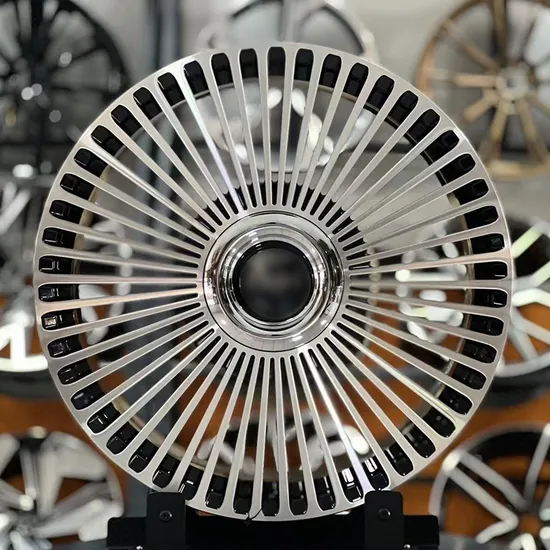
Replica Alloy Wheels 5 Holes 17-18inch SUV Crossover Car Rims
View Specifications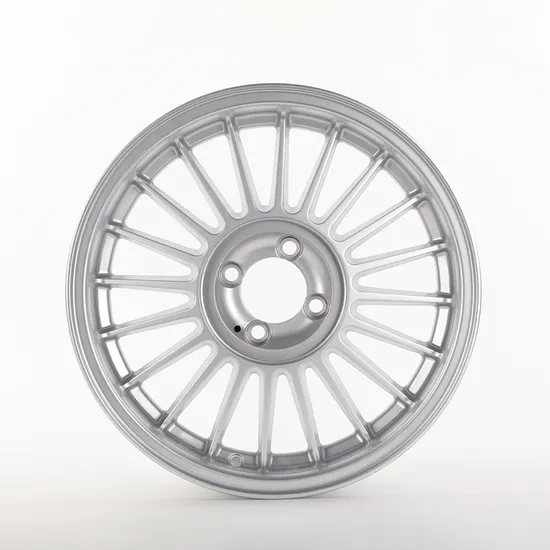 02
WHEEL RIM/HUB
Wholesale 17-18 Inch Aluminum Alloy Rims PCD 100 114.3 120
View Specifications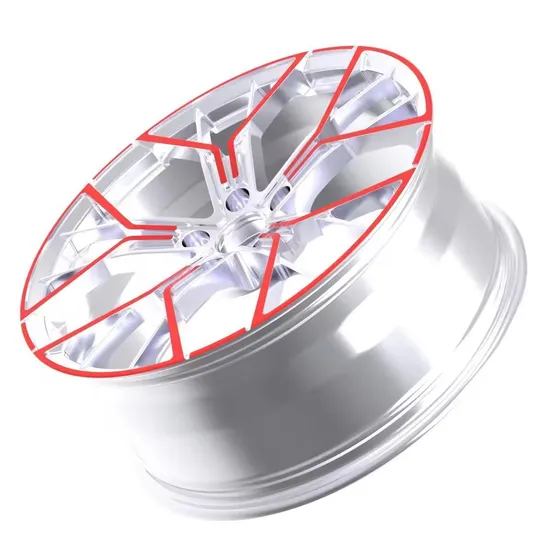 03
WHEEL RIM/HUB
Replica 17-18 Inch OEM-Style Car Alloy Wheels Rims
View Specifications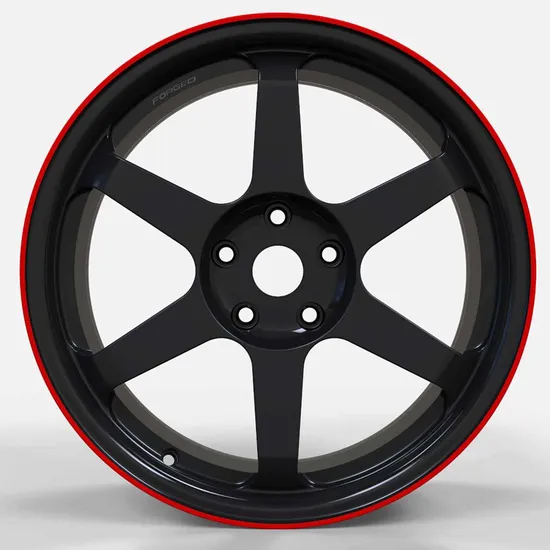 04
WHEEL RIM/HUB
Spoke Forged Wheels 17-18 Inch Custom Alloy Rims Hub
View Specifications
OE Fitment Check
Not sure it fits? Send us the OE number and we'll check it.
Jinan Yoker Auto Parts matches brake discs, drums, radiators, A/C condensers and wheel rims by OE number, vehicle model and year, PCD, ET and CB, so the parts fit before they ship.
- Factory-direct quote within 24 hours
- Free samples before bulk orders
- 10% off first order for new buyers (terms apply)
- Condenser MOQ from 10 PCS
Keep Reading
Related guides on auto parts sourcing
Buying Guide · · 10 min read
14 Inch Alloy Wheels Wholesale Supplier & Factory Direct Price 2026
Avoid costly port rejections by mastering the 14 inch alloy wheels price drivers for 2026. This guide details FOB pricing tiers by finish and…
Read the Guide
Buying Guide · · 9 min read
Car Rims Supplier for Pakistan: China Factory Direct OEM Wholesale
Sourcing from a reliable Car Rims Supplier for Pakistan requires verified VIA/JWL certification and fitment data matched to local road conditions. Avoid customs delays…
Read the Guide
Buying Guide · · 9 min read
SUV Alloy Wheels 12″-24″ Wholesale Supplier | OEM & Bulk for Sale
Selecting the best alloy wheels for SUV requires precise PCD, ET, and load index matching to prevent costly fitment failures. Verify VIA or TÜV…
Read the Guide