
Car Rims Price in Peru: 2026 Wholesale Buyer Guide
Bigger rims do not always cost more—some mainstream large diameters carry lower unit premiums than niche small sizes because Chinese factory tooling has matured around high-volume molds.
In 2026, the car rims price in Peru is shaped primarily by three levers: SUNAT ad valorem import duties, specification parameters (diameter, PCD, offset, center bore), and sourcing channel. Wholesale buyers who source factory-direct from China and match vehicle fitment data precisely can cut per-unit landed cost substantially while eliminating fitment-related returns.
I still remember a shipment I sent to a modification shop in Santiago—eighteen-inch matte black wheels, gorgeous finish, looked perfect on the pallet. The shop called back within a week: heavy vibration at highway speed. We pulled the data and found the center bore was off by a fraction for their hub pattern. The return freight alone ate into margins we had spent weeks negotiating. That kind of mistake does not just cost money; it costs reputation with the end customer. Since then, I check fitment numbers before I check price tags, and I urge anyone importing car rims price in Peru to do the same. [NEED_CITE: SUNAT tariff classification for alloy wheels under Andean Community Decision 370]
Let me walk you through what actually moves the needle on pricing, how to calculate real landed cost, which specs suit Peruvian roads, and how to source without getting burned.
What Factors Drive Car Rims Prices in Peru in 2026?
Exchange rate swings, tariff brackets, and raw material indices together determine the shelf price of any imported rim in Lima, Arequipa, or Cusco.
The Peruvian sol has shown notable volatility against the US dollar over recent cycles, and since most international alloy wheel trade settles in dollars, any sol depreciation translates almost immediately into higher local pricing. [NEED_CITE: Peruvian Central Bank historical exchange rate impact on imported auto parts] On top of currency, SUNAT applies an ad valorem duty on alloy wheel imports classified under specific HS codes, and this duty compounds with the IGV (general sales tax) at the border. Buyers who do not factor both layers into their cost model end up surprised at the counter.
Aluminum alloy ingot prices on the LME also feed through to FOB pricing at Chinese mills. When ingot costs climb, factory quotations adjust—usually within a single production quarter. The key point: none of these factors are constant, which is why locking in a car rims price in Peru quote for too long without a validity clause is risky.
I worked with a distributor in Arequipa who kept reordering the same SKU at what he assumed was a stable price. By the time his third container cleared Callao, the per-unit cost had shifted noticeably because both the dollar-sol rate and aluminum prices had moved. He later told me he wished he had built a simple quarterly review clause into his purchasing rhythm.
| Factor | Impact Direction | Typical Volatility |
|---|---|---|
| USD/PEN exchange rate | Direct cost multiplier | Noticeably variable quarter to quarter |
| SUNAT ad valorem duty | Fixed percentage on CIF value | Stable unless regulation changes |
| LME aluminum ingot index | FOB price driver | Substantially extended cycle swings |
| Ocean freight (Asia–Callao) | Landed cost adder | Noticeably reduced after peak seasons |
Wholesale vs. Retail: How to Calculate Landed Cost per Rim?
The gap between wholesale container-load pricing and retail single-piece pricing in Peru is wide enough that serious buyers must master the landed cost formula.
When you buy retail—say, picking up four rims from a shop in Lima—you pay a price that already includes importer margin, warehousing, local logistics, and retail overhead. When you buy wholesale by the container, you absorb those layers yourself but replace them with freight, duty, and handling. The math favors volume, but only if you calculate correctly. [NEED_CITE: Andean Community common external tariff schedule for aluminum alloy wheels]
Here is the logic I use when advising buyers:
- Start with the FOB unit price quoted by the manufacturer.
- Add ocean freight分摊 per unit—this is where container load matters enormously. A full container of twenty-inch rims holds substantially fewer pieces than a full container of fifteen-inch rims, so the per-unit freight分摊 shifts by diameter.
- Add the CIF-based SUNAT duty and IGV.
- Add inland transport from Callao port to your warehouse.
- Divide by total units to get true landed cost per rim.
A buyer in Arequipa once showed me his spreadsheet. He was comparing a retail quote against his own container import and thought he was saving a modest amount. When I asked whether he had included the inland trucking from Lima to Arequipa—a long haul across the Andes—he had not. That single line item changed his conclusion. The car rims price in Peru at wholesale still came out lower, but the margin was tighter than he assumed.
| Cost Component | Retail Purchase | Full Container Import |
|---|---|---|
| Unit base price | Noticeably higher | Substantially reduced |
| Freight per unit | Embedded in retail markup | 分摊 by container load |
| Duty and tax | Embedded | Calculated on CIF |
| Inland logistics | Embedded | Buyer-managed |
| Margin buffer | Retailer margin | Buyer’s own margin |
Size & Spec Matrix: Which Rims Fit Peruvian Roads Best?
Lima’s paved streets and the Andean highland routes demand different rim philosophies—and getting the spec wrong is the single most expensive mistake a Peruvian buyer can make.
In Lima, where roads are generally smooth and the aesthetic trend leans toward aggressive stance, buyers gravitate toward larger diameters with lower-profile tires. Nineteen and twenty-inch rims in matte black or gunmetal finish move quickly through modification shops there. The fitment priority is visual: deep concave profiles, mesh patterns, and staggered widths for SUVs and sedans.
Out in the highlands—Cusco, Puno, the passes toward Lake Titicaca—the conversation changes entirely. Potholes, unpaved stretches, and altitude-induced temperature swings mean rims need structural robustness over featherweight construction. [NEED_CITE: International Wheel Association load rating standards for light truck and SUV applications] A rim that saves grams on the scale but cracks on a highland pothole is no bargain.
This is where a common misconception surfaces: many buyers assume lighter is always better. In Peru’s highland context, a slight increase in rim wall thickness—sacrificing a small amount of weight—can meaningfully reduce deformation and crack risk. I have seen highland fleet operators switch to reinforced-spec rims and watch their replacement frequency drop noticeably.
| Application Zone | Preferred Diameter | Key Spec Priority | Finish Trend |
|---|---|---|---|
| Lima urban / coastal | 18"–20" | Visual depth, low offset | Matte black, gunmetal, bronze |
| Arequipa mixed use | 16"–18" | Balanced strength and style | Machined face, hyper silver |
| Cusco / highland / off-road | 15"–17" | Load rating, impact resistance | Gloss black, reinforced spoke design |
Another counterintuitive point: certain mainstream large sizes like twenty inches often carry a lower unit premium than冷门 small sizes like thirteen or fourteen inches. The reason is mold amortization—Chinese factories run high-volume tooling for popular diameters, spreading development cost across massive batch sizes. Niche small sizes, produced in lower volumes, can paradoxically cost more per piece.
How to Avoid Fitment Issues: The Data Checklist
PCD, offset, center bore, and load rating—four numbers that determine whether a rim bolts on cleanly or becomes an expensive return.
I cannot stress this enough: the majority of fitment failures I have witnessed in Latin America trace back to incomplete data verification before order placement. The rim itself may be perfectly manufactured, but if the center bore does not match the hub diameter, or if the offset pushes the wheel into the suspension strut, no amount of quality will save the transaction.
Here is the checklist I insist on before any order moves to production:
- PCD (Pitch Circle Diameter): Confirm bolt count and bolt circle. A five-lug 5×114.3 will not fit a 5×112 hub, period.
- Center Bore: Measure the vehicle hub precisely. If the rim center bore is larger, hub-centric rings can compensate. If it is smaller, the rim simply will not mount.
- Offset (ET): Too low and the rim protrudes past the fender; too high and it rubs the strut or brake caliper. Verify against the vehicle’s factory offset range.
- Load Rating: Especially critical for SUVs and light trucks operating in highland or重载 conditions. The rim’s rated load must meet or exceed the vehicle axle requirement. [NEED_CITE: WIA load index calculation methodology for aftermarket alloy wheels]
- Wheel Nut Seat Type: Conical, ball, or flat seat—mismatch here causes loose fastening even when everything else aligns.
A modification shop in Lima once ordered a batch of rims for a popular Japanese SUV platform. The PCD was correct, the offset was within range, but the center bore was a few millimeters too tight. The rims physically would not slide onto the hub. The shop had to source oversized hub-centric rings as a workaround, which added cost and a slight vibration concern at higher speeds. The customer noticed. The shop absorbed the cost to keep the relationship.
| Check Item | Correct Approach | Common Mistake |
|---|---|---|
| PCD | Match vehicle hub exactly | Assume all five-lug patterns are identical |
| Center Bore | Measure hub; allow ring compensation if rim bore is larger | Order without verifying; discover fitment gap at installation |
| Offset (ET) | Confirm within factory tolerance range | Copy offset from a different vehicle platform |
| Load Rating | Meet or exceed axle requirement | Select by visual preference only |
Sourcing from China: Lead Times and Quality Certifications
Reliable Chinese manufacturers can deliver consistent quality at factory-direct pricing, but only if you verify certifications and plan lead times around production reality.
China remains the world’s dominant production base for aftermarket alloy wheels, and for good reason: the combination of mature supply chains, scalable tooling, and competitive labor costs produces pricing that sits substantially below Japanese and European brand equivalents. [NEED_CITE: global alloy wheel production capacity distribution by country] But "sourcing from China" is not a monolith. The quality spectrum ranges from fully certified, export-grade manufacturers to unverified workshops that cut corners on material composition and structural testing.
What separates a dependable partner from a risky one? Certifications. International standards bodies—ISO for quality management systems, VIA for structural integrity testing, TÜV for European-market compliance, DOT for US-market requirements, JWL for Japanese standards—provide verifiable proof that a factory’s production process meets recognized benchmarks. A manufacturer holding multiple certifications demonstrates systematic process control, not just one-off sample quality.
Lead time is the other critical variable. A well-run factory with established mold inventory and raw material supply can turn around stock models in a matter of weeks, while custom finish or custom PCD orders require additional tooling and finishing time. Planning your car rims price in Peru procurement around realistic lead times—rather than optimistic promises—prevents stockout situations and emergency air freight costs.
I have worked with modification shops across Latin America that started with small trial orders—just enough to test market response and verify quality consistency. Once they confirmed that batch-to-batch finish and structural integrity held steady, they scaled to container volumes. The manufacturers who support this model typically offer flexible minimum order quantities for stock items and structured customization pathways for bespoke requests. Complete customs documentation—including certificates of origin, commercial invoices aligned with SUNAT requirements, and packing lists—smooths the clearance process at Callao.
One thing I always remind buyers: a three-year structural warranty from the manufacturer signals confidence in production consistency. Factories that avoid warranty commitments usually have reasons.
Conclusion
Understanding the car rims price in Peru requires looking past the sticker number to the full landed cost equation, the specification demands of your specific market zone, and the verification rigor you apply before placing an order.
Buyers who master the duty structure, match rim specs to actual road conditions, and validate fitment data before production consistently outperform those who chase the lowest headline price. Sourcing from certified Chinese manufacturers with flexible order structures and transparent documentation turns wheel importing from a gamble into a repeatable, margin-positive operation.
Related Applications
Parts in This Article
Products mentioned above
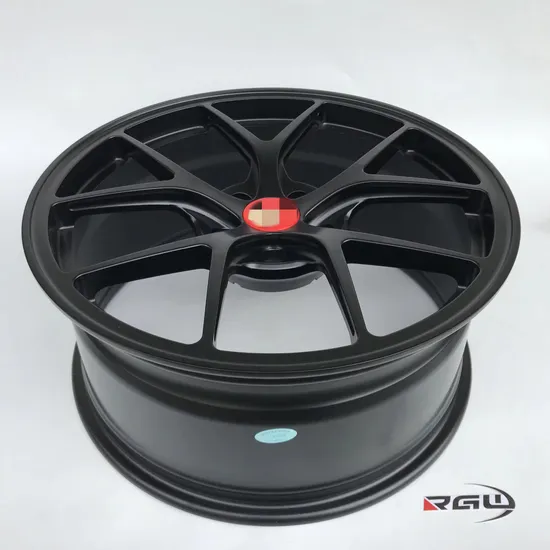 01
WHEEL RIM/HUB
16-20 Inch Racing Car Rims for BMW/Audi A3A4/Civic
View Specifications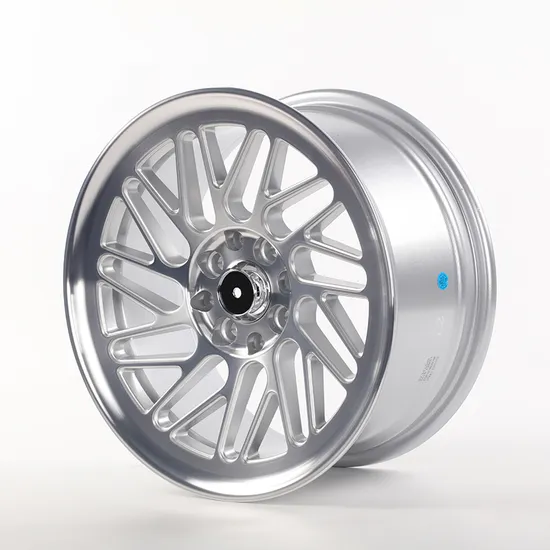 02
WHEEL RIM/HUB
17-22 Inch Forged Aluminum Alloy Car Rims Chrome Wheels China
View Specifications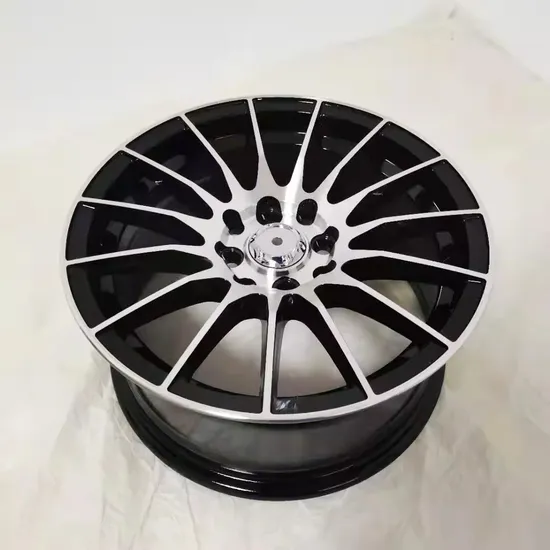 03
WHEEL RIM/HUB
High-Performance 15 Inch 4X100 4lug Aluminum Racing Car Rims
View Specifications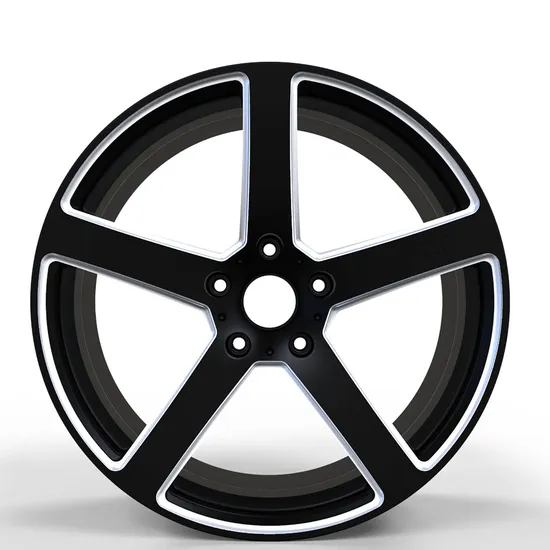 04
WHEEL RIM/HUB
Forged Alloy Wheels 17-21 Inch 5X114.3 Racing Car Rims Hub
View Specifications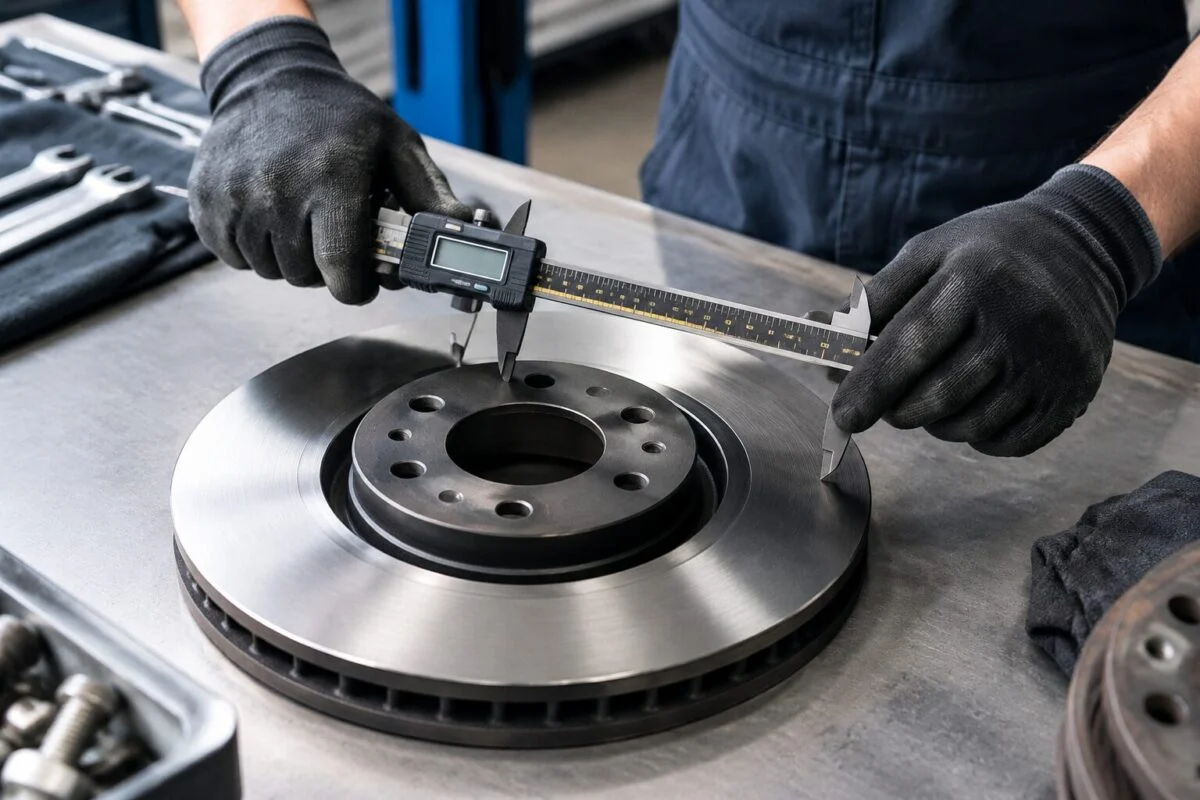
OE Fitment Check
Not sure it fits? Send us the OE number and we'll check it.
Jinan Yoker Auto Parts matches brake discs, drums, radiators, A/C condensers and wheel rims by OE number, vehicle model and year, PCD, ET and CB, so the parts fit before they ship.
- Factory-direct quote within 24 hours
- Free samples before bulk orders
- 10% off first order for new buyers (terms apply)
- Condenser MOQ from 10 PCS
Keep Reading
Related guides on auto parts sourcing
Buying Guide · · 9 min read
Alloy Wheels Price in USA: 2026 Wholesale Supplier Guide
Navigate US alloy wheel wholesale prices by mastering cost drivers beyond rim size. Discover how manufacturing process, DOT certification, and hidden fees like tooling…
Read the Guide
Buying Guide · · 10 min read
Alloy Wheels Price in UK: 2026 Wholesale Supplier Guide
Navigate the 2026 alloy wheels price UK market by understanding how surface finish and certification drive costs more than diameter. Discover why factory-direct sourcing…
Read the Guide
Buying Guide · · 13 min read
Alloy Wheels Price in Canada: 2026 Wholesale Supplier Guide
Stop relying on low FOB quotes that hide hidden costs. This 2026 guide breaks down the real alloy wheels price Canada buyers pay, covering…
Read the Guide