
Alloy Wheels Supplier for Qatar: China Factory Direct Wholesale
Most buyers assume cheap wheels are low-quality wheels. The real culprit is almost always an unverified paint specification left out of the proforma invoice.
When sourcing from a China-based alloy wheels supplier for Qatar, factory-direct sourcing cuts procurement costs substantially while keeping quality controllable—provided you verify certifications, lock paint standards into the contract, and match MOQ terms to your actual business model.
I still remember the first time a full container of matte black rims landed in Doha and the buyer dragged his fingernail across the surface right at the dock, shaking his head. "This is not the finish I paid for." The gloss reading was off, the film thickness was inconsistent, and the protective film had been applied the wrong way for desert heat. That whole shipment nearly got rejected. It was my turning point—after years of swapping wheels on pickup trucks in sandstorms on the outskirts of Riyadh, I moved to the sales side and started asking every buyer one question before quoting a single price: who is the end user, and what is the exact paint acceptance standard? [NEED_CITE: paint finish disputes as a leading cause of wheel import claims in the Middle East aftermarket]
That lesson shaped how I now approach every order. Below is a practical breakdown of what actually matters when you are evaluating an alloy wheels supplier for Qatar, drawn from real factory-floor and jobsite experience rather than brochure copy.
Why Do Qatar Buyers Choose a China Factory-Direct Alloy Wheels Supplier?
The short answer is cost, customization depth, and lead-time control—but only if you pick the right tier of manufacturer.
Qatar’s aftermarket and modification scene has grown steadily, fueled by a young car-enthusiast demographic and a steady flow of luxury and off-road vehicles. Local distributors and tuning shops used to rely heavily on Japanese and European wheel brands, but the price gap has become impossible to ignore. Factory-direct pricing from a qualified Chinese alloy wheels supplier for Qatar typically sits well below equivalent Japanese or European aftermarket pricing, leaving room for healthy distributor margins or competitive retail pricing. [NEED_CITE: Middle East aftermarket wheel market growth trend and buyer sourcing shift toward China]
Beyond price, the customization capability is what separates a true factory from a trading company. A genuine manufacturer can run anything from machined-face and chrome finishes to gloss black, matte black, bronze, gunmetal, and hyper silver—all on the same production line, with full OEM and ODM flexibility. Sizes span from 12-inch up to 24-inch, covering passenger cars, SUVs, luxury sedans, trucks, racing applications, and motorcycles.
| Sourcing Channel | Price Level | Customization Depth | MOQ Flexibility | Certification Traceability |
|---|---|---|---|---|
| Japanese/European Brand Distributor | High | Limited to catalog | Fixed catalog stock | Full but expensive |
| Chinese Trading Company | Medium | Surface-level only | Moderate | Often self-reported |
| Chinese Factory-Direct Supplier | Substantially lower | Full OEM/ODM | Highly flexible | Verifiable on-site |
A tuning shop owner in the Gulf once told me he switched from a European brand to a factory-direct alloy wheels supplier for Qatar and could finally offer his customers staggered fitments and deep-concave mesh designs in custom bronze—something the European catalog simply did not cover at a viable price point. The lead time stayed within a reasonable window, and batch-to-batch color matching was noticeably tighter than what he had experienced with a previous trading-company intermediary.
How Do You Verify an Alloy Wheels Supplier’s Qualifications and Production Capability?
Certificates on a website mean nothing unless you can trace them back to the actual production facility and the specific product line you are ordering.
The first thing I check is whether the alloy wheels supplier for Qatar holds internationally recognized certifications—ISO, TÜV, VIA, DOT, JWL, and CCC are the ones that actually open doors in different markets. For Qatar specifically, GCC conformity matters for customs clearance, and a factory that already exports to the broader Middle East will have this documentation ready. [NEED_CITE: GCC certification requirements for alloy wheel imports into Qatar and neighboring states]
But certificates are just the entry ticket. The real verification happens when you ask three follow-up questions:
- Can you provide the original test reports tied to the exact wheel model and size I am ordering, not a generic catalog certificate?
- What is your annual production capacity, and what percentage of that is allocated to export markets versus domestic?
- Can we arrange a live video factory tour covering the casting or flow-forming line, the CNC machining center, and the paint booth?
A serious manufacturer will agree to all three without hesitation. I have seen buyers get burned by "suppliers" who turned out to be small workshops subcontracting to whoever had spare furnace time. The wheels looked fine in photos, but the dynamic radial fatigue performance was a different story. [NEED_CITE: structural failure root causes in non-certified aftermarket alloy wheels]
When we walk a new buyer through our own production facility in Jinan, we show the full flow—from raw A356 aluminum alloy ingestion through low-pressure casting or gravity casting, T6 heat treatment, CNC machining, and finally the paint line with controlled booth temperature and humidity. The annual capacity figure is in the tens of millions of pieces, which means your order does not get squeezed between someone else’s rush job.
How Should Paint Finish Standards Be Written Into the Purchase Contract?
If the paint spec is not in the PI, you do not have a paint spec—you have a wish.
This is where most disputes originate. A buyer in the Middle East does not just look at the color code. He checks gloss level with a meter, measures film thickness, and sometimes performs an adhesion cross-cut test. In desert conditions, the paint also has to withstand extended salt-spray exposure and intense UV without chalking or peeling. [NEED_CITE: paint adhesion and UV resistance testing standards for automotive wheels in hot climates]
The three non-negotiable paint inspection parameters are:
- Gloss reading measured with a gloss meter at a defined angle, recorded against an approved reference panel.
- Film thickness measured with a coating thickness gauge at multiple points on the wheel face and barrel, with an acceptable tolerance band.
- Adhesion verified through a cross-cut tape test per the relevant ISO or ASTM method.
In addition, salt-spray endurance should be specified as a minimum threshold, and the supplier should provide test reports from an accredited lab—not just an in-house claim.
| Paint Parameter | Specification Level in Contract | Verification Method |
|---|---|---|
| Gloss level | Defined range against approved panel | Gloss meter reading |
| Film thickness | Tolerance band across wheel surface | Coating thickness gauge |
| Adhesion | Pass/fail per recognized standard | Cross-cut tape test |
| Salt-spray resistance | Minimum endurance threshold | Accredited lab report |
| Color match | Approved physical color panel | Visual under controlled lighting |
I always insist on a physical color panel being shipped to the buyer before production starts. For the Qatar market, matte black and bronze are consistently the hottest finishes—our stock runs of these two colors move fast, and having a signed-off panel on both sides has eliminated almost every paint-related dispute we used to see.
One buyer, a modification shop serving high-end SUV clients, had previously accepted a shipment where the matte black finish looked "close enough" in the factory photos but arrived with a noticeably glossier sheen under Gulf sunlight. The return rate on that batch was painful. After we locked the gloss range and film thickness into the PI with a signed panel, the next three containers passed his dock inspection without a single wheel sent back.
How Do You Optimize MOQ, Lead Time, and Logistics for Qatar Imports?
The right MOQ depends entirely on whether you are a tuning shop rotating inventory or a wholesale distributor filling a warehouse.
A common misconception is that the lower the MOQ, the better. In reality, an unusually low MOQ from an "alloy wheels supplier for Qatar" often signals a small workshop that cannot guarantee batch consistency or structural testing. A professional factory typically sets the MOQ around a few dozen pieces for stock models and around one hundred pieces for fully custom designs—this is the sweet spot where production efficiency and buyer flexibility meet. [NEED_CITE: MOQ benchmarks and batch consistency correlation in alloy wheel manufacturing]
Lead time for stock models is generally in the range of a couple of weeks, while custom orders with specific sizes, offsets, and finishes typically run a few weeks from order confirmation to container loading. For Qatar-bound shipments, full-container ocean freight is the most economical route, and a supplier experienced in Middle East exports will handle the complete customs documentation package—commercial invoice, packing list, certificate of origin, and any GCC-specific conformity paperwork.
| Buyer Type | Typical MOQ Need | Lead Time Expectation | Logistics Preference |
|---|---|---|---|
| Tuning/Modification Shop | Low, stock models | Short | LCL or shared container |
| Wholesale Distributor | High, mixed sizes | Standard | Full container |
| OEM/Tier-1 Buyer | Very high, single spec | Extended with milestones | Scheduled full containers |
| E-Commerce Seller | Low, mixed SKUs | Short with Amazon-ready packing | LCL to warehouse |
A wholesale distributor based in the Gulf once told me his biggest headache was not price—it was batch-to-batch color drift. He was ordering the same bronze finish every quarter, and each container looked slightly different. Once we moved him onto a dedicated production batch with controlled paint parameters and pre-shipment color panel comparison, the consistency issue disappeared. His reorder cycle became predictable, and his end customers stopped calling about color mismatch between front and rear axles.
What Are the Most Common Import Pitfalls and How Do You Avoid Them?
The three traps that cost buyers the most money are the low-price trap, the packaging failure trap, and the customs-document trap.
The low-price trap works like this: a supplier quotes a price that looks impossibly good, the buyer places a large order, and the wheels arrive with paint defects, uneven machining, or no verifiable test reports. The unit price was low, but the effective cost—counting returns, replacements, and lost customer trust—was several times higher than sourcing from a properly certified alloy wheels supplier for Qatar at a realistic price. [NEED_CITE: total cost of ownership comparison between certified and non-certified wheel imports]
The packaging failure trap is especially relevant for long sea voyages to the Middle East. Wheels stacked without proper separators, wrapped in low-grade protective film, or loaded without moisture-control measures arrive with surface scratches, film residue baked onto the paint, or early-stage corrosion. A professional supplier uses wheel-specific packaging with individual protective bags, reinforced carton corners, and container-level desiccant—details that cost very little but prevent costly claims.
The customs-document trap hits when the supplier cannot produce the correct certificate of origin, or the GCC conformity paperwork is missing or mismatched to the shipment. The container sits at the port, demurrage charges pile up, and the buyer is forced to accept a compromised clearance or face re-export. A factory that exports regularly to Qatar will have this documentation process standardized and will provide draft copies for review well before the vessel sails.
| Pitfall | Root Cause | Prevention |
|---|---|---|
| Low-price trap | Unverified supplier, no spec lock-in | Certification audit, PI spec detail |
| Packaging failure | Inadequate sea-freight protection | Wheel-specific packaging, desiccant |
| Customs-document trap | Inexperienced or non-compliant supplier | Draft document review before shipment |
A modification shop owner in the region once shared that his worst single order came from a supplier who offered the lowest price in the market. The wheels arrived with paint peeling at the bead seat, no salt-spray test documentation, and packaging that had collapsed inside the container. The financial hit was severe, and the reputational damage with his clients took months to repair. He now sources exclusively from a certified alloy wheels supplier for Qatar, even though the unit price is higher, because the total landed cost—including claims, returns, and headaches—is far lower.
Conclusion
Sourcing from a China-based alloy wheels supplier for Qatar is a proven path to lower costs and greater customization, but only when certifications, paint specs, MOQ terms, and logistics are locked down with discipline. Verify the factory, write every paint parameter into the contract, match MOQ to your real business model, and never let a suspiciously low price override structural and documentation requirements. Do these four things, and the factory-direct model delivers exactly what it promises.
Related Applications
Parts in This Article
Products mentioned above
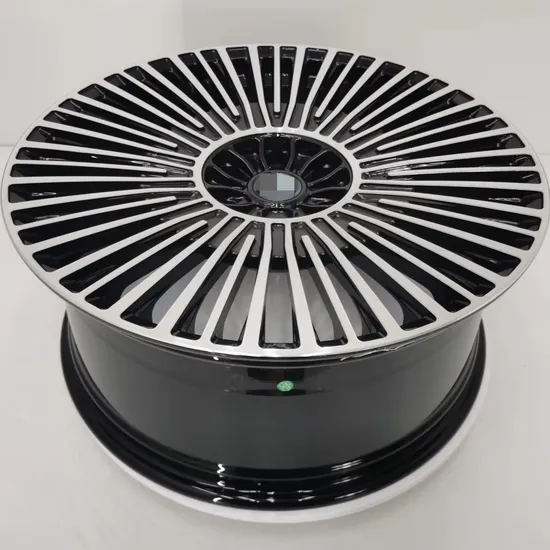 01
WHEEL RIM/HUB
A356 Aluminum Alloy 6 Holes Black Machined Car Wheel Rim
View Specifications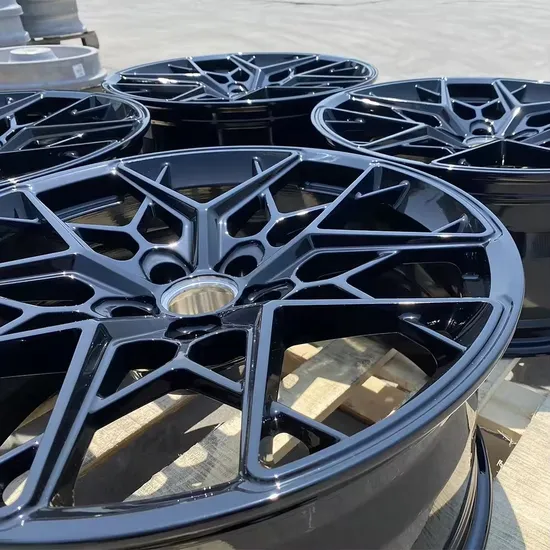 02
WHEEL RIM/HUB
A356 Aluminum 5-Hole Black Aftermarket Car Wheel Rim
View Specifications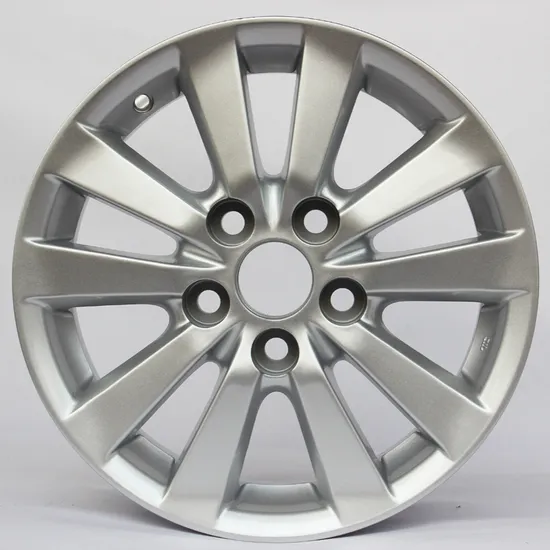 03
WHEEL RIM/HUB
15 Inch A356.2 Aluminum SUV Alloy Wheel Rim Silver Custom
View Specifications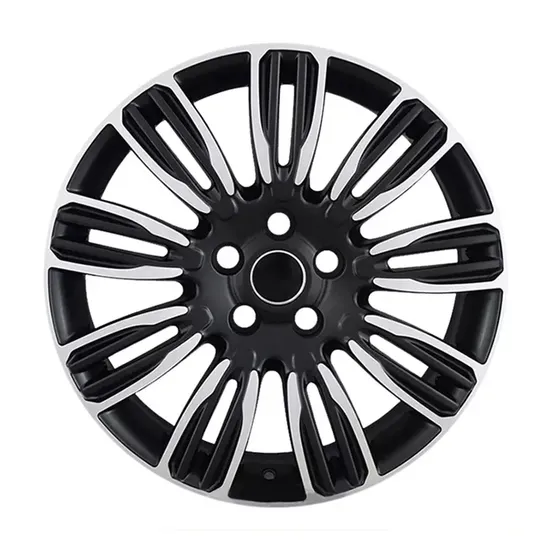 04
WHEEL RIM/HUB
16-22 Inch Merc A356 Aluminum Alloy Wheel Rims Hot Selling
View Specifications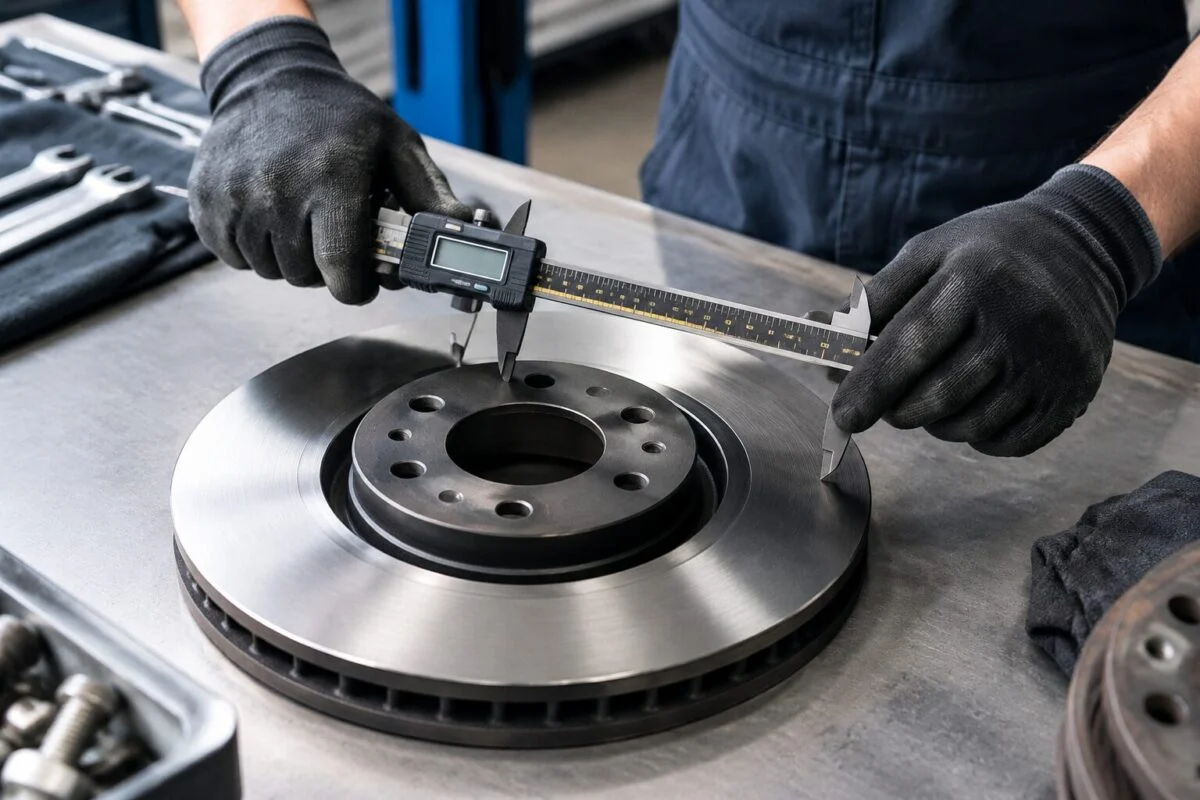
OE Fitment Check
Not sure it fits? Send us the OE number and we'll check it.
Jinan Yoker Auto Parts matches brake discs, drums, radiators, A/C condensers and wheel rims by OE number, vehicle model and year, PCD, ET and CB, so the parts fit before they ship.
- Factory-direct quote within 24 hours
- Free samples before bulk orders
- 10% off first order for new buyers (terms apply)
- Condenser MOQ from 10 PCS
Keep Reading
Related guides on auto parts sourcing
Buying Guide · · 9 min read
SUV Alloy Wheels 12″-24″ Wholesale Supplier | OEM & Bulk for Sale
Selecting the best alloy wheels for SUV requires precise PCD, ET, and load index matching to prevent costly fitment failures. Verify VIA or TÜV…
Read the Guide
Buying Guide · · 9 min read
Car Rims Wholesale Supplier for Kazakhstan: China Factory Direct
Secure a reliable China factory direct car rims wholesale supplier for Kazakhstan with JWL, VIA, and TUV certifications. Reinforced designs withstand harsh Central Asian…
Read the Guide
Buying Guide · · 11 min read
Alloy Wheel Rims 12-24 Inch Wholesale Supplier for Sale
Wheel rims price in UAE depends on diameter, finish, certification, and order volume rather than size alone. Factory-direct sourcing reduces landed costs significantly compared…
Read the Guide