
Alloy Wheel PCD Bolt Pattern Explained: Wholesale Supplier Guide
- By author
- Technical Resources
Alloy Wheel PCD Bolt Pattern Explained: Wholesale Supplier Guide
A 1mm deviation in bolt circle diameter can turn a full container of alloy wheels into dead stock sitting at port. The alloy wheel PCD bolt pattern is the single most critical fitment parameter in wheel sourcing—get it wrong, and you face unusable inventory, customs clearance delays, and financial losses that dwarf the product cost itself.
PCD (Pitch Circle Diameter) defines the diameter of an imaginary circle drawn through the center of all lug holes on a wheel. It is expressed as the number of bolt holes multiplied by the bolt circle diameter in millimeters (e.g., 5×114.3 means five lug holes arranged on a 114.3mm circle). Correct PCD matching ensures the wheel mounts flush against the hub, distributes clamping force evenly across all fasteners, and maintains structural integrity under dynamic loads.
Back when I was handling customs documentation at Qingdao Port, I processed wheel shipments daily—HS codes, packing lists, container manifests. I thought I understood fitment specs on paper. Then a full container of 18-inch replica mesh wheels landed in Lagos, Nigeria, and the buyer’s local fleet of Toyota Hilux pickups couldn’t mount a single one. The PCD was stamped correctly on our paperwork, but the actual machining tolerance had drifted. The wheels sat at Tincan Port for weeks, and the demurrage charges ended up exceeding the original invoice value. That shipment taught me that PCD isn’t just a number you copy onto a purchase order—it’s a physical dimension that must be verified at every stage, from factory floor to final installation. [NEED_CITE: SAE J2530 aftermarket wheel structural and dimensional specification requirements]
Let me walk you through how to identify, measure, verify, and source wheels with the correct alloy wheel PCD bolt pattern—so your cargo clears customs and your customers drive away without vibration complaints.
How to Measure Bolt Pattern Correctly (Even vs Odd Lug Count)?
Measuring PCD accurately depends entirely on whether your wheel has an even or odd number of lug holes, and using the wrong measurement path is the most common sourcing mistake in emerging markets. The principle is straightforward: you need to determine the diameter of the circle that passes through the center of every lug hole. But the physical measurement technique changes based on lug count. [NEED_CITE: standard measurement methodology for wheel bolt circle per SAE and TÜV technical guidelines]
Here is the step-by-step process:
-
Identify lug count. Count the bolt holes. Common configurations are 4-lug, 5-lug, 6-lug, and 8-lug. This determines your measurement method.
-
For even lug counts (4, 6, 8): Place a caliper across two directly opposite lug holes. Measure from the center of one hole to the center of the opposite hole. This distance is the PCD. For example, on a 4×100 wheel, the center-to-center distance across opposing holes reads exactly 100mm.
-
For odd lug counts (5-lug being the most common): No two holes sit directly opposite each other. You must measure from the back edge of one lug hole to the center of the hole farthest across from it—skipping the adjacent hole entirely. Alternatively, measure center-to-center between two adjacent holes and use a bolt pattern gauge or conversion chart to derive the PCD. On a 5×114.3 wheel, the adjacent hole center-to-center distance is approximately 67.2mm.
-
Use a bolt pattern template. Physical gauge templates with multiple hole patterns let you match the wheel directly without calculation. These are inexpensive and eliminate measurement ambiguity—especially useful when inspecting samples at a factory or checking incoming stock at a warehouse.
-
Cross-reference with vehicle fitment data. Once you have the measurement, verify it against a known vehicle database. If the wheel is supposed to fit a Toyota Camry, the PCD must read 5×114.3. If your caliper shows 115mm, the wheel will not mount correctly.
I once inspected a batch of wheels at a manufacturing facility where the quality inspector measured 5-lug PCD by taking the center-to-center distance between two adjacent holes and calling that the PCD. The actual number he recorded was roughly 67mm—nowhere near the correct 114.3mm. The entire batch was mislabeled before it ever reached the packing line. [NEED_CITE: common wheel measurement errors documented in aftermarket fitment technical bulletins]
What Are the Most Common PCD Specs and Which Vehicles Do They Fit?
The global aftermarket revolves around a relatively small set of PCD specifications, but regional vehicle populations create dramatically different demand profiles—sourcing for West Africa is not the same as sourcing for Southeast Asia. Understanding which PCD maps to which vehicle platforms is essential for building a sellable inventory rather than a warehouse of mismatches. [NEED_CITE: global vehicle parc distribution by major PCD specification across aftermarket regions]
Here is a reference matrix of the most frequently encountered specifications:
| PCD Specification | Typical Vehicle Platforms | Regional Demand Notes |
|---|---|---|
| 5×100 | Older Volkswagen Group (Golf MK4, Passat B5), Subaru, some Toyota | Moderate demand; aging vehicle parc in certain markets |
| 5×112 | Audi, Volkswagen (MQB platform), Mercedes-Benz (older), Skoda | High demand in markets with European vehicle imports |
| 5×114.3 | Toyota, Honda, Nissan, Hyundai, Kia, Mazda, Ford (Asian-origin platforms) | Dominant across Africa, Latin America, Southeast Asia due to Japanese/Korean vehicle prevalence |
| 5×120 | BMW, Land Rover, Honda (newer platforms), Porsche, Tesla | Growing demand as luxury/SUV segments expand |
| 5×127 | Chevrolet, GMC, Dodge, Jeep (North American platforms) | Concentrated in Middle East and Latin America with US-spec imports |
| 6×139.7 | Toyota Hilux, Land Cruiser, Nissan Patrol, Isuzu D-Max | Critical in Africa and Latin America for pickup and off-road segments |
| 8×165.1 / 8×6.5 | Heavy-duty pickups, commercial trucks (Ford Super Duty, RAM, Chevrolet) | Niche but high-value; fleet and commercial buyers |
One critical point that trips up buyers repeatedly: 5×114.3 and 5×4.5 are the exact same specification. The difference is purely imperial versus metric notation. Five inches multiplied by 25.4mm per inch equals 114.3mm. I have seen purchase orders where the buyer specified 5×4.5 and the factory interpreted it as a different pattern because the documentation mixed notations. Always standardize on metric (5×114.3) in your purchase orders to eliminate this ambiguity.
For buyers operating in West and East Africa, the 5×114.3 and 6×139.7 specifications together cover the overwhelming majority of the vehicle parc—Toyota dominates these markets, and getting these two PCDs right in your inventory mix is the foundation of a profitable wheel business there. [NEED_CITE: African vehicle parc composition by origin market and corresponding wheel fitment prevalence]
Can You Fix a PCD Mismatch with Adapters or Spacers?
Wheel adapters and spacers can physically bridge a PCD gap, but they fundamentally alter the load path and introduce engineering risks that most buyers underestimate—especially at highway speeds and on rough road surfaces common in emerging markets. The temptation to use adapters as a universal fix is strong, particularly when a container of wrong-PCD wheels is already sitting at port. But the technical reality demands careful evaluation.
Here is what adapters actually do: they bolt onto the hub using the vehicle’s original bolt pattern on one side, and present a new bolt pattern on the other side for the wheel to mount. This changes the wheel’s offset, increases the track width, and introduces an additional interface in the clamping system.
The risks are not theoretical:
-
Shear stress on fasteners. The adapter creates a lever arm between the hub mounting surface and the wheel mounting surface. Under cornering and braking loads, the lug bolts or studs experience shear forces they were not designed to handle. The thicker the adapter, the greater the leverage and the higher the shear stress.
-
Vibration and hub-centricity loss. If the adapter’s center bore does not match the hub diameter precisely, the wheel relies entirely on the lug bolts for centering (lug-centric mounting). At speed, this causes vibration that transfers through the steering system and suspension. Hub-centric adapters with machined lips that match the hub diameter precisely mitigate this, but cheap adapters skip this feature entirely.
-
Regulatory and certification implications. In markets with technical vehicle inspection requirements, adapter-modified wheel fitments may fail certification. TÜV guidelines in Europe, for instance, require adapters to meet specific material and dimensional standards, and the modified assembly must be tested as a system. [NEED_CITE: TÜV and SEMA technical position on wheel adapter safety and certification requirements]
-
Warranty and liability exposure. If a wheel detaches due to adapter failure, liability falls on whoever specified and installed the adapter—not the wheel manufacturer. For distributors selling to modification shops, this creates downstream legal risk.
If you must use adapters, insist on hub-centric designs with precise center bore matching, grade-8 or higher fasteners, and a maximum thickness that stays within the vehicle manufacturer’s stud engagement specification. For bulk sourcing, the better strategy is to order the correct PCD from the start rather than planning to adapt your way out of a mismatch.
How to Verify PCD Before Placing a Bulk Order?
Verification is not a single checkpoint—it is a chain of confirmations that runs from the initial inquiry through sample inspection, production monitoring, and pre-shipment audit. Breaking any link in that chain is what causes containers of wheels to arrive at port with the wrong fitment. Based on repeated experience with orders across multiple regions, here is the verification protocol I follow with every bulk purchase.
-
Confirm the target vehicle parc. Before specifying any PCD, document which vehicles your end customers actually drive. Visit local registration data if available, survey repair shops in your market, or work with your supplier’s fitment team to match regional vehicle data to PCD requirements. Do not assume the PCD you used last year is still correct—vehicle fleets evolve.
-
Request a fitment confirmation sheet from the supplier. A competent manufacturer will provide a document listing every wheel SKU alongside its PCD, center bore, offset, and bolt seat type (ball seat, cone seat, or flat seat). Cross-reference this against your target vehicle list. Every parameter must align—not just PCD.
-
Inspect pre-production samples with your own tools. When samples arrive, do not trust the markings stamped on the wheel alone. Use a caliper and bolt pattern gauge to physically measure the PCD and center bore. I have seen samples where the stamping read 5×114.3 but the actual machined PCD measured 115.2mm—a tolerance drift that would prevent proper hub seating. [NEED_CITE: wheel manufacturing dimensional tolerance standards per ISO and industry specifications]
-
Verify center bore and bolt seat compatibility. PCD is necessary but not sufficient. A 5×114.3 wheel with a 73.1mm center bore will not fit a hub that requires 67.1mm, regardless of whether the bolt pattern matches. Similarly, mismatched bolt seats (cone vs ball) prevent proper lug nut torque and create loosening risks under vibration.
-
Require a pre-shipment inspection report. Before the container is sealed, request a third-party or factory-issued inspection report covering PCD measurement, center bore diameter, offset verification, and visual finish quality. This report should reference actual measured values from a random sample of the production batch—not just the specification sheet.
-
Check packaging and documentation alignment. The PCD printed on the wheel box must match the PCD stamped on the wheel and the PCD listed on the packing list. Discrepancies between these three documents are a red flag that the batch may contain mixed SKUs.
When I work with buyers now, the first question I ask is always the same: what vehicles are on the road in your market? From there, we build the PCD specification list together, verify it against the production samples, and lock it into the purchase documentation before a single wheel goes into production. The alloy wheel PCD bolt pattern is not a detail you verify after the fact—it is the foundation of the entire order.
Conclusion
Getting the alloy wheel PCD bolt pattern right is the difference between profitable inventory and expensive dead stock. Measure correctly using the right technique for your lug count, match specifications to your regional vehicle parc, resist the urge to adapt away from mismatches, and verify every parameter physically before committing to bulk production. The cost of diligence at the ordering stage is always less than the cost of correction at the port.
Related Applications
Parts in This Article
Products mentioned above
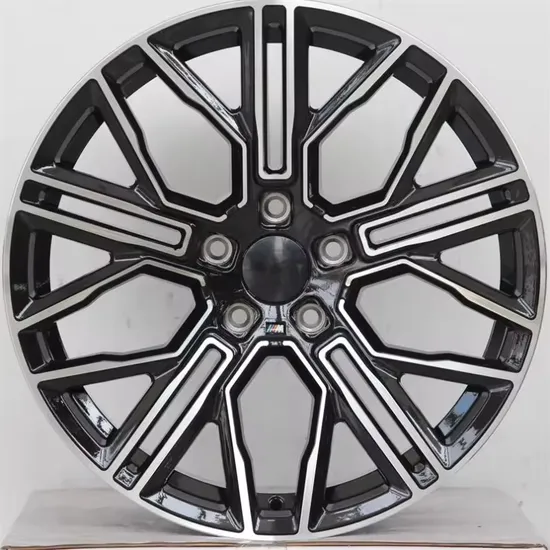 01
WHEEL RIM/HUB
19inch Car Aluminum Alloy Wheel PCD5*120 Aftermarket Sale
View Specifications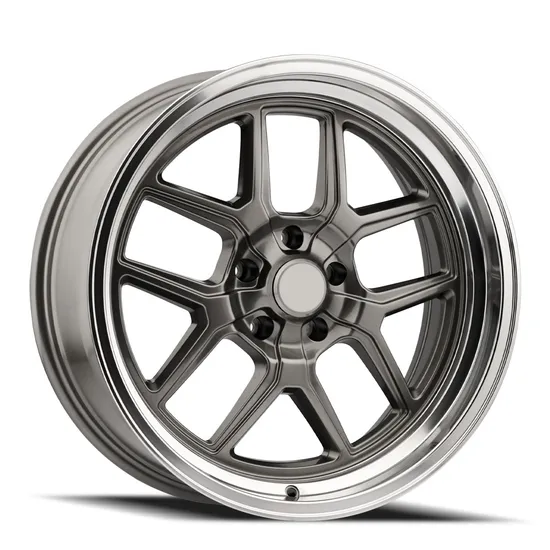 02
WHEEL RIM/HUB
19-Inch 5X120 PCD Et35 Custom Alloy Wheels for Performance
View Specifications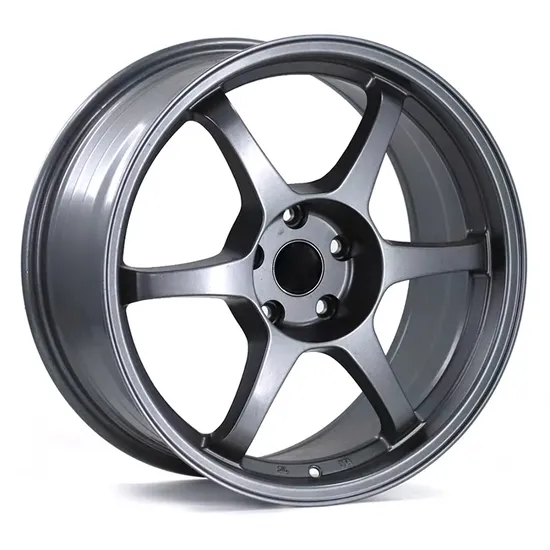 03
WHEEL RIM/HUB
Flow Form Rims 15X6.5 4Holes 6Spokes Lightweight Racing Alloy Wheels
View Specifications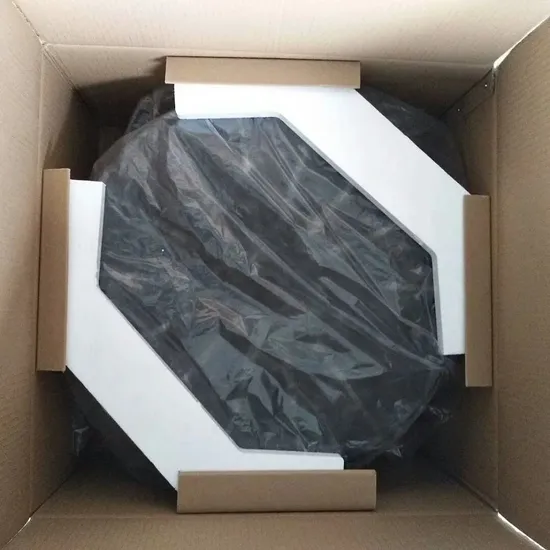 04
WHEEL RIM/HUB
20 22 Inch 5 Hole 120 Luxury Car Alloy Wheels Rim
View Specifications
OE Fitment Check
Not sure it fits? Send us the OE number and we'll check it.
Jinan Yoker Auto Parts matches brake discs, drums, radiators, A/C condensers and wheel rims by OE number, vehicle model and year, PCD, ET and CB, so the parts fit before they ship.
- Factory-direct quote within 24 hours
- Free samples before bulk orders
- 10% off first order for new buyers (terms apply)
- Condenser MOQ from 10 PCS