
15-22 Inch Alloy Wheels Manufacturer for Poland Market: OEM Wholesale Bulk Supply
- By author
- Buying Guide
15-22 Inch Alloy Wheels Manufacturer for Poland Market: OEM Wholesale Bulk Supply
Most buyers assume TÜV paperwork clears European customs. Polish border agents disagree.
To sell alloy wheels in Poland, JWL+VIA dual certification is the mandatory clearance threshold; TÜV alone will not pass. The Polish aftermarket then rewards 17-19 inch sizes in MAT matte black finishes, with flow-formed construction offering the best price-to-performance ratio for mid-tier tuning shops. MOQs typically start at one hundred pieces for custom orders and twenty pieces for stock SKUs, with lead times ranging from fifteen to thirty days depending on finish complexity.
I still remember a shipment that sat at the Port of Gdynia for weeks. A Polish chain of tuning shops had ordered a full container of 18-inch MAT matte black forged wheels. The surface finish passed salt-spray endurance tests, the PCD and CB matched the VW and Skoda fitments they needed, and the ET offsets were dialed in. What they did not have was the VIA certification document. We had supplied TÜV reports, which we assumed would cover European Union customs. Polish authorities, however, specifically require the JWL+VIA dual mark for alloy wheel imports [NEED_CITE: Polish customs classification and certification requirements for alloy wheel imports under EU combined nomenclature]. The cargo was held, demurrage fees piled up, and the buyer had to wait for supplementary paperwork from the testing laboratory before release. That single shipment taught me to ask one question before quoting any European order: which specific certification does your target country’s customs actually accept?
Getting the paperwork right is only the first gate. Once clearance is solved, the real work begins: matching wheel size, finish, construction method, and order terms to the way Polish buyers actually purchase.
What Certification Do You Need to Sell Alloy Wheels in Poland?
JWL+VIA dual certification is the hard requirement for Polish customs clearance; TÜV alone is insufficient.
The confusion is understandable. Many international standards apply across the European Union, and TÜV certification is widely recognized in Germany, Austria, and several Western European markets. Buyers naturally assume that one rigorous European test report covers the entire continent. Poland, however, maintains its own enforcement practice at the border. Customs officers at Gdynia, Gdańsk, and other entry points specifically look for the JWL (Japan Light Alloy Wheel) and VIA (Vehicle Inspection Association) dual marking on alloy wheels [NEED_CITE: JWL VIA certification recognition in Central and Eastern European customs procedures].
The distinction matters because JWL+VIA is a Japanese-origin standard that tests dynamic radial fatigue, dynamic lateral fatigue, and impact resistance under specific load cycles. TÜV, by contrast, focuses on dimensional accuracy, material composition verification, and structural integrity under German automotive authority oversight. Both are rigorous, but they are not interchangeable at Polish border control.
| Certification | Polish Customs Acceptance | Typical Market Recognition | Test Focus |
|---|---|---|---|
| JWL+VIA Dual Mark | Certified for clearance | Japan, Central and Eastern Europe | Dynamic fatigue and impact |
| TÜV Alone | Not accepted alone | Germany, Austria, Western Europe | Dimensional and material integrity |
| JWL+VIA Plus TÜV | Certified with full documentation | Pan-European coverage | Combined fatigue, impact, and material |
A distributor based in Warsaw once told me he had tried importing wheels with only TÜV documentation from a Southeast Asian supplier. The wheels were structurally sound, the finish was clean, and the price was competitive. They still could not clear customs. He ended up paying for re-testing and re-certification through a JWL+VIA accredited laboratory, which added substantial cost and delayed his market entry by months.
The practical takeaway is straightforward. If you are sourcing best alloy wheels Poland market inventory, confirm that your manufacturer holds JWL+VIA certification before placing any order. Manufacturers with multi-certification portfolios covering JWL, VIA, TÜV, ISO, and DOT can supply the documentation Polish customs requires without delay [NEED_CITE: multi-certification alloy wheel manufacturers serving European aftermarket]. This is not a premium feature; it is a baseline compliance requirement.
Which Sizes and Styles Sell Best in the Polish Aftermarket?
17-19 inch wheels in MAT matte black finishes with multi-spoke or deep concave designs dominate Polish tuning shop demand.
Poland’s vehicle parc skews heavily toward Volkswagen Group platforms. Skoda Octavia, VW Golf, VW Passat, and Audi A3 variants make up a substantial share of the cars that walk into modification shops across Warsaw, Kraków, Wrocław, and Poznań. This concentration drives fitment preferences in a very predictable direction [NEED_CITE: vehicle registration statistics and popular car models in Poland aftermarket].
The PCD for most of these vehicles is 5×112, with center bores of 57.1 mm or 66.6 mm depending on the specific platform. ET offsets typically range from ET35 to ET45 for a flush or slightly concave stance without requiring fender modifications. Getting these parameters right is non-negotiable; a Polish tuning shop will not reorder from a supplier whose wheels require spacers on the most common local vehicles.
Size demand breaks down roughly as follows:
| Size Range | Market Position | Typical Buyer |
|---|---|---|
| 16-17 inch | Entry-level and replacement | Tire shops, retail sellers |
| 17-18 inch | Core aftermarket volume | Tuning shops, e-commerce sellers |
| 18-19 inch | Premium modification | Enthusiast-focused shops |
| 20-22 inch | Niche luxury and SUV | Specialty retailers |
Within these sizes, surface finish trends have shifted decisively toward MAT matte black over the past several years. Gloss black and machined face finishes still sell, but matte black pairs with the dark-window, clean-stance aesthetic that Polish enthusiasts favor. Multi-spoke patterns and deep concave profiles command higher margins than simple five-spoke designs, because they visually justify the price premium to end customers.
A wholesale buyer I worked with in central Poland initially wanted to stock mostly 15-16 inch wheels because his historical data showed high volume in those sizes. After reviewing current registration data and consulting with three local tuning shops, he shifted his inventory toward 17-18 inch MAT matte black wheels in 5×112 fitment. His inventory turnover improved noticeably within a single season, because he was stocking what the active modification market actually wanted rather than what had sold years earlier.
Forged vs. Cast vs. Flow-Formed: Which Fits Poland’s Price Sensitivity?
Flow-formed construction delivers the best balance of weight reduction, structural strength, and cost for Poland’s mid-tier modification market.
The forged-versus-cast debate is one of the most persistent in the wheel industry, but it often misses the actual purchasing context. Forged wheels are undeniably superior in strength-to-weight ratio. They are machined from solid billet, grain flow follows the wheel contour, and they can be made lighter than any cast alternative at equivalent strength. The problem is cost. A genuine forged wheel costs substantially more to produce than a gravity-cast wheel, and that cost passes directly to the end buyer.
Poland’s aftermarket is price-sensitive. Enthusiasts want the look and performance upgrade of premium wheels, but they are comparing prices against Western European competitors who have access to established brands at local distribution costs. A Polish tuning shop cannot sell forged wheels at Japanese or German brand pricing and remain competitive.
Cast wheels are the opposite extreme. They are the cheapest to produce, but they are heavier and have lower structural integrity under impact loads. For entry-level replacement applications, cast wheels are perfectly adequate. For modification shops selling to enthusiasts who track their cars or drive on roads with variable surface quality, cast wheels do not inspire confidence.
Flow-formed, also called rotary-forged or roll-forged, sits in the middle. The wheel face is cast, but the barrel is spun under high pressure while heated, which stretches and aligns the aluminum grain structure along the barrel contour. The result is a wheel that is noticeably lighter and stronger than a pure cast wheel, at a production cost that remains well below fully forged alternatives [NEED_CITE: flow-formed versus cast versus forged alloy wheel manufacturing process comparison and performance characteristics].
| Construction Method | Weight | Structural Strength | Production Cost | Market Position |
|---|---|---|---|---|
| Gravity Cast | Heaviest | Basic | Lowest | Entry-level replacement |
| Flow-Formed | Noticeably reduced | Substantially extended | Moderate | Mid-tier aftermarket sweet spot |
| Fully Forged | Lightest | Highest | Highest | Premium and motorsport |
For best alloy wheels Poland market sourcing, flow-formed construction gives tuning shops a product they can price competitively while still marketing genuine performance benefits. The weight savings over cast wheels is verifiable on a scale, the strength improvement is real under lateral and radial loads, and the price point allows shops to maintain healthy margins without pricing themselves out of the local market.
How to Match MOQ, Lead Time, and Pricing for Your Business Type?
Tuning shops should target one hundred piece MOQs for custom orders; wholesalers should negotiate full-container pricing; e-commerce sellers should start with twenty piece stock SKU test orders.
The right order structure depends entirely on what kind of business you are running. A one-size-fits-all approach to MOQ and pricing leaves money on the table for high-volume buyers and creates inventory risk for low-volume sellers.
Tuning shops typically need variety across multiple fitments and finishes. A shop serving the Polish market might need 5×112 in 18-inch MAT matte black, 5×100 in 17-inch gunmetal, and 5×114.3 in 19-inch bronze, each in small quantities. For custom finishes or specific ET offsets that the manufacturer does not keep in stock, MOQs generally start at one hundred pieces per specification. This is the threshold at which a manufacturer will set up the painting line and run a dedicated production batch without pricing the order prohibitively.
Wholesalers and distributors operating across multiple countries or supplying dozens of retail points should target full-container procurement. A twenty-foot container holds a meaningful number of wheels depending on size and packaging configuration, and per-piece pricing drops noticeably at container-load volumes. The key negotiation points at this level are batch color consistency, packaging customization for private-label requirements, and payment terms that align with inventory turnover cycles [NEED_CITE: alloy wheel wholesale container loading quantity and private-label OEM procurement terms].
E-commerce sellers face a different challenge. They need to test multiple SKUs before committing to volume, because listing data and customer demand can be unpredictable. Amazon-ready packaging, accurate fitment data for listing integration, and low MOQs for initial test orders are essential. A twenty piece MOQ per SKU allows a seller to list, photograph, and test market response without tying up excessive capital. If a SKU performs, the seller can then scale to larger orders with confidence.
Lead times vary by order type. Stock models in standard sizes and finishes can ship within days of order confirmation. Custom finishes, specific PCD drilling, or non-standard ET offsets typically require fifteen to thirty days from order confirmation to ex-works readiness, depending on current production queue and surface treatment scheduling.
| Buyer Type | Recommended MOQ | Lead Time Expectation | Key Requirement |
|---|---|---|---|
| Tuning Shop | One hundred pieces custom | Fifteen to thirty days | Fitment variety and finish customization |
| Wholesaler | Full container | Negotiated per contract | Batch consistency and private-label packaging |
| E-Commerce Seller | Twenty pieces stock SKU | Shortest available | Amazon-ready packaging and fitment data |
A Central European e-commerce seller I advised started by ordering twenty pieces each of five different 18-inch SKUs in MAT matte black. He listed them with detailed fitment data, professional photography, and clear shipping timelines. Within a single quarter, he identified two SKUs that turned over rapidly and three that moved slowly. He then scaled the fast movers to full container volume while discontinuing the slow movers, minimizing dead stock and maximizing return on inventory investment.
Conclusion
Certification opens the door; specification and order structure determine whether you stay profitable.
Best alloy wheels Poland market success requires JWL+VIA dual certification for customs clearance, 17-19 inch MAT matte black sizing aligned with Volkswagen Group fitments, flow-formed construction for mid-tier price-performance balance, and MOQ structures matched to your specific business model. Get the paperwork right first, then optimize the product and order terms around how Polish buyers actually purchase.
Related Applications
Parts in This Article
Products mentioned above
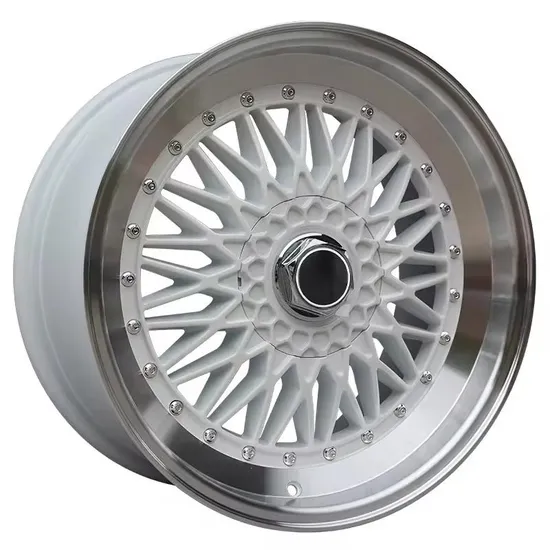 01
WHEEL RIM/HUB
15-22inch Custom Spoke Alloy Rims High Quality Performance
View Specifications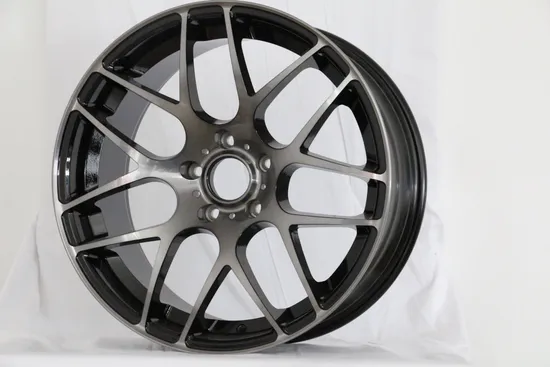 02
WHEEL RIM/HUB
Racing Car Alloy Wheels 15-22inch Customized Factory Supply
View Specifications 03
WHEEL RIM/HUB
High-Quality 15-22 Inch Forged Alloy Car Rims China
View Specifications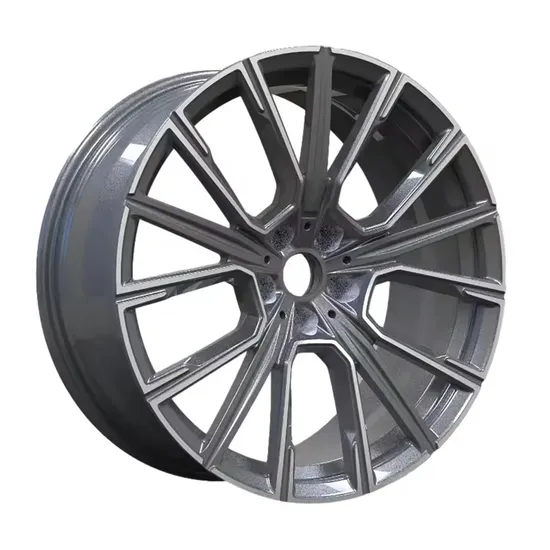 04
WHEEL RIM/HUB
17-19 Inch Bronze/Silver Flow Form Alloy Car Wheels Rims
View Specifications
OE Fitment Check
Not sure it fits? Send us the OE number and we'll check it.
Jinan Yoker Auto Parts matches brake discs, drums, radiators, A/C condensers and wheel rims by OE number, vehicle model and year, PCD, ET and CB, so the parts fit before they ship.
- Factory-direct quote within 24 hours
- Free samples before bulk orders
- 10% off first order for new buyers (terms apply)
- Condenser MOQ from 10 PCS
Keep Reading
Related guides on auto parts sourcing

Buying Guide · · 9 min read
Alloy Wheels Price in Iraq: 2026 Wholesale Buyer Guide
Alloy wheels price in Iraq in 2026 depends on diameter, finish, and certification rather than base metal costs alone. Avoid underestimating total landed cost…
Read the Guide
Buying Guide · · 9 min read
Buy 15 Inch Alloy Wheels OEM Custom Manufacturer
Buy 15 inch alloy wheels OEM custom with confidence by mastering PCD, offset, and climate-specific finishes. Avoid costly fitment errors and corrosion failures with…
Read the Guide
Buying Guide · · 9 min read
Wheel Rims Wholesale Supplier for Turkey: China Factory Direct OEM
Selecting the right wheel rims supplier for Turkey requires matching surface finishes to coastal salt exposure and ensuring TÜV or VIA certification for smooth…
Read the Guide