
Chinese Replica Wheels vs OEM: Wholesale Supplier Guide
- By author
- Brands & Alternatives
Chinese Replica Wheels vs OEM: Wholesale Supplier Guide
The real gap between replica and OEM wheels has nothing to do with looks — it lies in certification depth, material traceability, and after-sales accountability.
For wholesale buyers, the core difference between Chinese replica wheels and genuine OEM products is not the unit price but the total cost of ownership: certification coverage determines whether your container clears customs or sits at port, material standards dictate whether wheels survive one season or trigger a recall, and batch traceability decides whether a defect claim gets resolved or denied.
I spent months at Apapa port in Lagos watching a full container of replica wheels get held up because the SONCAP compliance markings did not match the shipping documents. The demurrage charges ended up exceeding the cargo value. When we finally got clearance to open the boxes, rim wall thickness varied by a clearly visible margin across the same batch, and the alloy composition had no verifiable mill certificate attached. That container was meant for a West African distributor who had been quoted a price that looked excellent on paper. By the time the wheels reached end users, vibration complaints started within tens of thousands of kilometers. The supplier disappeared. The buyer absorbed every cost.
Since then, I have worked with wholesale buyers across multiple African and Middle Eastern markets, and the pattern repeats: the conversation always starts with price, but the real losses come from certification gaps, material shortcuts, and zero traceability. [NEED_CITE: root cause analysis of alloy wheel field failures by material and process variables]
Let me walk you through what actually separates these two categories and how to evaluate a Chinese replica wheels supplier before you commit to a container.
What Really Separates Replica Wheels from OEM?
The dividing line is not visual similarity — it is the depth of certification, the rigor of material control, and the existence of a traceable quality system.
A genuine OEM wheel is engineered to meet the vehicle manufacturer’s specification sheet, which covers everything from alloy chemistry and heat treatment parameters to dynamic balance tolerance and fatigue cycle requirements. The manufacturer must hold recognized certifications and submit to periodic audits. Chinese replica wheels, by contrast, exist on a wide spectrum. Some factories operate at near-OEM discipline with full certification portfolios. Others produce visually convincing copies with no structural validation whatsoever.
The critical parameters where differences emerge include:
| Parameter | OEM Grade | Certified Aftermarket | Basic Replica |
|---|---|---|---|
| Certification Coverage | Full (ISO, VIA, TÜV, DOT, JWL as applicable) | Multi-certification available on request | Self-reported or none |
| Alloy Material Traceability | Full batch-level mill certificates | Verifiable alloy grade with documentation | Not provided |
| Heat Treatment Control | Controlled T6 process with logged cycles | Standard T6 with batch records | Uncontrolled or skipped |
| Dimensional Tolerance | Tight radial and lateral runout | Standard tolerance range | Noticeably wider variation |
| Batch Traceability | Full lot tracking from melt to finish | Batch-level tracking | Sample-level or none |
| Structural Warranty | Backed by manufacturer and vehicle brand | Backed by wheel manufacturer | Rarely offered |
[NEED_CITE: international certification requirements for alloy wheels by major import markets]
A buyer in Nairobi once showed me two wheels side by side — one OEM, one replica of the same design. The finish looked nearly identical. But when we checked the back stamping, the replica had no JWL or VIA mark, no heat treatment lot code, and the center bore tolerance was visibly off with a simple caliper. That wheel was being offered at roughly half the OEM price. What the buyer did not see on the spec sheet was that the replica supplier had no documented alloy sourcing and no fatigue test records.
This is the fundamental issue. When you source Chinese replica wheels, you are not just buying a shape — you are buying into whatever quality system sits behind that shape. If the system is weak, the wheel may look right on day one but fail under sustained load.
How to Verify a Chinese Wheel Supplier’s Claims?
Do not accept a certification PDF at face value — request the original certificate, cross-check the registration number with the issuing body, and demand batch-level test reports tied to your specific order.
Verification is where many wholesale buyers get caught. A supplier sends a glossy brochure listing ISO, TÜV, DOT, and VIA certifications. The buyer assumes the factory holds all of them for all products. In reality, certifications may cover only certain product lines, certain size ranges, or may have expired. Some suppliers display certificates that belong to a partner factory, not their own production line.
A disciplined verification process should cover these steps:
-
Request original certificate copies with visible registration numbers, scope of coverage, and validity dates. Cross-reference the registration on the certifying body’s official database. [NEED_CITE: how to verify wheel certification authenticity through issuing authority databases]
-
Ask for material mill certificates for the alloy used in your order batch. A credible supplier will provide certificates showing alloy grade and chemical composition from the raw material source.
-
Require third-party inspection reports from recognized testing laboratories. These should cover dynamic radial fatigue, impact resistance, and salt spray endurance — not just visual inspection.
-
Check mold precision documentation. OEM-grade molds are produced with micron-level precision and maintained on a scheduled basis. Ask for mold maintenance logs and dimensional inspection records.
-
Confirm batch traceability capability. A reliable Chinese replica wheels supplier should be able to trace any individual wheel back to its melt batch, heat treatment cycle, machining run, and finishing line.
I worked with a buyer in Johannesburg who received a shipment where the supplier’s TÜV certificate turned out to cover only steel wheels, not the alloy wheels in the container. The alloy wheels had no valid certification for the South African market. The entire shipment had to be reworked through a third-party testing facility at a cost that erased the initial price advantage.
Which Market Needs Which Wheel Grade?
Certification requirements vary dramatically by destination — a wheel grade that clears customs in one region may be seized or rejected in another.
This is where many first-time importers make costly mistakes. They assume that if a wheel looks correct and fits the hub, it will be accepted anywhere. The regulatory reality is very different.
For African and Middle Eastern markets, conformity assessment programs are strictly enforced at the port of entry. Nigeria requires SONCAP certification, Saudi Arabia requires SASO, Egypt requires GOEIC registration. Without the correct marks and documentation, the container does not clear. Period. In these markets, choosing a Chinese replica wheels supplier who holds the relevant destination-country certifications is not optional — it is a prerequisite.
For European and North American markets, the technical bar is higher. TÜV, VIA, DOT, and JWL certifications carry weight because end users and regulators understand what they mean. Aftermarket buyers in these regions also tend to be more technically literate and will ask about alloy grade, weight, and load rating. A supplier who can provide multi-certification coverage and detailed technical data sheets has a significant advantage.
For the modification and tuning segment, the priorities shift somewhat. Buyers in this space value design variety, staggered fitment options, custom finishes, and flexible minimum order quantities. However, even in this segment, structural integrity matters — a wheel that cracks under hard cornering creates liability that no amount of style can offset.
| Market Region | Key Certification Requirements | Priority Factors for Buyers |
|---|---|---|
| West Africa | SONCAP, destination-specific conformity | Compliance documentation, port clearance support |
| Middle East | SASO, GCC conformity standards | Certification validity, load rating accuracy |
| Europe | TÜV, ECE regulations, VIA where applicable | Technical data sheets, material traceability |
| North America | DOT compliance, SAE standards | Load and speed ratings, impact test records |
| 改装/Tuning Market | Varies by end-user country | Design range, finish quality, flexible MOQ |
[NEED_CITE: regional wheel import certification requirements and conformity assessment programs]
A distributor in Dubai once told me he switched suppliers after his second shipment got held at Jebel Ali because the conformity paperwork listed the wrong product category. The new supplier, who specialized in multi-market certification coverage, delivered documentation that cleared within days. The price per wheel was slightly higher, but the total landed cost — including avoided demurrage and delayed sales — was substantially lower.
What Are the Hidden Costs of Choosing Replica Wheels?
The sticker price is only the beginning — customs delays, warranty claims, and reputational damage can multiply your actual cost many times over.
Wholesale buyers naturally focus on per-piece pricing. This is understandable — margins matter, and competition is intense. But the unit price tells you almost nothing about the total cost of bringing a wheel to market and keeping it there.
Consider the cost categories that rarely appear on a supplier quotation:
-
Customs delays and demurrage. A container held at port for weeks due to documentation or marking issues accumulates storage fees, inspection charges, and administrative costs that can exceed the original freight bill.
-
Warranty claims and returns. Wheels that develop cracks, suffer premature finish degradation, or fail dynamic balance checks generate return logistics costs, replacement shipments, and customer compensation.
-
Brand reputation erosion. End users who receive a wheel that vibrates, cracks, or loses finish within months will blame the retailer — not the invisible overseas factory. Repeat business disappears.
-
Regulatory penalties. In some markets, importing non-compliant wheels can result in fines, forced product recalls, or even import license suspension.
A wholesale buyer in East Africa shared his experience with me. He sourced a large batch of replica wheels at a price that looked extremely attractive. Within the first several months, the return rate climbed noticeably. End users reported vibration issues and, in a few cases, visible cracking near the spoke roots. The supplier’s response was to offer a small credit on the next order — nothing close to covering the buyer’s actual losses in logistics, customer refunds, and damaged reputation. The initial unit price savings were completely wiped out, and the buyer’s market position in his region took a lasting hit.
This is why evaluating a Chinese replica wheels supplier requires looking beyond the quotation. A supplier who offers a structured warranty, maintains batch traceability, and stands behind structural integrity is not charging more — they are pricing in the accountability that protects your business.
How to Build a Reliable Long-Term Wheel Supply Chain?
Shift your evaluation from single-order pricing to total ownership cost, and treat your supplier relationship as a strategic partnership rather than a transactional purchase.
The most successful wholesale buyers I have worked with approach supplier selection with a long-term lens. They understand that a slightly higher unit price from a disciplined supplier delivers better economics over time than the cheapest available option.
Building a reliable supply chain involves several elements:
-
Multi-certification coverage. Your supplier should hold or be able to obtain the certifications required for each of your target markets. This eliminates customs risk and gives you flexibility to serve multiple regions from a single source.
-
OEM and ODM capability. A supplier who can produce to your specifications — including custom sizes, offsets, finishes, and branding — gives you product differentiation that generic replicas cannot match.
-
Flexible minimum order quantities. Especially when entering a new market or testing new designs, the ability to start with smaller quantities reduces inventory risk. A supplier who accommodates low-MOQ trial orders demonstrates confidence in their product and respect for your business reality.
-
Consistent lead times. Predictable production scheduling — typically in the range of two to four weeks depending on order complexity — allows you to plan inventory and meet your customers’ expectations.
-
Structural warranty backing. A supplier who offers a multi-year structural warranty is signaling that they trust their materials and processes. This warranty becomes a powerful sales tool for you when convincing end users to choose your product.
-
Complete customs documentation. Proper commercial invoices, packing lists, certificates of origin, and conformity certificates should be prepared accurately and provided promptly. This is not a luxury — it is operational infrastructure.
I have seen buyers who started with a small trial order from a well-certified Chinese replica wheels supplier, validated the quality in their market, and then scaled up to regular container orders. Because the supplier maintained consistent quality and documentation, the buyers were able to expand into additional markets without re-qualifying a new source. The relationship compound over time — better pricing through volume, priority production scheduling, and collaborative new design development.
Conclusion
The gap between Chinese replica wheels and OEM products is measured in certification depth, material accountability, and after-sales structure — not in visual appearance or initial unit price.
Wholesale buyers who evaluate suppliers on total ownership cost rather than sticker price consistently achieve better margins, fewer customs disruptions, and stronger end-user trust. The right supplier relationship transforms wheel sourcing from a recurring risk into a predictable competitive advantage.
Related Applications
Parts in This Article
Products mentioned above
 01
WHEEL RIM/HUB
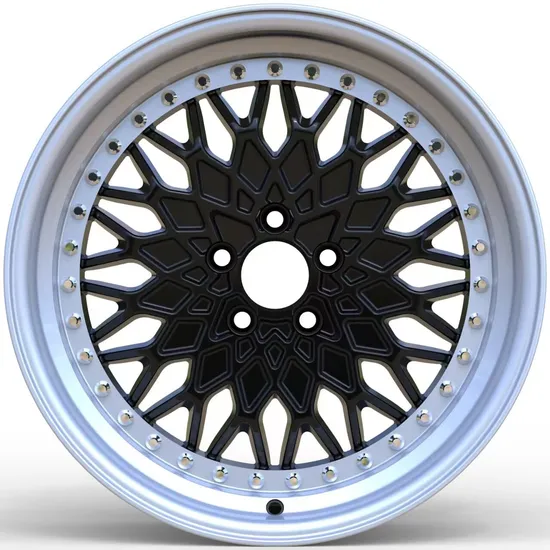
Custom 5X114.3 5X120 Sport Rims 18-23 Inch Light Weight Replica Wheels
View Specifications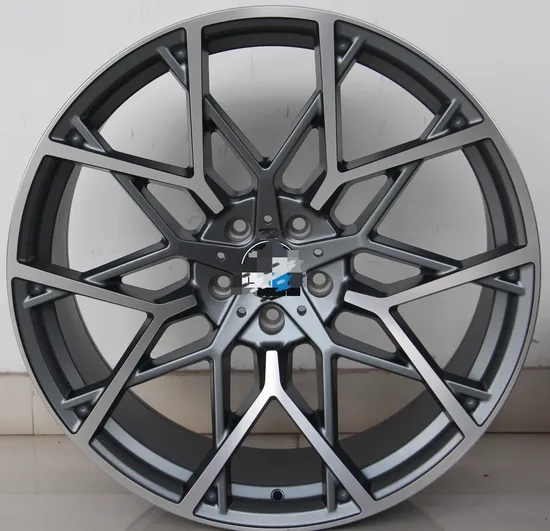 02
WHEEL RIM/HUB
Mag Replica Wheel Rims Auto Part High-Quality Car Rims
View Specifications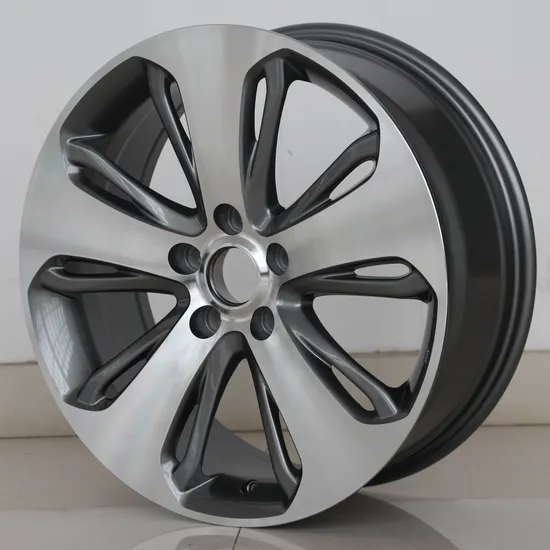 03
WHEEL RIM/HUB
Replica Wheel for Hyundal Aftermarket Car Rims
View Specifications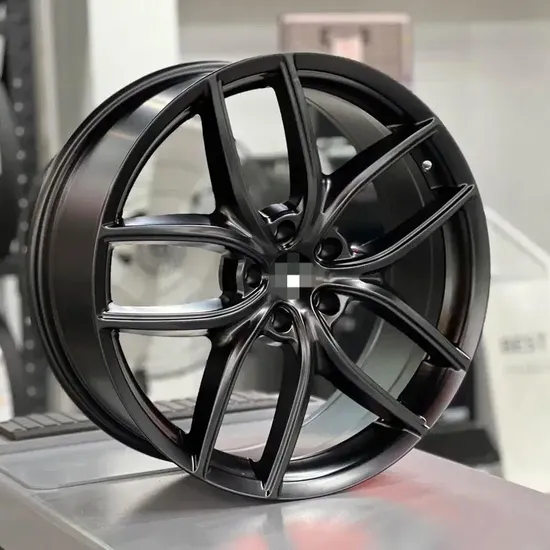 04
WHEEL RIM/HUB
Tesla Black Full Painting Alloy Replica Wheel Rims
View Specifications
OE Fitment Check
Not sure it fits? Send us the OE number and we'll check it.
Jinan Yoker Auto Parts matches brake discs, drums, radiators, A/C condensers and wheel rims by OE number, vehicle model and year, PCD, ET and CB, so the parts fit before they ship.
- Factory-direct quote within 24 hours
- Free samples before bulk orders
- 10% off first order for new buyers (terms apply)
- Condenser MOQ from 10 PCS
Keep Reading
Related guides on auto parts sourcing
Brands & Alternatives · · 10 min read
OEM Replica vs Aftermarket Design Wheels Wholesale Supplier
Master the critical differences between OEM replica vs aftermarket design wheels to avoid costly fitment errors and customs delays. Compare center bore tolerances, finish…
Read the Guide
Brands & Alternatives · · 8 min read
Full Chrome vs Chrome Lip Wheels Wholesale Supplier for Bulk OEM
Deciding between full chrome vs chrome lip wheels requires analyzing masking labor, regional demand, and moisture-controlled packaging rather than aesthetics alone. Full chrome suits…
Read the Guide