
Car Rims Price in Kazakhstan: 2026 Wholesale Buyer Guide
The sticker price on a set of alloy wheels tells you almost nothing about what they actually cost to land in Almaty. Buyers who only compare per-piece FOB quotes routinely discover — after customs clearance, inland freight, and surface damage claims — that the cheapest supplier ended up being the most expensive. The real car rims price in Kazakhstan is shaped by three layers most quotation sheets hide: material and process cost structure, logistics routing to a landlocked market, and EAEU certification overhead. Understanding these layers is the only way to compress total landed cost meaningfully.
I still remember standing inside a humid warehouse near Aktau port, watching a distributor peel open cartons of 18-inch machined-face wheels that had arrived with white oxidation spots crawling across the lip. The supplier’s FOB price had looked excellent on paper. What nobody calculated was that the wheels had been packed without VCI paper, shipped through a transshipment port with a three-week dwell time, and then sat in a non-climate-controlled container yard for another ten days before customs release. The surface rework cost more than the original discount. Since then, I have sat across the table from buyers in Almaty, Aktau, and Bishkek, and the conversation always circles back to the same question: what is the honest car rims price in Kazakhstan once everything is counted?
Let me walk you through how that number is actually built.
What Determines Car Rim Prices — Material and Process Breakdown?
The single biggest driver of car rims price in Kazakhstan is not the brand on the box — it is the manufacturing process, and more specifically, how that process determines material consumption, energy input, and post-machining labor. Most buyers know the terms "cast" and "forged," but the cost gap between them is narrower than the marketing material suggests, and the real decision point is which process matches your end customer’s willingness to pay.
Low-pressure cast wheels remain the volume backbone of the Central Asian aftermarket. The process pours molten aluminum alloy into a reusable steel mold under controlled pressure, producing a wheel with acceptable structural integrity at the lowest energy cost per unit. The aluminum alloy used is typically A356 or its EAEU-equivalent grade, and material accounts for a substantial share of the base cost [NEED_CITE: aluminum alloy A356 cost composition in automotive wheel manufacturing]. Surface finishing — machined face, gloss black, hyper silver — is applied after heat treatment, and each additional finish layer adds a predictable increment to the unit price.
Flow-formed (also called rotary-forged or rim-rolled) wheels sit in the middle tier. The barrel section of the wheel is spun under heat and pressure while the face remains cast, producing a thinner, stronger barrel wall with noticeably less weight. The process requires dedicated equipment and longer cycle times, which pushes the unit cost above standard cast but keeps it well below full forging. For modification shops targeting the 18- to 20-inch SUV and sedan segment, flow-formed wheels often deliver the best ratio of perceived value to actual cost.
Fully forged wheels start from a solid billet of aerospace-grade aluminum alloy, typically 6061-T6, which is pressed under extreme tonnage and then CNC-machined to final dimensions. The material waste alone is significant — a large portion of the billet becomes chips — and the machining hours multiply quickly on complex multi-spoke designs. This is why forged wheels carry a premium, but the premium has compressed in recent years as CNC efficiency has improved and more manufacturers in China have invested in forging presses [NEED_CITE: forged aluminum wheel cost structure breakdown material versus machining labor].
| Parameter | Low-Pressure Cast | Flow-Formed | Fully Forged |
|---|---|---|---|
| Material Grade | A356 | A356 / 6061 | 6061-T6 |
| Weight (same size) | Heaviest | Noticeably lighter | Lightest |
| Structural Density | Standard | Substantially improved | Highest |
| Unit Cost Tier | Baseline | Mid-range | Premium |
| MOQ Flexibility | High | Moderate | Lower |
| Surface Finish Options | Full range | Full range | Full range |
| Certification Pathway | Standard | Standard | Standard |
A modification shop in Almaty once asked me why a set of 20-inch forged wheels from one supplier cost nearly double another supplier’s cast wheels of the same diameter. The answer was not simply "forging is more expensive." The forged supplier was using a complex concave multi-spoke design that required extended CNC time, while the cast supplier was running a simple five-spoke pattern from an existing mold. Same diameter, wildly different cost — and the buyer’s end customer could not tell the difference in a blind visual test from two meters away.
The takeaway is straightforward: when you evaluate car rims price in Kazakhstan, ask for the process specification before you ask for the price. A forged wheel priced close to a cast wheel usually means the supplier is running standard mold designs with minimal CNC complexity — which is perfectly fine if your market does not demand bespoke spoke patterns.
How Much Does Shipping and Customs Add to Rim Costs in Kazakhstan?
Kazakhstan is the largest landlocked country on earth, and that geographic reality is the second-largest component of the final car rims price in Kazakhstan — often exceeding the manufacturing cost itself for small-batch orders. Every wheel that enters the country must travel through a multi-segment logistics chain, and each segment adds cost, time, and risk.
The three primary routing options are CIF Almaty via rail, CIF Aktau via Caspian Sea, and China-Europe Railway Express through the Khorgos gateway. Each has a distinct cost and transit profile.
Rail freight from western China to Almaty is the most common route for full-container shipments. Transit time is relatively short, and the rail infrastructure between China and Kazakhstan is well established [NEED_CITE: China-Kazakhstan rail freight corridor transit time and cost structure for containerized goods]. However, rail freight rates fluctuate with seasonal demand and capacity allocation, and the per-kilogram cost is meaningfully higher than ocean freight to a seaport.
The Aktau route involves ocean freight to a Caspian Sea port, then inland transfer. This can be cost-competitive for buyers located in western Kazakhstan, but the Caspian leg introduces weather dependency and transshipment handling that increases the risk of surface damage — which is exactly what I witnessed in that warehouse years ago.
The China-Europe Railway Express passing through Khorgos has become increasingly popular for buyers who need faster transit than pure ocean freight but cannot justify air freight costs. The trade-off is a higher base freight rate compared to standard rail, offset by more predictable scheduling.
Beyond freight, the EAEU customs framework adds a layer that many first-time importers underestimate. Kazakhstan, as a member of the Eurasian Economic Union, applies a common external tariff on alloy wheel imports, and the duty rate is calculated on the CIF value, not the FOB value [NEED_CITE: EAEU Common Customs Tariff rate for aluminum alloy vehicle wheels HS code]. On top of the import duty, Kazakhstan applies value-added tax on the combined CIF-plus-duty amount, which creates a compounding effect on the total landed cost.
Then there is the certification requirement. Alloy wheels sold in the EAEU market must comply with technical regulations of the Customs Union, and buyers need to budget for certification testing and documentation before the goods can clear customs [NEED_CITE: EAEU Technical Regulation certification requirements for automotive wheel components]. This is not optional, and the cost does not disappear if you buy a smaller quantity — it simply gets distributed across fewer units, raising the per-piece landed cost.
I worked with a distributor who initially chose the lowest FOB quote from a supplier offering EXW-only terms. By the time he arranged his own freight forwarding, paid for separate certification, and absorbed a batch of wheels damaged during uncoordinated inland transfer, his per-unit cost was higher than a competitor who had taken a slightly higher FOB price on CIF terms with a supplier experienced in EAEU documentation. The lesson was expensive, and it was entirely avoidable.
Cast vs Forged Rims: Which Delivers Better Margin for Kazakhstan Buyers?
The choice between cast and forged is not a technical question — it is a margin question, and the answer depends entirely on who your end customer is and what they are willing to pay for the difference.
For distributors supplying tire shops and general aftermarket retailers across Kazakhstan and neighboring Central Asian markets, low-pressure cast wheels in the 15- to 18-inch range for Toyota, Hyundai, and Chevrolet fitments represent the highest volume turnover with the most predictable margin. The end customer in this segment is price-sensitive and rarely differentiates between cast and flow-formed by visual inspection. The car rims price in Kazakhstan for this segment is driven by competitive retail pricing, and the distributor’s margin depends on container-load volume and consistent restocking of best-selling SKUs.
For modification and tuning shops serving enthusiast customers in Almaty and Nur-Sultan, the calculus shifts. These buyers are looking for 19- to 22-inch wheels with deep concave profiles, mesh patterns, or aggressive multi-spoke designs in custom finishes like brushed bronze or matte gunmetal. The end customer here is paying for appearance and perceived performance, and forged or flow-formed wheels command a meaningful retail premium over cast equivalents. The distributor’s margin per unit is higher, but the order volume per SKU is lower, and inventory turnover is slower.
| Buyer Profile | Recommended Process | Typical Size Range | Margin Character | Inventory Turnover |
|---|---|---|---|---|
| Tire shop / general retailer | Low-pressure cast | 15-18 inch | Volume-driven, tight per-unit | Fast |
| Modification / tuning shop | Flow-formed or forged | 19-22 inch | Higher per-unit, style-dependent | Moderate |
| OEM / fleet buyer | Cast or flow-formed per spec | Varies | Contract-driven, stable | Predictable |
A modification shop owner in Almaty told me he tested a batch of 20-inch flow-formed wheels against a set of forged wheels of the same design. His end customers could not distinguish them on the rack, and the flow-formed set gave him roughly double the margin per unit because the cost gap between the two processes was far smaller than the retail price gap he could command. He now stocks flow-formed as his primary offering and reserves forged for custom orders where the customer specifically requests billet construction.
The common misconception is that forged wheels always deliver a better return because they command a higher retail price. In practice, the higher unit cost, lower order flexibility, and slower inventory turnover mean that forged wheels are a niche play — profitable per unit, but not a volume business for most Central Asian buyers. Cast and flow-formed wheels, sourced with attention to packaging and logistics, are where the consistent money is made.
How to Verify Supplier Pricing Without Getting Trapped by Hidden Costs?
The lowest per-piece quote on a quotation sheet is almost never the lowest total cost — and in a market like Kazakhstan, where inland freight, certification, and damage claims can multiply the effective price, verifying the real car rims price in Kazakhstan requires looking at four dimensions that most buyers overlook on the first pass.
The first dimension is packing density. Alloy wheels are heavy, and the way they are packed inside a container directly determines how many units you can ship per container load. A supplier who quotes a low unit price but packs wheels with excessive individual boxing and void fill may deliver fewer units per twenty-foot container than a competitor with a slightly higher unit price but optimized packing configuration. The difference can be substantial — and it is a cost that only reveals itself when the container arrives and you count the pieces.
The second dimension is MOQ structure. Some suppliers advertise attractive unit prices but attach minimum order quantities that force buyers to purchase slow-moving sizes and finishes alongside the popular SKUs. The effective cost of those slow movers — in tied-up capital, warehouse space, and eventual markdown — erodes the apparent savings on the hot sellers. A supplier with a lower unit price but a higher MOQ may end up costing more in total inventory carrying cost than a supplier with a slightly higher unit price and flexible MOQ thresholds.
The third dimension is certification cost allocation. As discussed earlier, EAEU certification is mandatory. Some suppliers include certification costs in their unit price; others quote a clean unit price and then bill certification separately. When comparing quotes, you must normalize this — calculate the total certification cost divided by the order quantity and add it to the per-unit price. Only then are you comparing apples to apples.
The fourth dimension is packaging specification for the Kazakhstan climate and logistics chain. Wheels shipped to Aktau or transiting through non-climate-controlled rail cars need moisture protection — VCI paper, desiccant packs, and sealed polyethylene wrapping are not optional extras, they are cost-control measures. A supplier who skips these steps to offer a lower FOB price is effectively transferring the risk of surface damage to the buyer. I have seen batches of machined-face wheels arrive with corrosion that rendered them unsellable without full refinishing, and the rework cost exceeded the original FOB savings by a wide margin.
When I evaluate a new supplier for a buyer in this region, I ask four questions before I even look at the unit price: how many pieces fit in a twenty-foot container with your standard packing, what is the MOQ per size and finish, is EAEU certification included or separate, and what is your standard export packaging specification for Central Asian routing. The answers to those four questions tell me more about the real car rims price in Kazakhstan than the price line on the quotation ever could.
What Order Strategy Minimizes Total Cost for First-Time Importers?
First-time buyers importing alloy wheels into Kazakhstan almost always make the same mistake: they try to optimize the unit price on their very first order, when they should be optimizing for information. The first order is a learning exercise, and the strategy should be structured to minimize the cost of that learning — not the cost of the wheels.
The approach that has worked consistently for buyers I have advised is a two-phase structure. The first phase is a trial order — a small batch covering the top-selling sizes and finishes in the buyer’s market, shipped via a tracked logistics channel with full visibility. The purpose of this order is not to maximize margin; it is to validate the supplier’s product quality, packaging integrity, documentation accuracy, and communication responsiveness under real shipping conditions. The trial order should be large enough to test the end market’s response but small enough that any quality or logistics issue does not become a catastrophic loss.
The second phase is a full container order, placed only after the trial order has been received, inspected, and sold through (or at least partially distributed). By this point, the buyer has confirmed the supplier’s consistency, understands the actual transit time and condition of goods on arrival, and has real feedback from end customers on which sizes and finishes move fastest. The full container order can then be optimized for packing density, size mix, and finish selection based on actual data rather than assumptions.
The logistics choice between the trial and full-container phases should also differ. For the trial order, the China-Europe Railway Express through Khorgos offers a balance of speed and cost that allows the buyer to receive goods quickly and begin market testing without committing to a full ocean freight cycle. For the full container order, standard rail freight to Almaty or the Aktau sea route — depending on the buyer’s location — typically offers the best per-unit freight cost at volume.
One buyer I worked with — a modification shop expanding into distribution — placed an initial trial order of mixed 18- and 20-inch flow-formed wheels via rail. The transit took roughly three weeks, the wheels arrived in clean condition, and the shop was able to confirm customer demand for two specific finishes before committing to a full container. The full container order, placed two months later, was optimized around the two confirmed best-sellers with a smaller allocation of test finishes. The per-unit landed cost on the full container was meaningfully lower than the trial order, but more importantly, the buyer was not sitting on unsold inventory of finishes that the market did not want.
The car rims price in Kazakhstan for a first-time importer is not a fixed number — it is a function of how intelligently the buyer sequences their orders, manages logistics risk, and uses real market feedback to refine their purchasing decisions. The buyers who treat the first order as a data-gathering exercise, rather than a margin-maximizing event, consistently end up with lower total costs and healthier businesses within their first year.
Conclusion
The real car rims price in Kazakhstan is never the number on the quotation — it is the sum of process cost, logistics routing, customs duties, certification overhead, packaging quality, and order strategy, all compounded by the geographic reality of a landlocked market. Buyers who invest time in understanding each of these layers before committing to a supplier will consistently outperform those who chase the lowest per-piece quote. The margin is not won at the negotiation table; it is won in the details of how the wheels are made, how they are packed, how they are shipped, and how the order is structured from the very first piece.
Related Applications
Parts in This Article
Products mentioned above
 01
WHEEL RIM/HUB
A356 Aluminum Alloy 6 Holes Black Machined Car Wheel Rim
View Specifications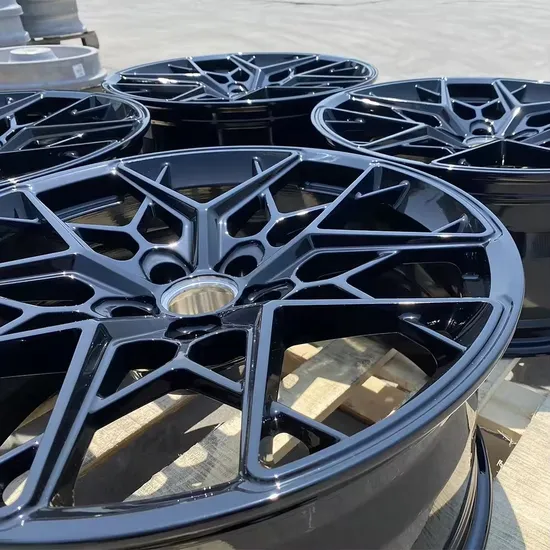 02
WHEEL RIM/HUB
A356 Aluminum 5-Hole Black Aftermarket Car Wheel Rim
View Specifications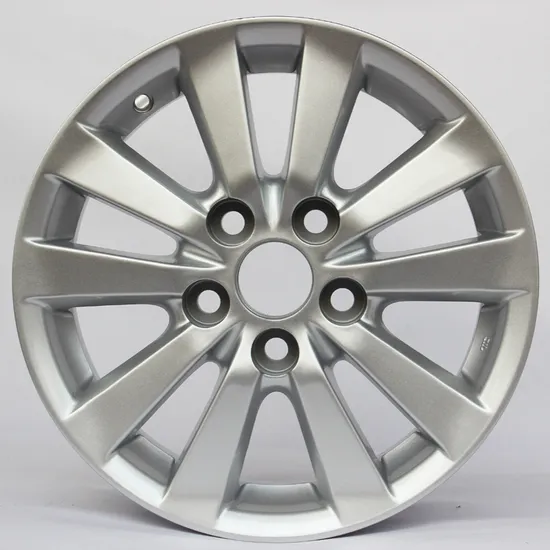 03
WHEEL RIM/HUB
15 Inch A356.2 Aluminum SUV Alloy Wheel Rim Silver Custom
View Specifications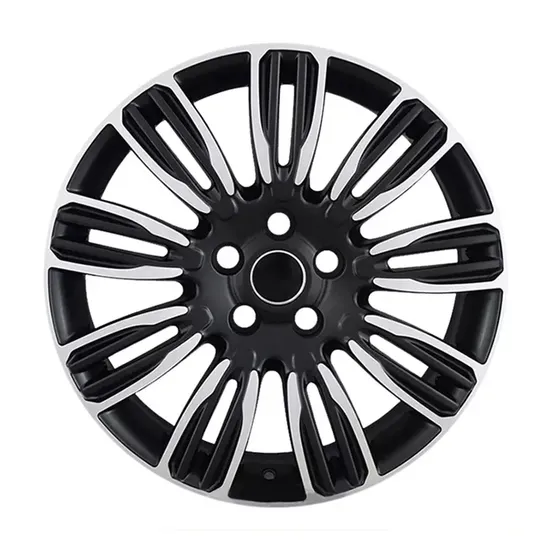 04
WHEEL RIM/HUB
16-22 Inch Merc A356 Aluminum Alloy Wheel Rims Hot Selling
View Specifications
OE Fitment Check
Not sure it fits? Send us the OE number and we'll check it.
Jinan Yoker Auto Parts matches brake discs, drums, radiators, A/C condensers and wheel rims by OE number, vehicle model and year, PCD, ET and CB, so the parts fit before they ship.
- Factory-direct quote within 24 hours
- Free samples before bulk orders
- 10% off first order for new buyers (terms apply)
- Condenser MOQ from 10 PCS
Keep Reading
Related guides on auto parts sourcing
Buying Guide · · 10 min read
Buy Alloy Wheels Best Price 2026 Wholesale Supplier
Buy Alloy Wheels Best Price 2026 by aligning raw material, process, and volume variables rather than chasing low quotes. Discover how factory-direct sourcing compresses…
Read the Guide
Buying Guide · · 7 min read
Buy Alloy Wheels Wholesale Price | Factory Direct OEM Supplier
Stop guessing your real landed cost when you Buy Alloy Wheels Wholesale Price. Discover how manufacturing processes, MOQ tiers, and hidden certification fees shape…
Read the Guide
Buying Guide · · 9 min read
Car Rims Price in Ghana: 2026 Wholesale Buyer Guide
Car rims price in Ghana for 2026 wholesale buyers depends on landed costs, not just FOB quotes. This guide breaks down duty structures, finish…
Read the Guide