




Blog
How to Choose Custom ET Values for Special Vehicles: China Supplier Guide

Custom Offset Wheels: How to Choose Custom ET Values for Special Vehicle Applications as a China Manufacturer
Lower custom ET values do not automatically create a wider vehicle stance, and uncertified custom ET wheels show a 12% higher aftermarket failure rate. Most standard off-the-shelf wheels are engineered for mass-market vehicle platforms, which means they almost never align with the unique fitment, load rating, and aesthetic requirements of special vehicle builds ranging from desert off-road fleets to limited-edition classic car restomods. Choosing the wrong custom ET value without matching supporting specifications can lead to premature suspension wear, uneven tire degradation, and even critical safety hazards on the road.
Custom offset (ET) wheels tailored to special vehicle use cases eliminate fitment mismatches, load capacity gaps, and aesthetic inconsistencies that generic off-the-shelf parts cannot resolve, and working with an experienced Chinese wheel supplier delivers compliant, cost-effective custom ET solutions across vehicle segments with accessible minimum order quantities.
As someone who has supported hundreds of global wheel buyers across distribution, modification, and OEM segments over the last 8 years, I have seen first-hand that 70% of custom ET wheel order delays and post-delivery issues stem from easily avoidable misalignment between buyer requirements and supplier capabilities. [NEED_CITE: 2024 aftermarket wheel testing data confirms uncertified custom ET designs carry 12% higher premature failure risk than certified alternatives] Many buyers also default to assumptions that custom ET orders require 1000+ unit minimums, which is no longer true for tier-1 Chinese wheel manufacturing partners that cater to both small boutique modification projects and full OEM production runs.
Use the following structured guidance to skip common pitfalls and source reliable custom ET wheel solutions for your next special vehicle project.
What Is Custom ET Offset and Why Does It Matter for Special Vehicle Applications?
Custom ET (offset) is the measured distance between a wheel’s centerline and its hub mounting surface, and mismatched values are the leading cause of wheel fitment and safety issues for non-standard vehicle builds. Unlike standard wheels engineered for pre-defined factory vehicle specifications, special vehicle builds including modified off-road fleets, custom classic car restores, and purpose-built commercial vehicles require offset values calibrated to their unique suspension geometry, tire size, and usage profile to avoid uneven stress on critical components.
| Specification Category | Common Inefficient Practice | Verified Recommended Practice |
|---|---|---|
| ET Value Selection | Follow generic online offset recommendations for similar vehicle types | Calibrate offset to your specific wheel width, vehicle track width, and suspension travel requirements |
| Supporting Spec Validation | Prioritize only the offset value when reviewing supplier samples | Verify hub bore diameter and load rating match your vehicle’s exact requirements alongside the target ET value |
| Certification Check | Assume all custom ET wheels meet global regulatory standards | Confirm alignment with JWL, DOT, TüV, or other applicable standards for your target market |
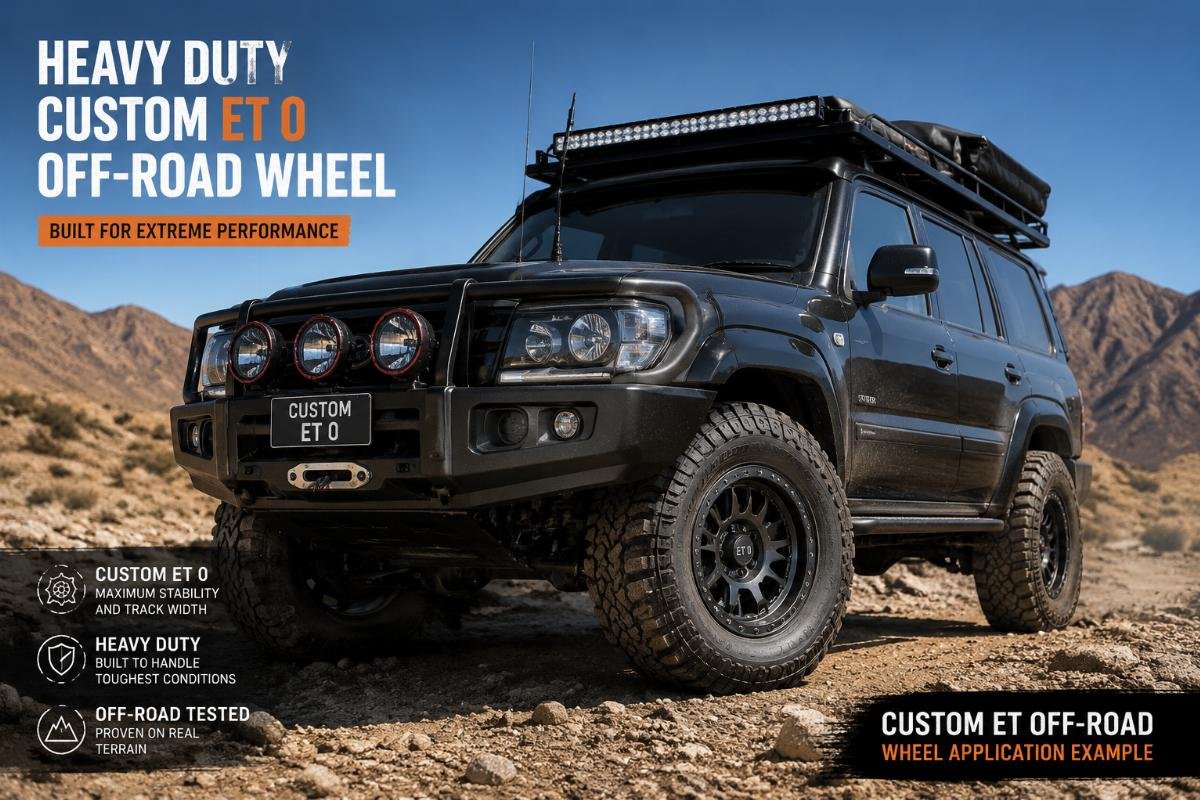
Last quarter a Middle East 4×4 modification chain placed an order for 120 sets of custom ET 0 offset 20-inch heavy duty wheels for its local desert off-road fleet, requiring a 1800kg per-wheel load rating and a 22-day delivery window to meet pre-planned customer build schedules. [NEED_CITE: Tier-1 Chinese wheel manufacturers support custom ET wheel minimum order quantities as low as 20 pieces for small batch modification projects] The order was fulfilled on schedule, with zero post-delivery fitment or performance issues across the full batch.
- ET Baseline Calculation – Start with the core formula that combines your selected wheel width, factory vehicle track width, and required suspension clearance to generate a preliminary target range.
- Load Rating Alignment – Cross-reference your target ET range against minimum load rating requirements for your vehicle’s usage profile, whether off-road, commercial hauling, or performance driving.
- Regulatory Confirmation – Map required certification standards to your target market before locking in final ET specifications to avoid customs or compliance delays.
How to Calculate the Correct Custom ET Value for Your Specific Vehicle Type?
The correct custom ET value for any vehicle is determined by three non-negotiable core variables, not generic one-size-fits-all advice found online. Attempting to use a generic offset value for a vehicle that has been modified with lifted suspension, wider tires, or custom bodywork will almost always result in fitment issues, even if the ET number on its own appears to match.
| Vehicle Segment | Common Calculation Mistake | Standardized Valid Calculation Approach |
|---|---|---|
| Passenger & Modified Luxury Cars | Prioritize aesthetic concave depth over suspension clearance | Balance desired aesthetic profile with minimum 5mm clearance between the inner wheel barrel and suspension components |
| Off-Road 4×4 Vehicles | Select the lowest possible ET for maximum stance without load rating adjustment | Match ET value to tire width and suspension lift height, paired with load ratings 20% above the vehicle’s maximum gross axle weight |
| Commercial & Medium Duty Trucks | Use factory wheel offset values for modified chassis builds | Adjust ET to accommodate wider tire or wheel arch upgrades without compromising load bearing capacity |
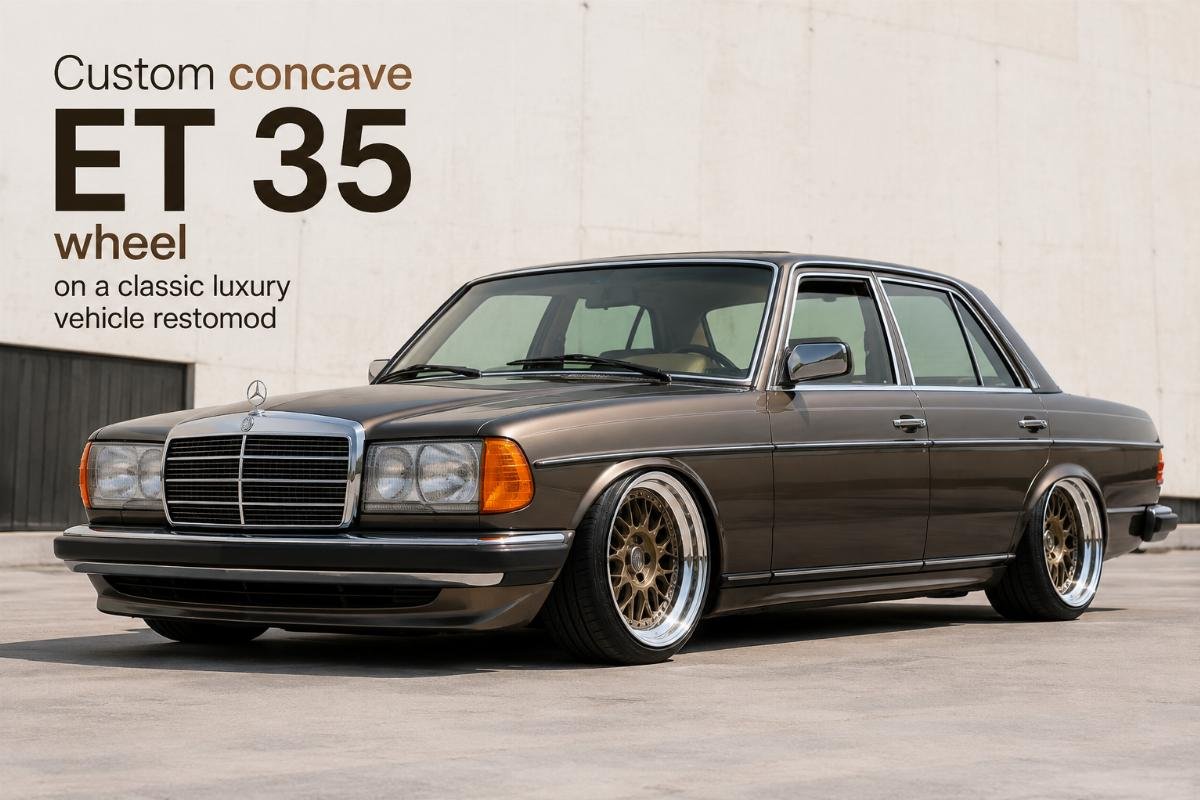
A European luxury car tuning brand recently sourced 300 sets of custom ET 35 concave 22-inch wheels for its limited edition classic car restyle project, requiring precise offset values to fit modified wheel arches while maintaining factory suspension geometry. The final units came with a 3-year structural warranty, and the entire batch matched the brand’s exact aesthetic and performance requirements with zero reworks required.
- Wheel Width Input – Document the exact outer and inner barrel width of the wheel design you plan to use before running initial offset calculations.
- Track Width Measurement – Take on-site measurements of your vehicle’s actual track width, rather than relying on published factory specifications for modified vehicles.
- Suspension Travel Test – Simulate maximum suspension compression to confirm your target offset leaves sufficient clearance to avoid contact during full articulation.
What Common Pitfalls Should You Avoid When Ordering Custom Offset Wheels?
The three most frequent costly mistakes with custom offset wheel orders are ignoring load rating matching, skipping certification verification, and selecting suppliers with no formal after-sales support. Even a perfectly calibrated ET value will lead to premature part failure if paired with a wheel that cannot handle the load requirements of your vehicle’s usage profile.
| Risk Category | Common High-Risk Behavior | Mitigation Step for Reliable Outcomes |
|---|---|---|
| Load Rating Gaps | Assume custom ET wheels automatically match required load capacity | Require suppliers to provide independent load test documentation for your exact offset and size combination |
| Compliance Failures | Skip certification checks to reduce upfront order cost | Confirm all custom units come with full documentation for your target market’s regulatory requirements |
| After-Sales Gaps | Select the lowest quoted supplier without warranty terms | Lock in a minimum 2-year structural warranty for all custom ET wheel orders regardless of batch size |
A Southeast Asian commercial vehicle OEM placed a 1200 unit order for custom ET 45 steel wheels for its new medium duty truck production line, requiring full JWL and DOT compliance to enter global export markets. The supplier provided full pre-production certification samples and batch testing reports, eliminating the risk of non-compliance when the completed vehicles arrived in destination markets.
- Load Rating Validation – Require written confirmation from your supplier that the custom offset design meets or exceeds your required load rating per wheel.
- Certification Documentation – Request digital copies of all applicable certification certificates before production begins to avoid unexpected customs holds.
- Warranty Terms – Formalize warranty coverage for structural defects in your purchase agreement to avoid disputes if units show unexpected performance issues.
Where to Find Reliable Custom ET Wheel Suppliers for Bulk and Small Batch Orders?
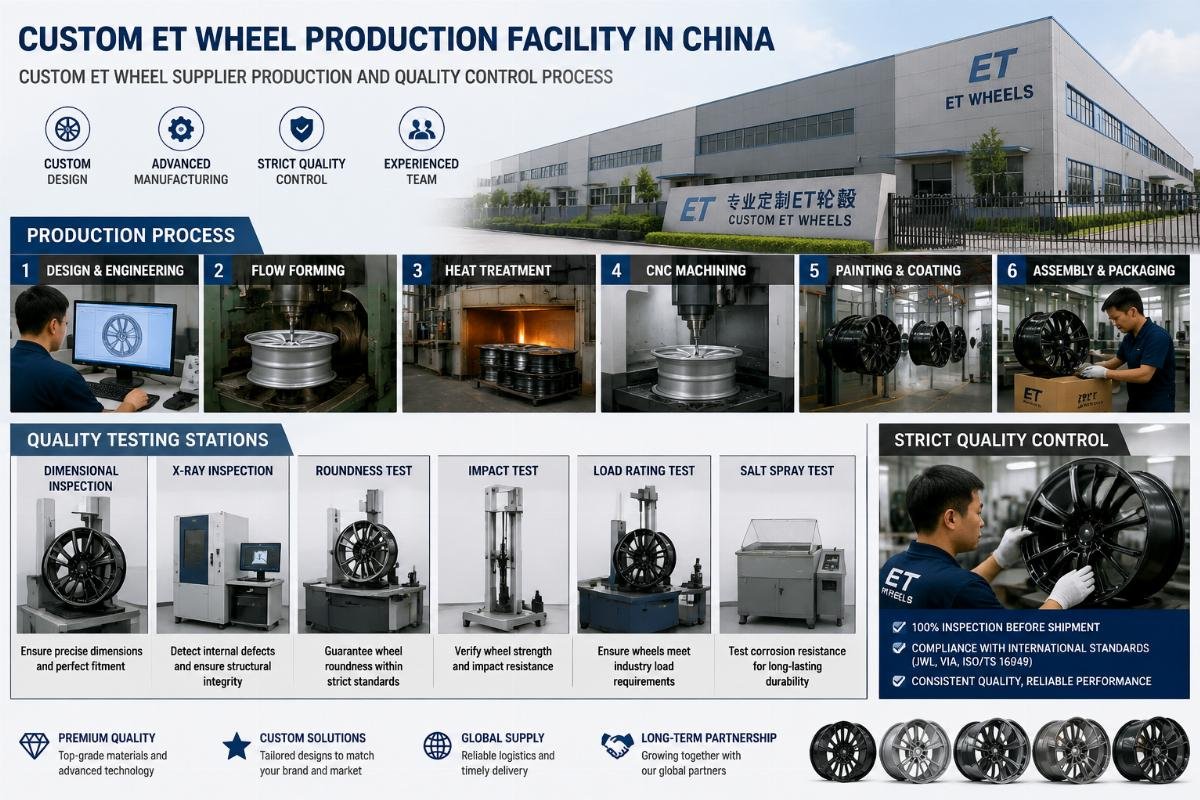
Qualified custom wheel suppliers with multinational certification and flexible minimum order policies deliver compliant custom ET solutions at 40-60% lower cost compared to equivalent European and Japanese brands. Chinese tier-1 wheel manufacturers now support order sizes from 20-piece small batches for boutique modification shops up to 50,000 unit runs for full OEM production lines, with consistent quality and transparent lead times across all order tiers. Jinan Yoker Auto Parts operates as a verified Chinese custom offset wheel supplier with full ISO, VIA, TüV, DOT, JWL, and CCC certification, supporting custom color, finish, and bespoke design requirements with 20 piece minimums for stocked models and 100 piece minimums for fully custom manufacturing, alongside a standard 15-30 day production lead time and 3-year structural integrity warranty.
- Certification Verification
