
Car Rims Wholesale Supplier for Kazakhstan: China Factory Direct
- By author
- Buying Guide
Car Rims Wholesale Supplier for Kazakhstan: China Factory Direct
Cheap rims that crack on Almaty’s potholed highways cost far more than certified wheels priced slightly higher.
The most reliable China factory direct car rims wholesale supplier for Kazakhstan combines JWL/VIA/TUV certification, reinforced rim designs for Central Asian road conditions, and MOQ as low as 20 pieces for custom orders with 30-45 day delivery windows.
I still remember the container that got stuck at the Khorgos dry port back in my procurement days. A batch of 18-inch SUV rims looked perfect on paper—gloss black, deep concave, aggressive multi-spoke design. But when the buyer’s inspector pulled a caliper out at the warehouse, the bolt pattern was off by a fraction that no spec sheet had warned about. The entire shipment sat in bonded storage for weeks, eating demurrage charges that nearly wiped out the margin. That single mistake taught me more about fitment precision than any trade show brochure ever could. Since then, I have walked through casting floors and coating lines across Shandong province, watching how the gap between a certified car rims wholesale supplier for Kazakhstan and a basement workshop shows up in the details—literally, in the microns of runout and the thickness of clear coat. [NEED_CITE: bolt pattern tolerance standards per SAE J2530]
The shift from buyer-side agent to factory-side operations gave me a different lens. Now I see the same mistakes repeating: importers chasing the lowest FOB quote without asking about salt-spray endurance, or modification shops ordering intricate ten-spoke designs that cannot survive a single Kazakh winter on gravel roads. Let me walk you through what actually matters when sourcing from China for this market.
What Certifications Should a Car Rims Wholesale Supplier for Kazakhstan Hold?
ISO 9001 is the baseline, but JWL, VIA, TUV, and DOT are the real gatekeepers for Kazakhstan’s import and aftermarket channels.
These certifications are not decorative stamps. Each one corresponds to a specific testing protocol that simulates real-world stress. JWL and VIA, originating from Japanese industrial standards, focus on dynamic radial fatigue and impact resistance—tests that directly correlate to how a rim behaves when hitting a pothole at speed. TUV, the German standard, adds stricter requirements on material homogeneity and dimensional consistency across production batches. DOT addresses the North American market but is increasingly requested by Central Asian buyers who resell into broader CIS channels. [NEED_CITE: comparative testing parameters across JWL VIA TUV certification standards]
Here is how these certifications stack up in practical terms for a Kazakhstan-bound order:
| Certification | Testing Focus | Relevance to Kazakhstan Market | Verification Level |
|---|---|---|---|
| JWL | Dynamic radial fatigue, impact | High—matches rough road conditions | Third-party lab verified |
| VIA | Enhanced impact, lateral bending | High—validates structural integrity | Third-party lab verified |
| TUV | Material consistency, batch traceability | Medium-High—required for EU-resale channels | Third-party lab verified |
| DOT | Impact, endurance under US standards | Medium—useful for CIS diversification | Third-party lab verified |
| ISO 9001 | Quality management system | Baseline—does not guarantee rim quality | Auditor-verified process |
| CCC | Chinese domestic compliance | Low for export—confirms factory legitimacy | Government-issued |
A car rims wholesale supplier for Kazakhstan that holds multiple certifications—say JWL, VIA, TUV, and DOT simultaneously—demonstrates production discipline that goes beyond minimum compliance. I have seen workshops produce a handful of samples that pass any test, only to ship bulk orders with inconsistent alloy composition. The certification stack is your insurance against that drift.
A wholesale buyer in Almaty once asked me why his previous supplier’s rims kept developing hairline cracks near the valve stem area after one season. The old supplier had ISO 9001 but no JWL or VIA. The answer was simple: ISO certifies the management process, not the physical rim. Without dynamic fatigue testing, the factory had no idea their casting parameters produced a stress concentration point that Kazakh roads would exploit within months.
Which Rim Specifications Suit Kazakhstan’s Roads and Climate?
Reinforced rim profiles, corrosion-resistant finishes, and precise bolt-pattern matching are non-negotiable for Kazakhstan’s mix of extreme cold, salt-treated roads, and uneven surfaces.
Kazakhstan’s driving environment is unforgiving. Winter temperatures in Nur-Sultan and Almaty regularly plunge below minus thirty, making brittle alloys a liability. Road salt and sanding grit accelerate corrosion on poorly coated wheels. And the road surface itself ranges from freshly paved urban arteries to cratered rural highways where a single deep pothole can bend an inadequately designed rim. [NEED_CITE: Central Asian road surface condition reports and winter climate impact on automotive components]
The specification matrix below shows what a serious car rims wholesale supplier for Kazakhstan should offer versus what generic exporters typically provide:
| Specification Factor | Certified Supplier Offering | Generic Exporter Offering |
|---|---|---|
| Rim profile | Reinforced bead seat, thicker flange | Standard profile, weight-optimized only |
| Alloy composition | Controlled magnesium-silicon ratio | Unverified scrap blend |
| Surface treatment | Multi-layer paint with corrosion undercoat | Single-layer cosmetic coat |
| Salt-spray endurance | Substantially extended resistance | Basic resistance, vulnerable to road salt |
| Bolt pattern precision | Micron-level machining | Tolerant of minor deviation |
| Center bore accuracy | Vehicle-specific or precision hub-ring compatible | Generic oversized bore |
The reinforced bead seat matters more than most buyers realize. When a rim hits a sharp-edged pothole at speed, the bead area absorbs the shock. A thin, weight-reduced design might look aggressive on a showroom floor, but it transfers impact energy directly into the spokes—where cracks initiate. I have inspected rims from generic exporters where the spoke roots showed micro-fractures after only one season of urban driving in Almaty.
For surface treatment, the hierarchy is clear. Machined face with clear coat offers decent protection and a premium look. Full paint with a dedicated corrosion undercoat performs better in salt-heavy environments. Chrome plating provides the highest corrosion resistance but adds cost and weight. A car rims wholesale supplier for Kazakhstan should be able to walk you through salt-spray test results for each finish option—without those results, you are guessing.
A modification shop in Shymkent ordered a set of deep concave mesh-pattern rims for a client’s luxury SUV. The design was stunning, but the supplier had used a single-layer gloss black finish with no undercoat. Within two winters, the road salt had eaten through the paint at the barrel edges, and corrosion was spreading under the clear coat. The shop had to replace the entire set at a loss. The lesson: aesthetics without durability is a liability in this market.
How Does the Procurement Process Work with a China Factory Direct Supplier?
The standard flow runs from inquiry through sampling, bulk production, quality inspection, and shipment, with typical lead times of 30-45 days for stock designs and longer for fully custom orders.
Understanding the timeline and checkpoints prevents costly surprises. Here is the sequence a professional car rims wholesale supplier for Kazakhstan should follow:
-
Inquiry and specification confirmation: You provide target sizes, bolt patterns, offset values, finish preferences, and quantity. The supplier confirms feasibility and provides a detailed quotation including tooling costs if custom designs are involved. [NEED_CITE: standard alloy wheel export procurement workflow]
-
Sample production and approval: For custom designs, the factory produces samples—typically a small batch for physical evaluation. You verify dimensions, finish quality, and fitment on your target vehicles before authorizing bulk production.
-
Bulk production with in-process checks: The casting, machining, and coating stages each include quality checkpoints. A serious supplier shares production photos or video at key stages rather than waiting until the order is finished.
-
Final inspection and documentation: Pre-shipment inspection covers dimensional accuracy, dynamic balance, finish defects, and packaging integrity. The supplier prepares commercial invoice, packing list, certificate of origin, and any certification copies required for Kazakhstan customs.
-
Shipping and logistics coordination: Whether by container through Aktau port or via rail through the China-Kazakhstan border crossing at Khorgos, the supplier should provide complete export documentation and coordinate with your freight forwarder.
A distributor in Astana once told me about an order where the supplier finished production in record time—only to discover during pre-shipment inspection that the offset values were wrong across the entire batch. The rims had to be scrapped and recast, delaying delivery by weeks. The root cause? The supplier had skipped the sample approval stage to "save time." A professional car rims wholesale supplier for Kazakhstan never skips that step, because the cost of a wrong batch dwarfs the cost of a sample delay.
Packaging deserves specific attention. Rims destined for Kazakhstan face multiple handling points—factory loading, border transfer, rail or truck transit, final warehouse unloading. Each transition risks cosmetic damage. A reliable supplier uses individual rim bags, foam dividers, and reinforced outer cartons designed to prevent edge-to-edge contact during transit. I have seen poorly packaged rims arrive with curb rash that was actually caused by rim-to-rim contact inside the container.
How Do You Balance Cost and Quality When Sourcing from China?
The lowest unit price often masks hidden costs—rework, warranty claims, and reputation damage—while a certified car rims wholesale supplier for Kazakhstan delivers predictable total cost of ownership.
The temptation to chase the cheapest quote is universal, especially for buyers operating in price-sensitive segments. But the math rarely works out. Here is why:
A rim that fails structural testing in the field triggers a cascade of costs. The replacement rim itself is one line item. The return shipping, customs re-import duties, warehouse handling, and customer goodwill loss multiply the original savings into a net negative. I worked with a Central Asian importer who switched from a cheap uncertified supplier to a certified car rims wholesale supplier for Kazakhstan after one batch failure. The per-unit price increase was noticeable, but his warranty claim rate dropped to near zero within one season. The total cost—including logistics, handling, and reputational repair from the failed batch—meant the switch paid for itself quickly. [NEED_CITE: total cost of ownership analysis in automotive aftermarket procurement]
The cost structure of a certified supplier breaks down differently than a workshop operation:
| Cost Component | Certified Factory | Low-Cost Workshop |
|---|---|---|
| Raw material (alloy ingot) | Certified composition, traceable | Unverified, potentially recycled blend |
| Quality control labor | Dedicated QC team, in-process checks | Minimal, end-of-line visual only |
| Certification amortization | Spread across production volume | Absent—no certification cost |
| Packaging | Export-grade, damage-preventive | Basic, cosmetic-damage prone |
| Documentation | Full customs and certification package | Incomplete, buyer must source separately |
A car rims wholesale supplier for Kazakhstan that invests in certification and quality infrastructure passes those costs into the unit price transparently. What you avoid are the invisible costs: the container that arrives with damaged goods, the batch that fails customs inspection due to missing paperwork, the customer who returns cracked rims six months later.
Long-term partnership also unlocks pricing flexibility. Suppliers reward consistent volume with better unit pricing, priority production slots during peak season, and willingness to accommodate custom specifications without excessive tooling charges. A buyer who places sporadic orders at the lowest possible price gets neither priority nor flexibility.
Conclusion
Sourcing a reliable car rims wholesale supplier for Kazakhstan requires looking past unit price to certification depth, specification alignment with local conditions, and process transparency. The difference between a successful import program and a costly failure lies in verifying JWL/VIA/TUV credentials, specifying reinforced profiles and corrosion-resistant finishes, insisting on sample approval before bulk production, and calculating total cost rather than sticker price. A certified China factory direct partner with multi-standard accreditation and a structural warranty transforms rim procurement from a gamble into a predictable, scalable operation.
Related Applications
Parts in This Article
Products mentioned above
 01
WHEEL RIM/HUB
16-20 Inch Racing Car Rims for BMW/Audi A3A4/Civic
View Specifications 02
WHEEL RIM/HUB
17-22 Inch Forged Aluminum Alloy Car Rims Chrome Wheels China
View Specifications 03
WHEEL RIM/HUB
High-Performance 15 Inch 4X100 4lug Aluminum Racing Car Rims
View Specifications 04
WHEEL RIM/HUB
Forged Alloy Wheels 17-21 Inch 5X114.3 Racing Car Rims Hub
View Specifications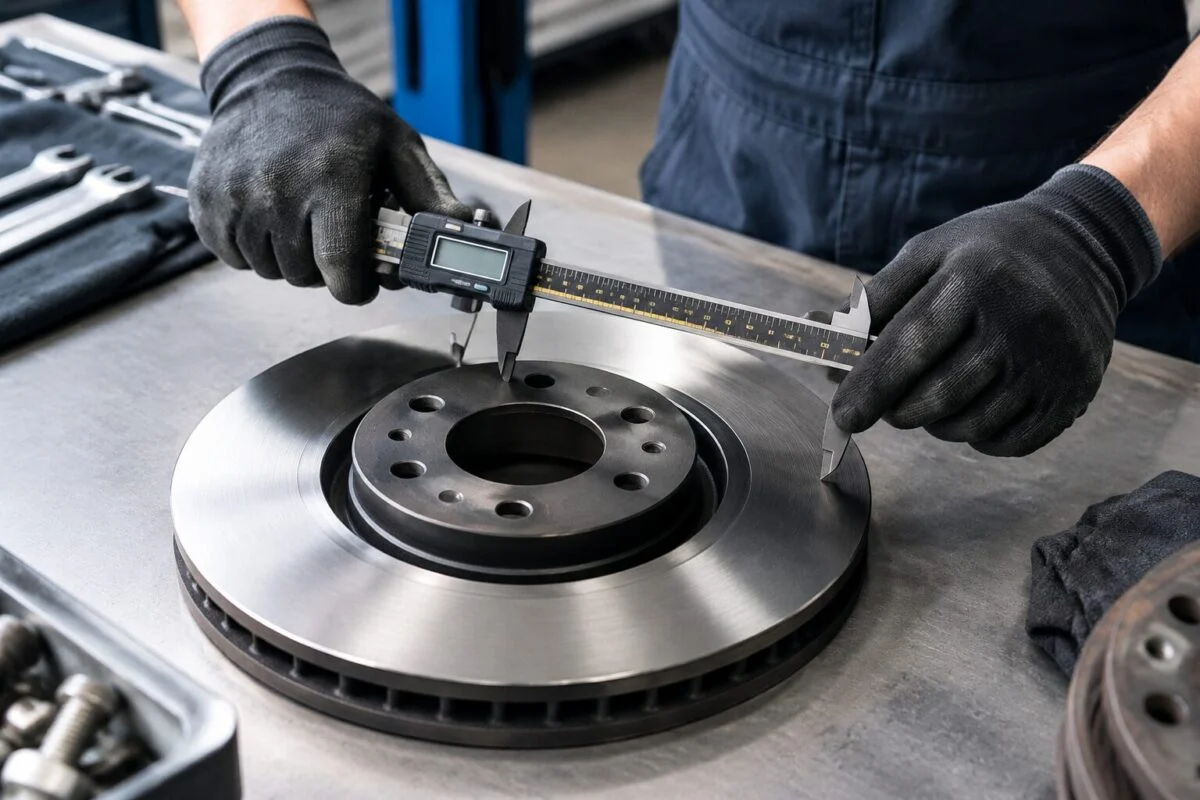
OE Fitment Check
Not sure it fits? Send us the OE number and we'll check it.
Jinan Yoker Auto Parts matches brake discs, drums, radiators, A/C condensers and wheel rims by OE number, vehicle model and year, PCD, ET and CB, so the parts fit before they ship.
- Factory-direct quote within 24 hours
- Free samples before bulk orders
- 10% off first order for new buyers (terms apply)
- Condenser MOQ from 10 PCS
Keep Reading
Related guides on auto parts sourcing

Buying Guide · · 10 min read
14 Inch Alloy Wheels Wholesale Supplier & Factory Direct Price 2026
Avoid costly port rejections by mastering the 14 inch alloy wheels price drivers for 2026. This guide details FOB pricing tiers by finish and…
Read the Guide Buying Guide · · 9 min read
Car Rims Supplier for Pakistan: China Factory Direct OEM Wholesale
Sourcing from a reliable Car Rims Supplier for Pakistan requires verified VIA/JWL certification and fitment data matched to local road conditions. Avoid customs delays…
Read the Guide
Buying Guide · · 9 min read
SUV Alloy Wheels 12″-24″ Wholesale Supplier | OEM & Bulk for Sale
Selecting the best alloy wheels for SUV requires precise PCD, ET, and load index matching to prevent costly fitment failures. Verify VIA or TÜV…
Read the Guide